Foxes Lair
  • Home
  • About
    • About Foxes Lair
    • History
    • Landscape and Soils
  • Things To Do
    • Picnic Spots
    • Walk Trails
    • Visit the Arboretum
    • Ride Your Bicycle
    • Scavenger hunt
    • Geocaching and Orienteering
  • Things To See
    • Wildflowers
    • Trees in the Narrogin district
    • Birds
    • Vertebrates
    • Narrogin spiders scorpions ticks
    • Fungi and lichens
  • Foxes Lair seasonal guide
    • December to March
    • April - May
    • June-July
    • August
    • September
    • October
    • November
  • Other great reserves
    • Railway Dam
    • Yilliminning Rock
    • Old Mill Dam
    • Yornaning Dam
    • Contine Hill
    • Highbury Reserve
    • Boyagin Rock
    • Barna Mia
    • Toolibin Lake
    • Newman Block
    • Harrismith Nature Reserve
    • Candy Block
    • Tutanning Nature Reserve
  • 1Foxypress
    • Foxypress
    • Vanishing Farms
  • Contact

Giant Gymnopilus Junonius

7/7/2021

0 Comments

 
Picture

PictureGymnopilus allanopus
Greeting Fellow Foxies,
​
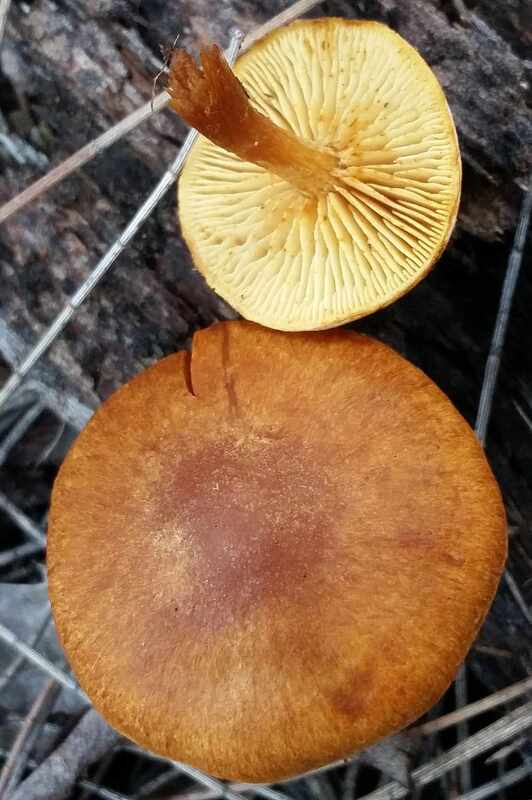
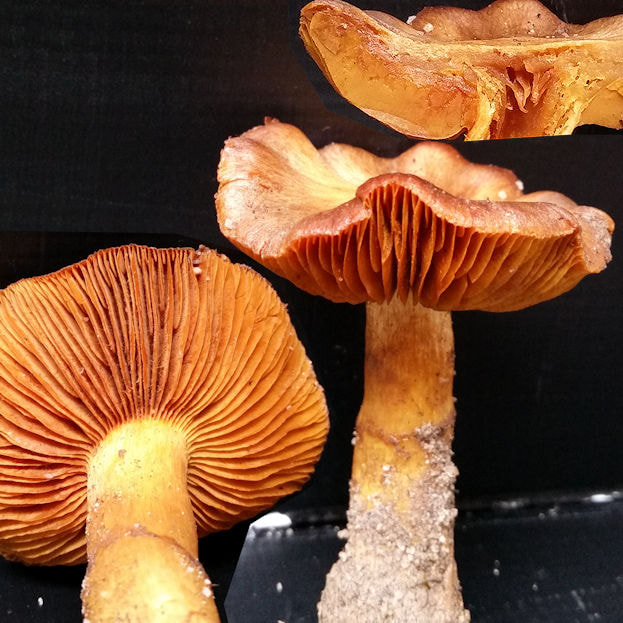
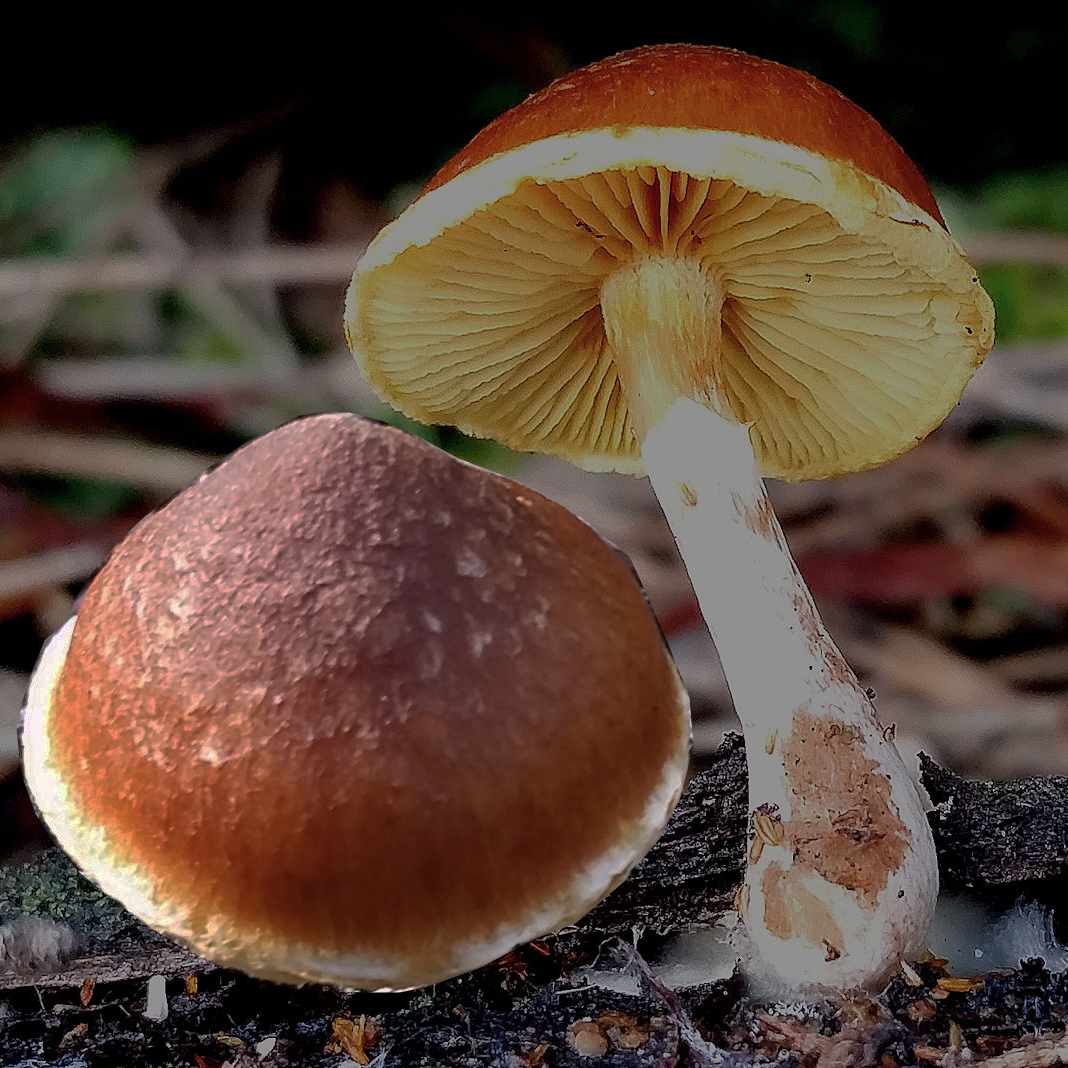
Each winter, small orange-brown Gymnopilus mushrooms emerge on and around dead wood at Narrogin, particularly in rock sheoak woodland.
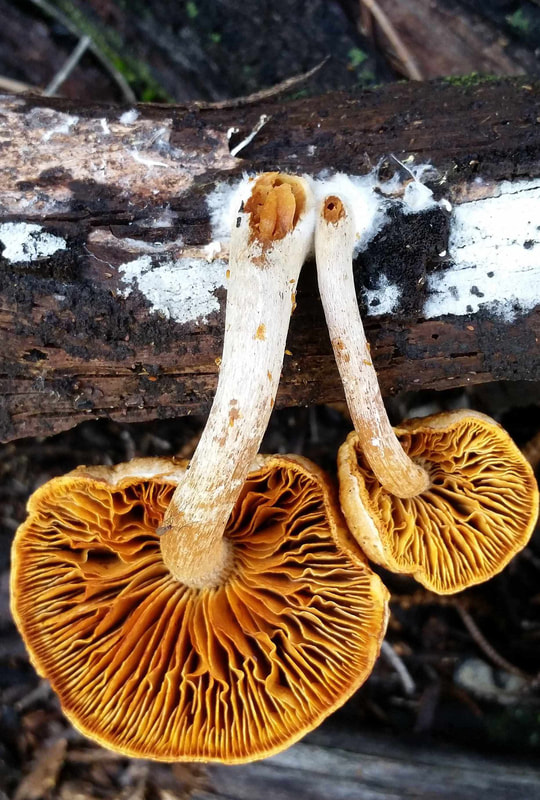
The fruit body is typically reddish-brown to rusty orange to yellow, medium to large. The veil (ring of tissue around the stem below the cap) varies. It is often not obvious on older specimens, but can be well developed. They produce large amounts of ochre-brown spores that can coat the veil, stem and ground underneath. Most members of Gymnopilus grow on wood but at times may appear to be soil fungi if the wood is buried.
The name means 
naked pileus, which I assume refers to the relatively regular, smooth and dry cap. 

Gymnopilus is not edible.

Picture
Young Gymnopilus junonius. Note stem veil
Picture
A common gymnopius
Picture
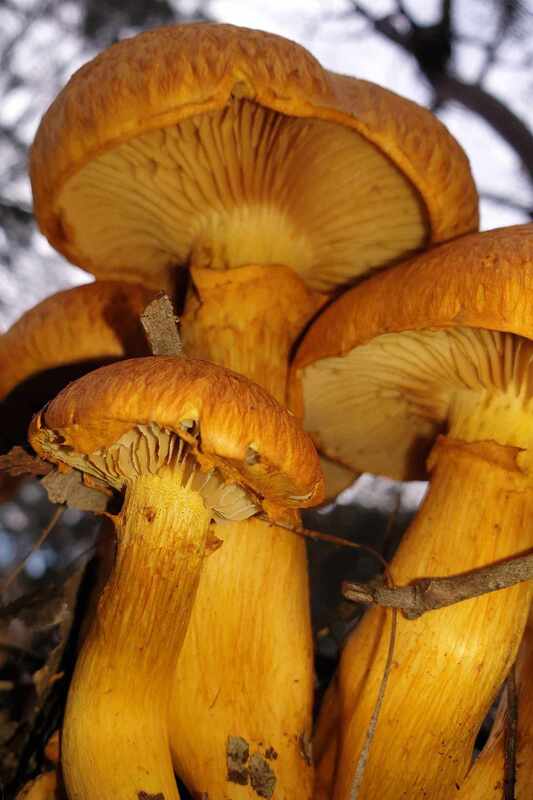
Gymnopius underside
Picture
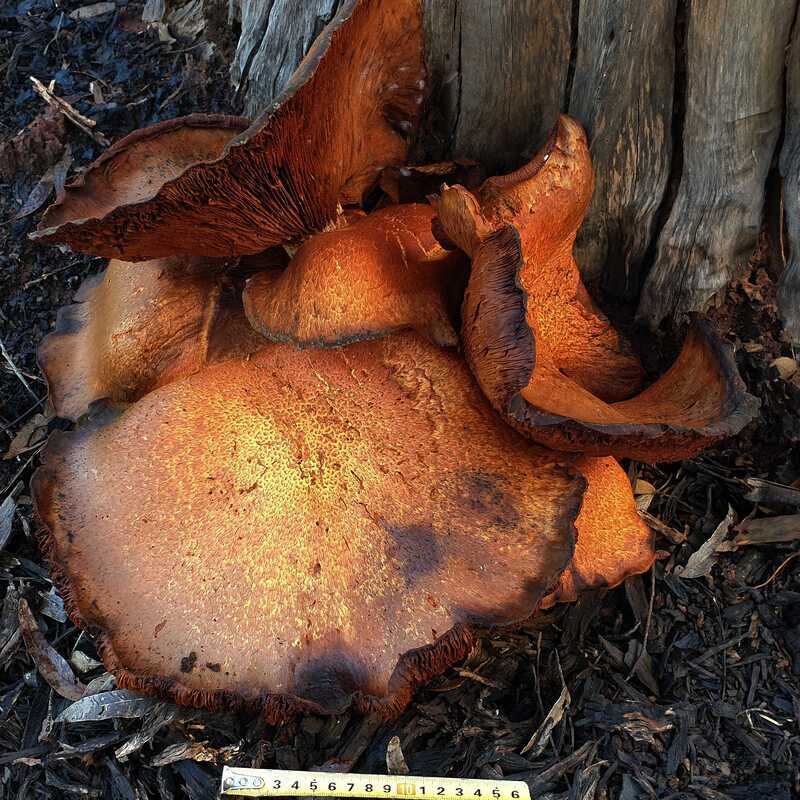
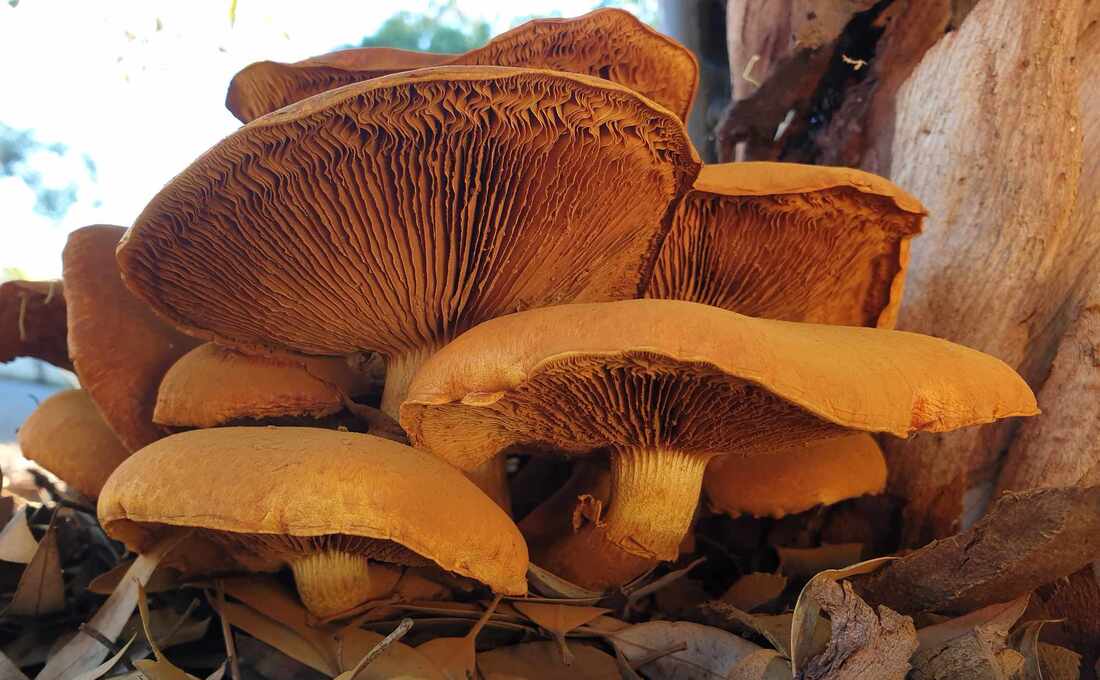
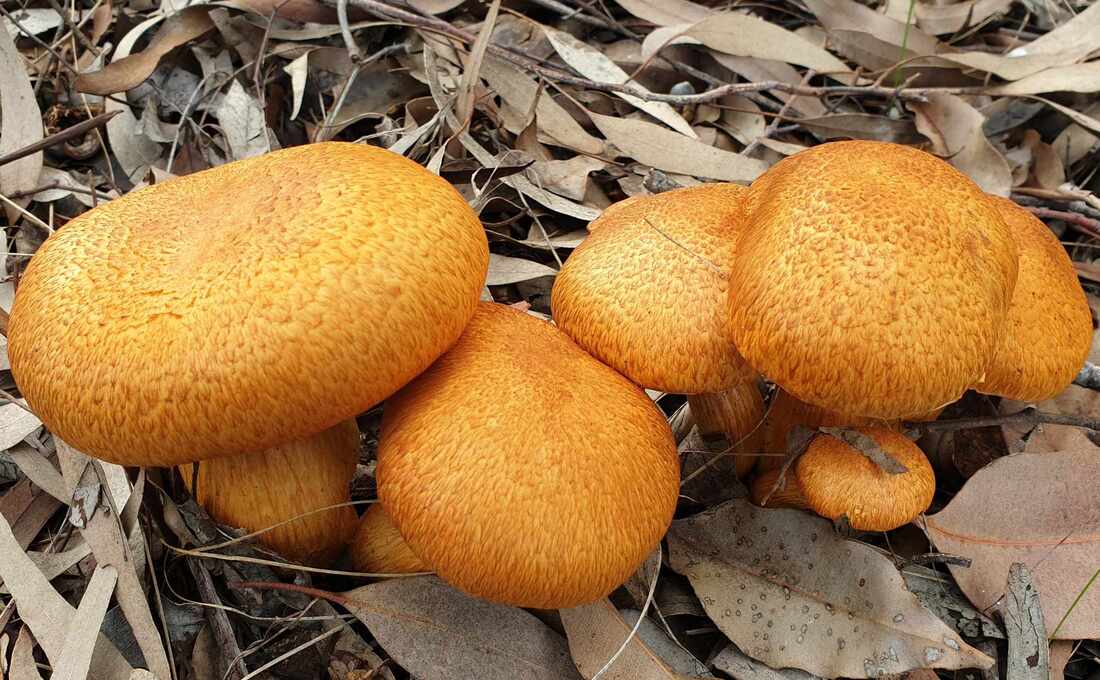
A wet autumn-winter has really stimulated large Gymnopilus Junonius (Spectacular Rustgill) that forms clumps of overlapping mushrooms. I found three large groups in different locations.
1. The youngest find had two groups around and about a metre away from a Eucalyptus caesia mallee (that was probably planted on or near an old tree base). They resembled large orange  "button mushrooms" that live in the soil.
2. The second find was a more advanced group that had emerged at the base of a mallee street tree. Initially it was misidentified as the aggressive pathogen Armillaria luteobubalina (Australian Honey Fungus), which is very similar, but has white spores. The image below shows a coating of brown spores on cap and stems. Gymnopilus  .junosius can be a weak pathogen, but the mallee may have also been planted near a long dead and disappeared tree. 
3. The third find at the base of a dead wandoo was past its prime. The darkened fully expanded caps overlapped each other so much that they resembled oyster mushrooms.
Picture
1. Early development
Picture
2 fully developed releasing spores
Picture
3. Almost finished
Picture
A Cortinarius


Members of Pholiota and Cortinarius are easy to confuse with Gymnopilus. 
Pholiota can be distinguished by its sticky cap and duller (brown to cinnamon brown) spores.

Cortinarius grows on the ground as scattered mushrooms.
​
​Beginners can confuse 
Gymnopilus with Galerina, which contains deadly poisonous species.
0 Comments

Hohenbuehelia petaloides in Foxes Lair

3/7/2021

0 Comments

 
​Greetings fellow Foxies,
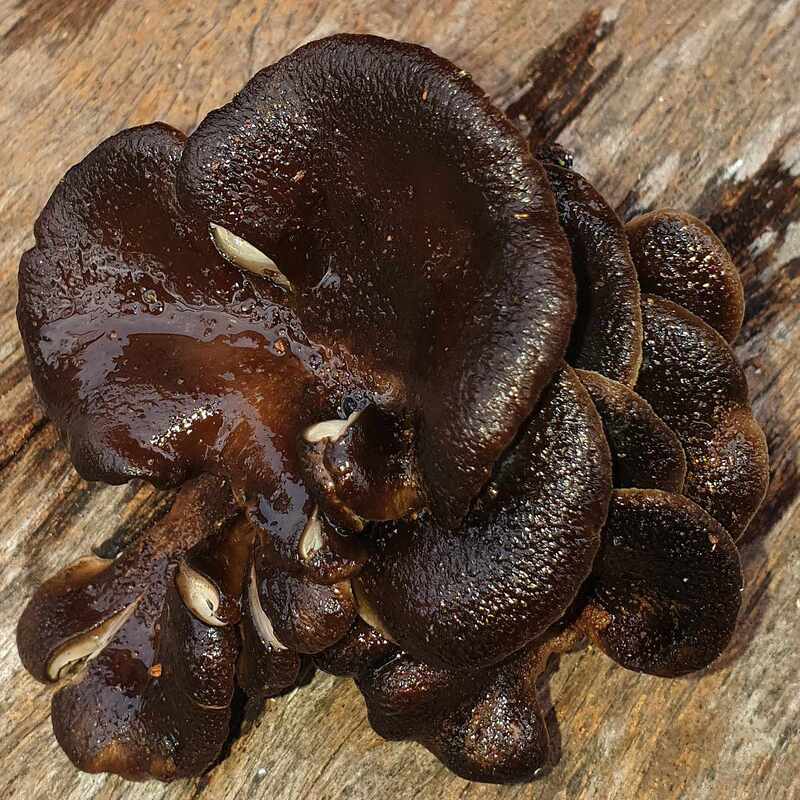
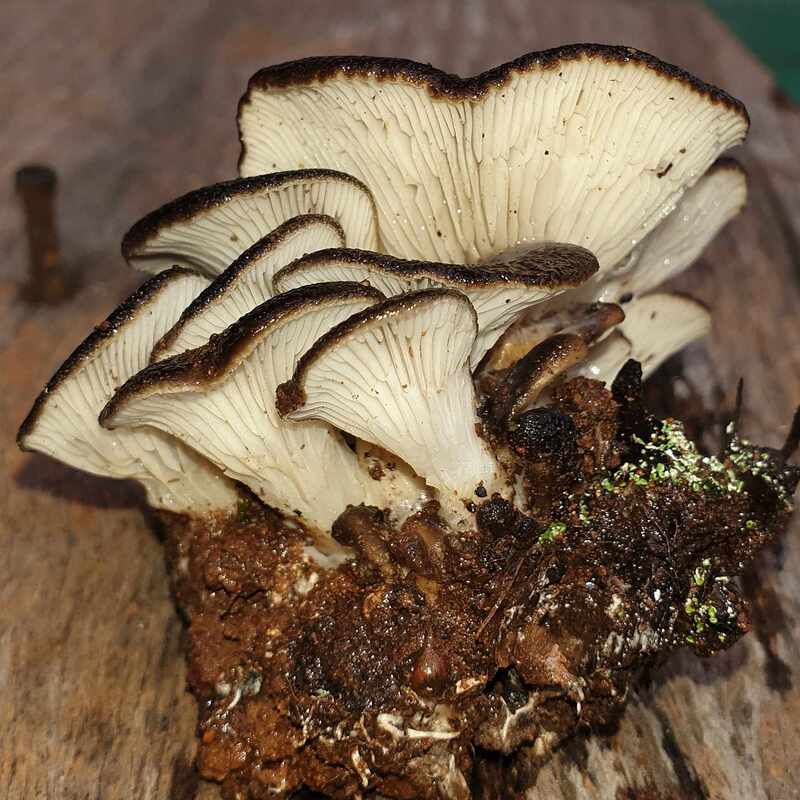
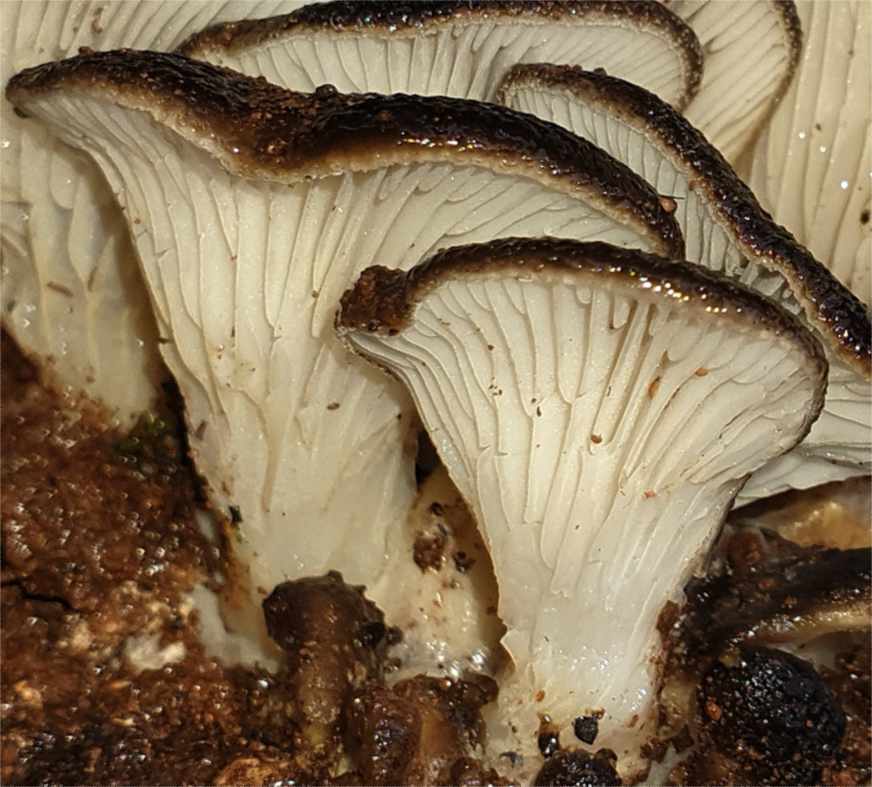
I recently made my first-ever find of a beautiful fungus called Hohenbuehelia petaloides on a dolerite ridge adjoining the junction of Granite and Narrakine South roads. Despite much searching there was only one specimen that had grown from an underground rotting branch or a root.
It is an oyster fungus with gills that run down the stalk (decurrent) and has white spores. Most images on the web show a pale cap. 
Picture
Picture
Picture
PictureSimilar except for the pores
A few interesting features are:
  • It is named after an Austrian aristocrat: Ludwig Samuel Joseph David Alexander Freiherr von Hohenbühel Heufler zu Rasen und Perdonegg. Try saying that after a few beers? or even before!
  • It has a novel way of obtaining nitrogen, which is lacking in wood: Sticky ends on the hyphae, trap nematodes in the soil to harvest their protein.
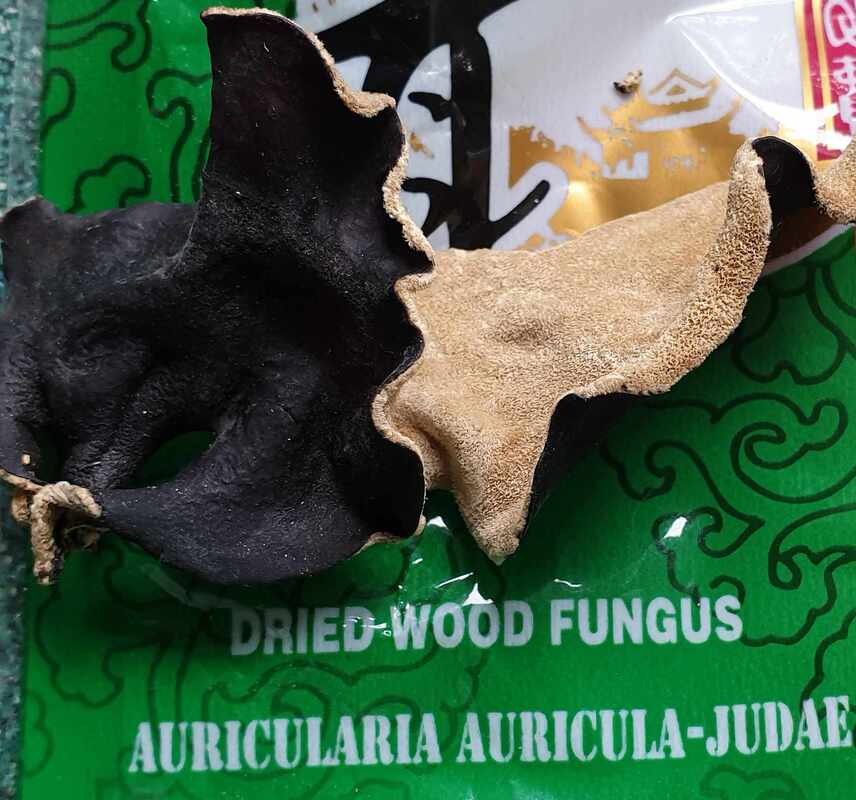
  • I reckon that it resembles a wood fungus I use in my stir fries. Hang on, that has a different name and pores not gills! another poisoning averted :).

Picture
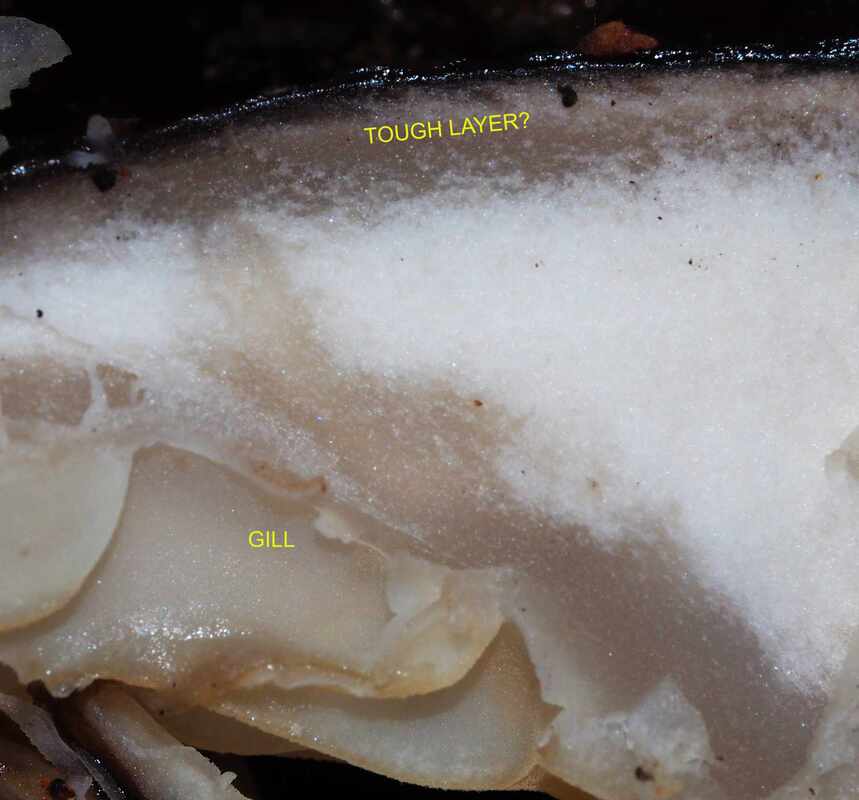
Apparently Hohenbuehelia is very similar to Pleurotis, but has a thinner, tougher cap due to a very tough layer below the top 'skin'. I guess I will find out when I find and compare a Pleurotis.

0 Comments

False Puffball Slime Mould

14/11/2020

0 Comments

 
Greetings fellow Foxies,
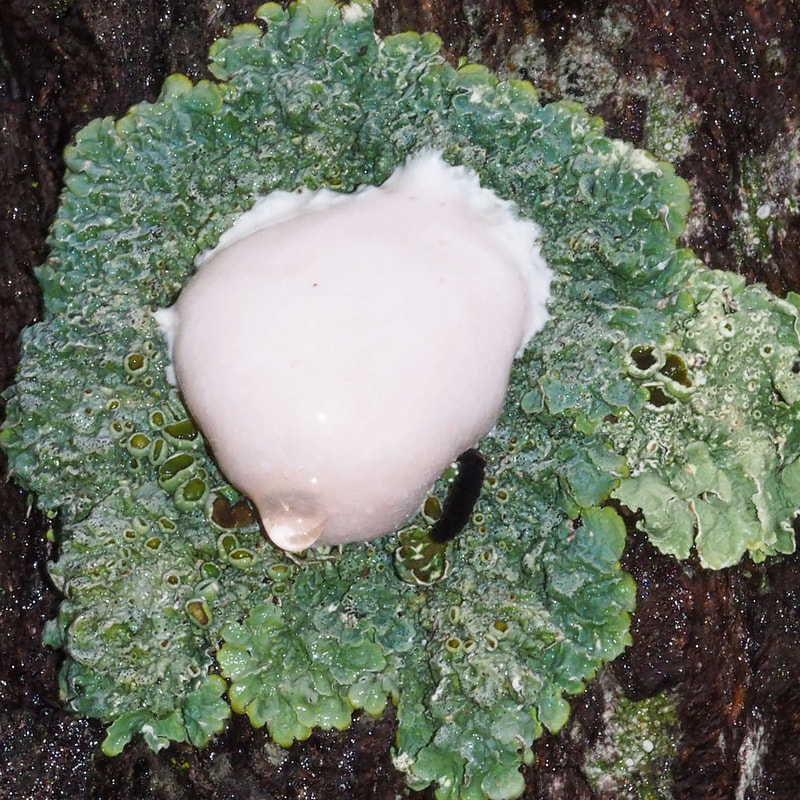
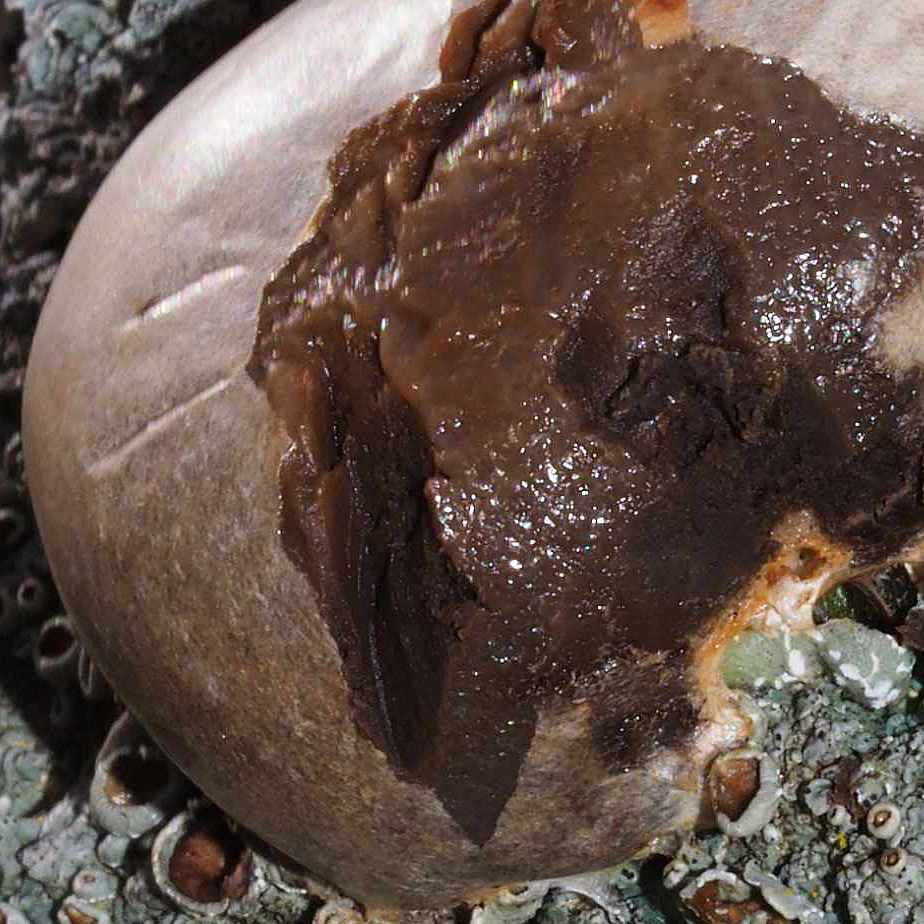
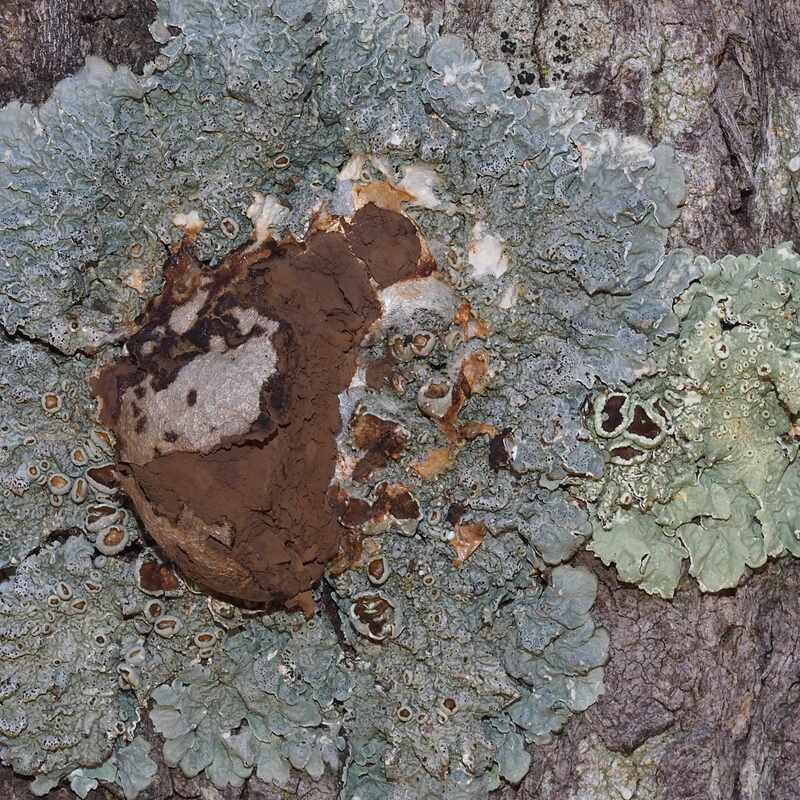
Last week after rain, I discovered a lichen with a raised milky-white centre. After trying to convince people that I had found the rare “Poached Egg Lichen”, I was politely informed that the white mass was a False Puffball Reticularia Lycerpodon that just happened to form its spore mass on a lichen.
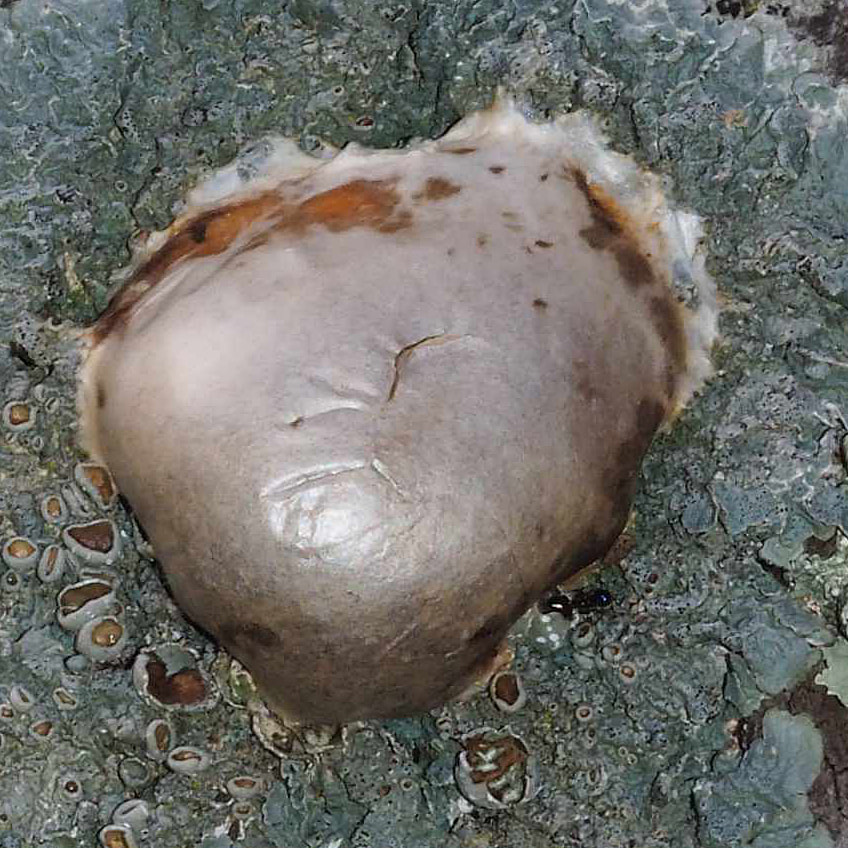
This is a type of slime mould that is distinctive in forming a tough ‘skin’ on its powdery spore mass (sporangium) to resemble a puffball. The skin became obvious as the sporangium dried.
It is quite unusual to find slime moulds in November. As their name signifies, they move around in wet weather, (mostly winter) as slimy threads of protoplasm called plasmodium, that group together to form fruiting bodies (sporangia). If conditions become very dry when this species is in the plasmodial stage it is able to survive as a dry dormant resting body called a sclerotium. When wet weather returns the sclerotium changes to the plasmodial stage to feed before forming a sporangium at the end of the season.
Note that there are two lichen species on the bark. The large one faded from sea green to greenish grey as it dried, but the small one retained its light green colour.
Picture
Milky wet sporangium
Picture
Skin on dry sporangium
Picture
Immature spores (chocolate mousse anyone?)
Picture
Dry powdery spores
​Despite many years of wandering around Foxes Lair and surrounds I still make new discoveries that excite my imagination.
A Buddhist saying goes “If a fool persists in his folly. He may become a wise man”
Let us hope it works!
p.s. The saying is equally applicable to all genders.
0 Comments

Hypomyces chrysospermus Bolete Destroyer

30/7/2020

0 Comments

 
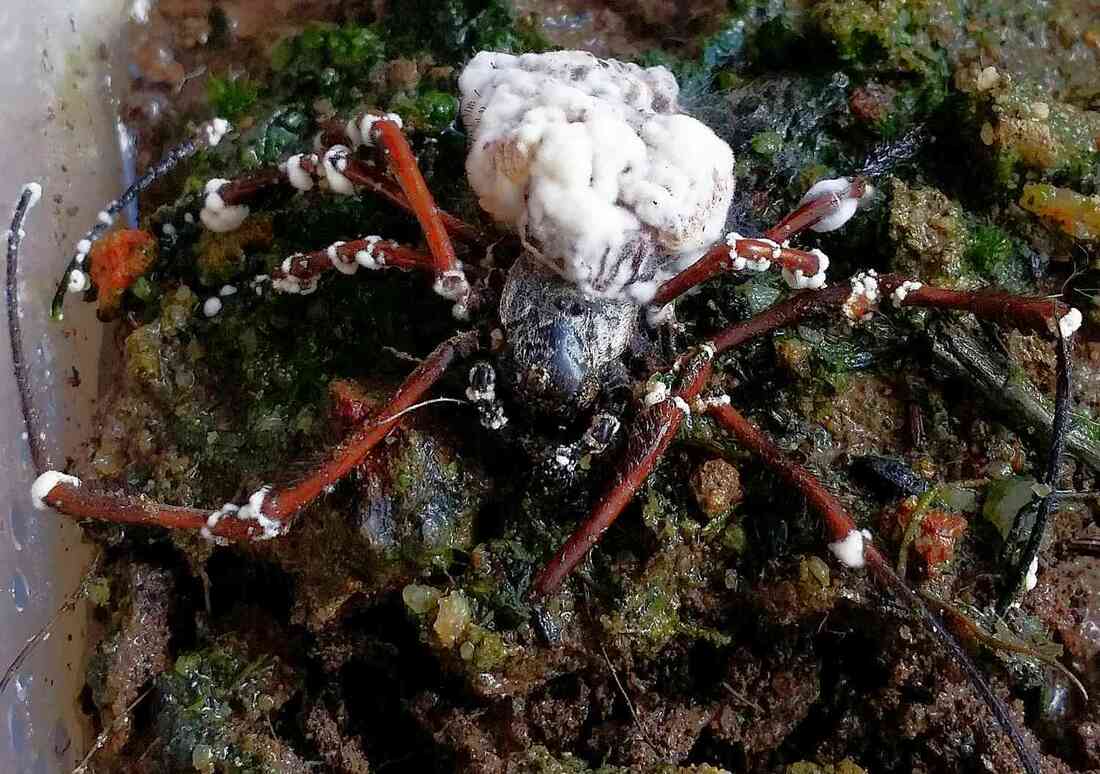
PictureFungus emerging from dead spider
​Greetings fellow Foxies,
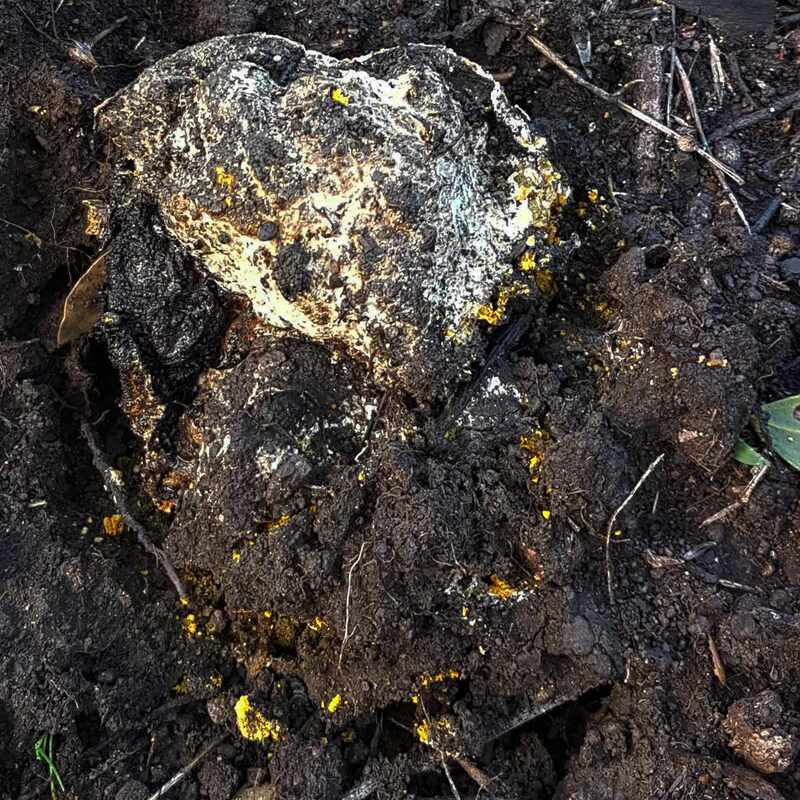
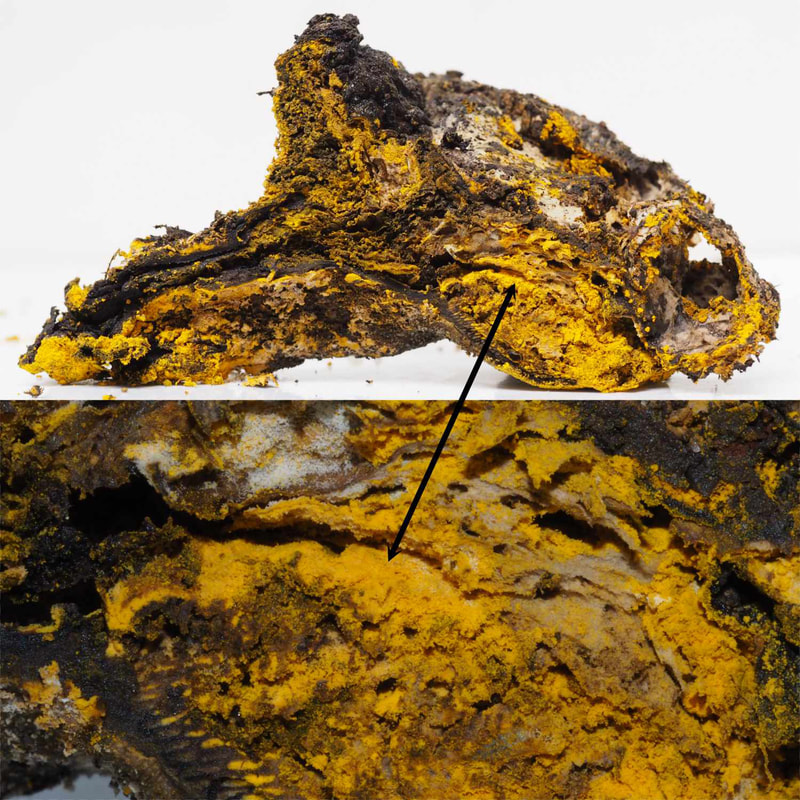
A chance discovery of a mass of brilliant yellow spores erupting from the ground led me to the interesting world of mycotrophic fungi – fungi that parasitise other fungi. These are common in parts of the world but only one is listed in WA. This is Hypomyces chrysospermus, ominously called the bolete destroyer, which is an ascomycete fungus.
 
Ascomycetes generally have small fruiting bodies that are frequently disc or rod-shaped. They are most commonly seen as the small fruiting discs on lichens, where fungi have an association with single celled algae.
 Cordyceps genus ascomycetes gruesomely parasitise insects and spiders like the golden orb weaver I found in Foxes Lair. Cordyceps affects a caterpillar’s brain, inducing it to climb up a stem. A Cordyceps fruiting body then grows out of the insect’s head where its spores are spread. (delightful!).

PictureSalmon gum bolete after rain
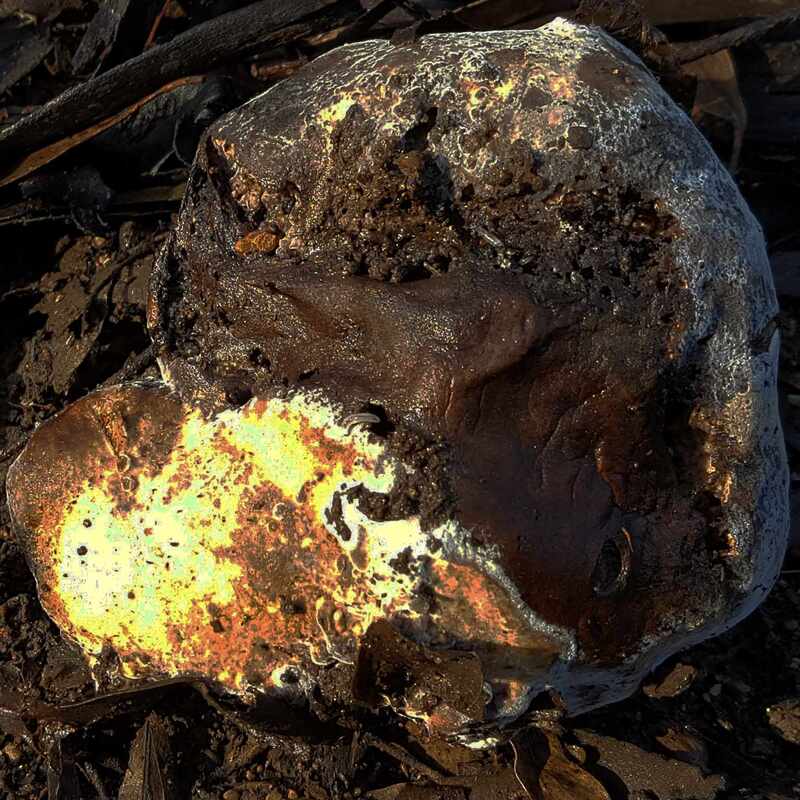
​I found Hypomyces affected boletes in soil adjoining a drain on the north side of salmon gum bolete patch in the arboretum. They were less than a quarter the size of unaffected boletes and had only partially emerged.
​Three specimens below show increasing stages of infection.
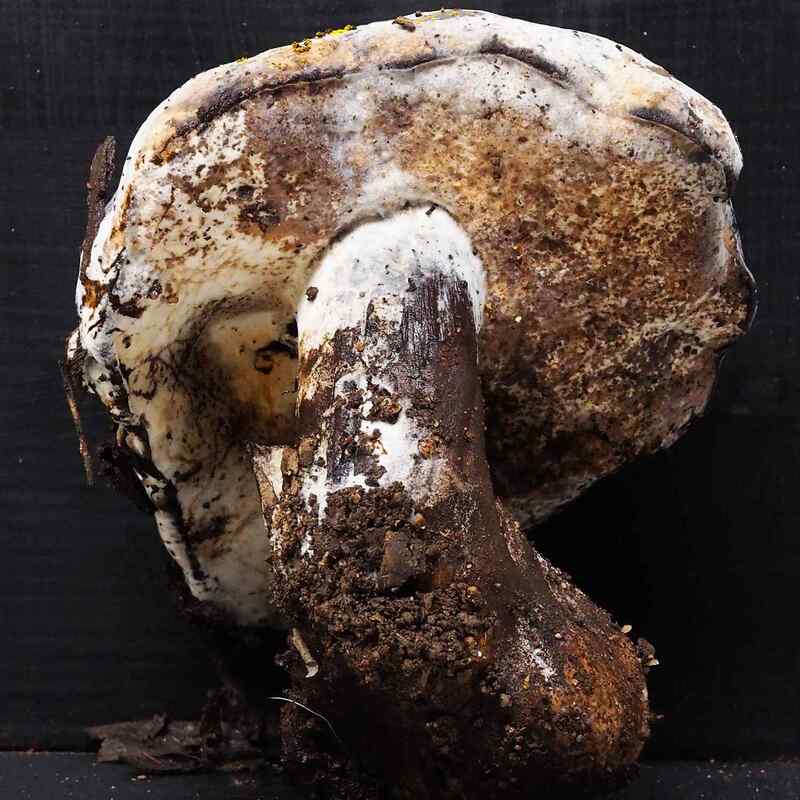
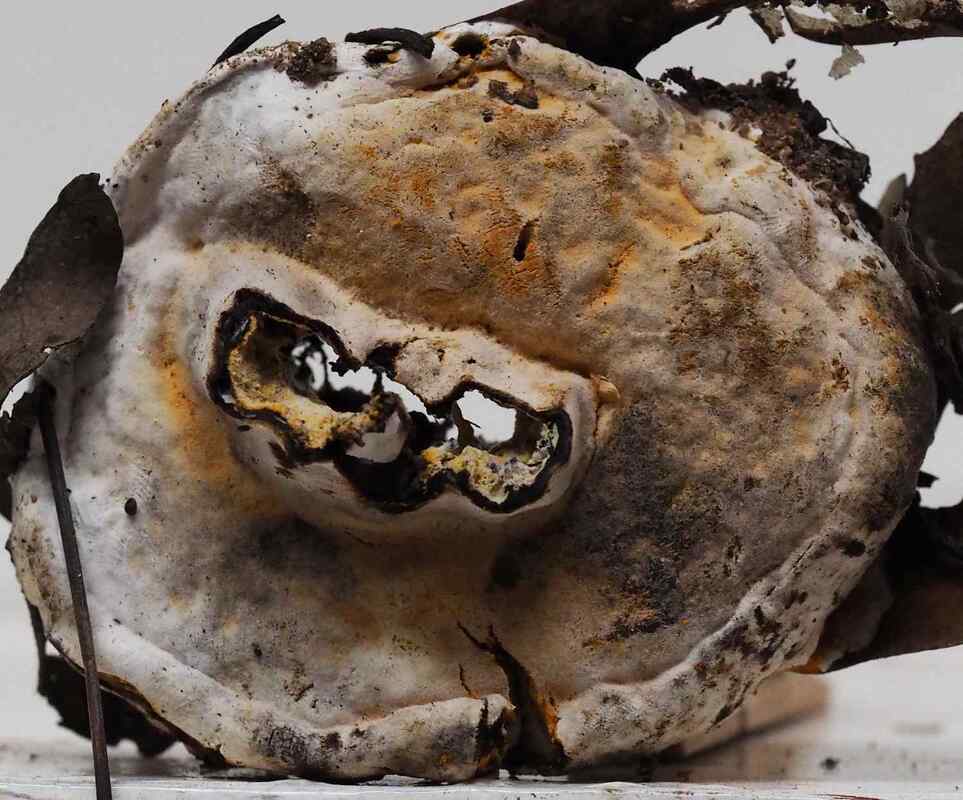
The least affected bolete below had a Hypomyces white powdery coat, except for a small unaffected area on the top of the cap.
Fungus fly maggots normally start eating these boletes as they have reached full size but had already tunnelled through most of this specimen (probably because it was parasitised).
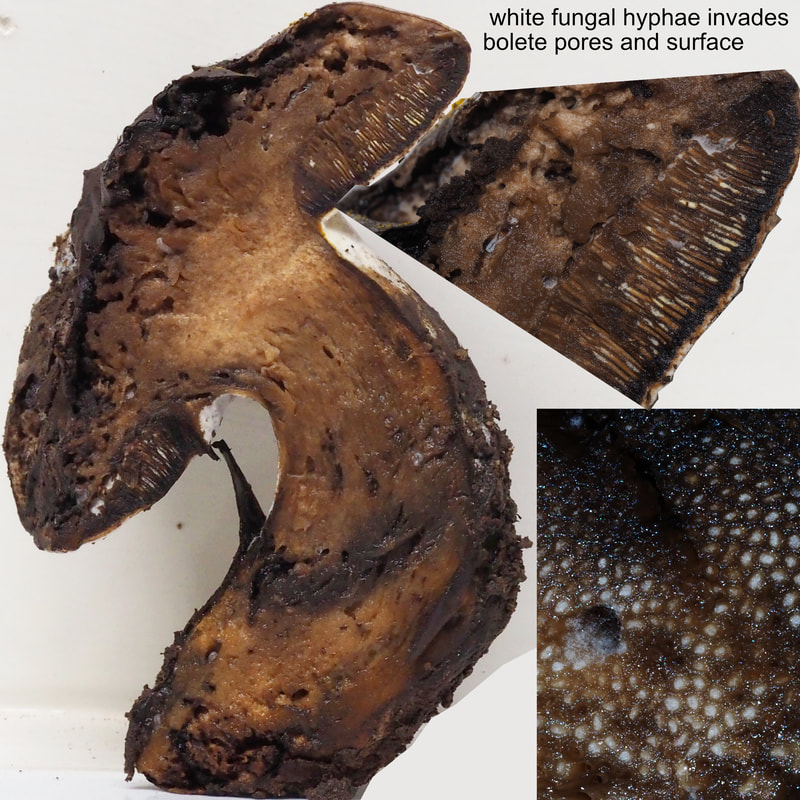
Hypomyces has three stages of spore production. The first 2 asexual stages have white and then gold spores. The last sexual stage has minute colourless flasks.​ White Hypomyces hyphae containing white asexual spores has invaded maggot holes and pores of the bolete.

PictureTop view: The brown leathery central band has yet to be invaded

Picture
Underside. White coating of spores covering mushy brown dead bolete tissue
PictureUnderside. White coating of spores covering mushy brown dead bolete tissue

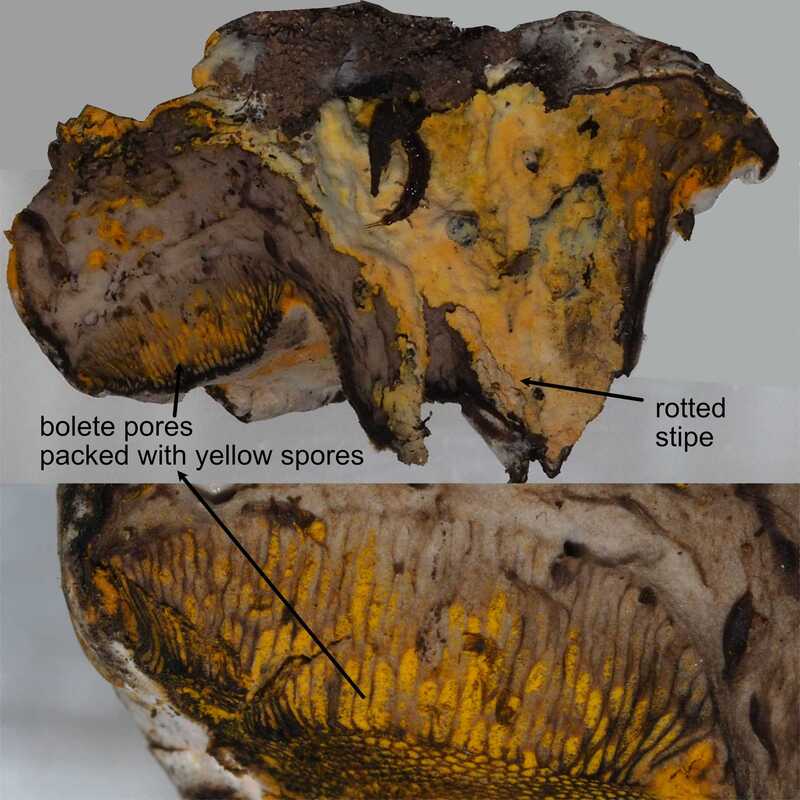
The more advanced second specimen appeared quite dry on the exterior. Presumably, maggots had eaten out the stem but were forced out of the other tissue by Hypomyces hyphae (I wonder if it is toxic?).
 The cross section shows that most bolete tissue has been replaced by yellow Hypomyces hyphae and spores.
Picture
Top view. White and yellow spore coat
Picture
Underside, note hollow stem
Picture
profile. Yellow Hypomyces tissue
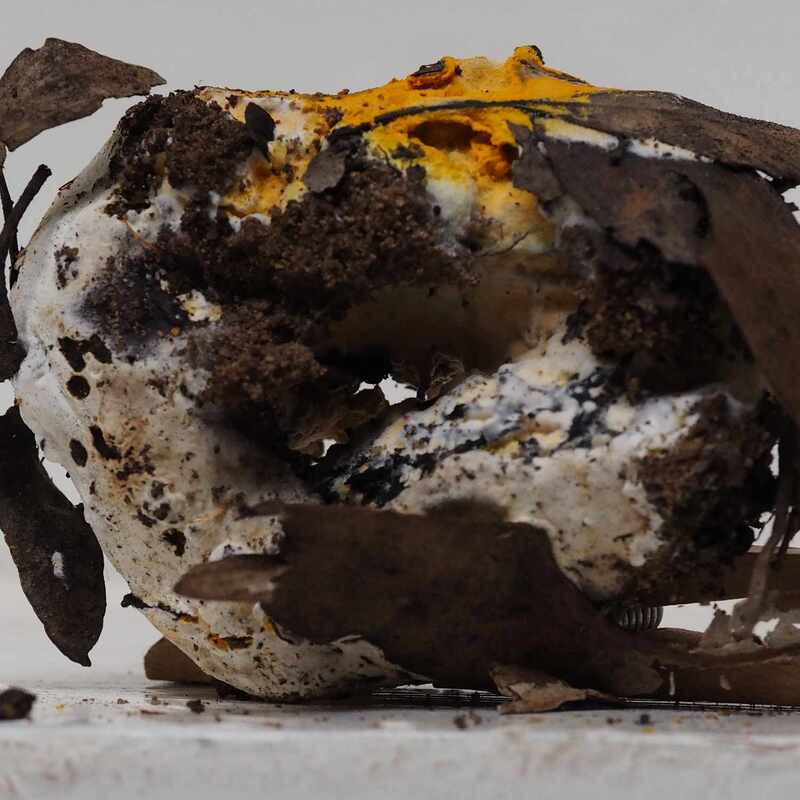
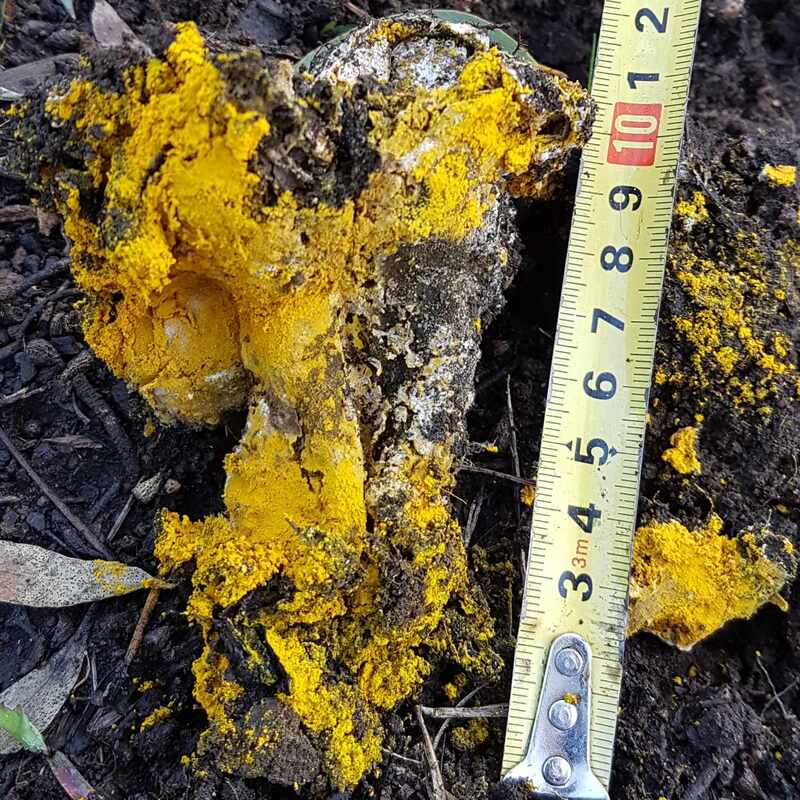
The interior of the third bolete has been completely replaced by Hypomyces hyphae and spores.
 A casual observer would think that they had found a yellow puffball at its powdery phase.
 The bolete has been well and truly destroyed!
Picture
Picture
Picture
0 Comments

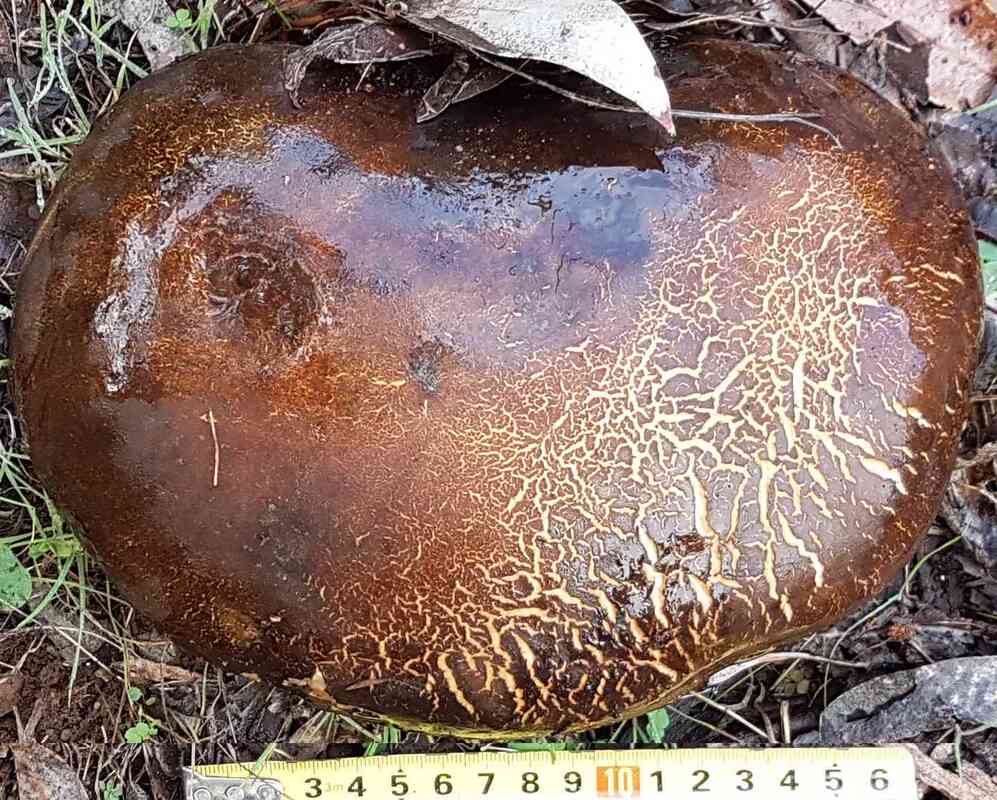
Phylloporus clelandii (Clelands Bolete) a Gilled Bolete

7/7/2020

0 Comments

 
​Greetings fellow Foxies,
 
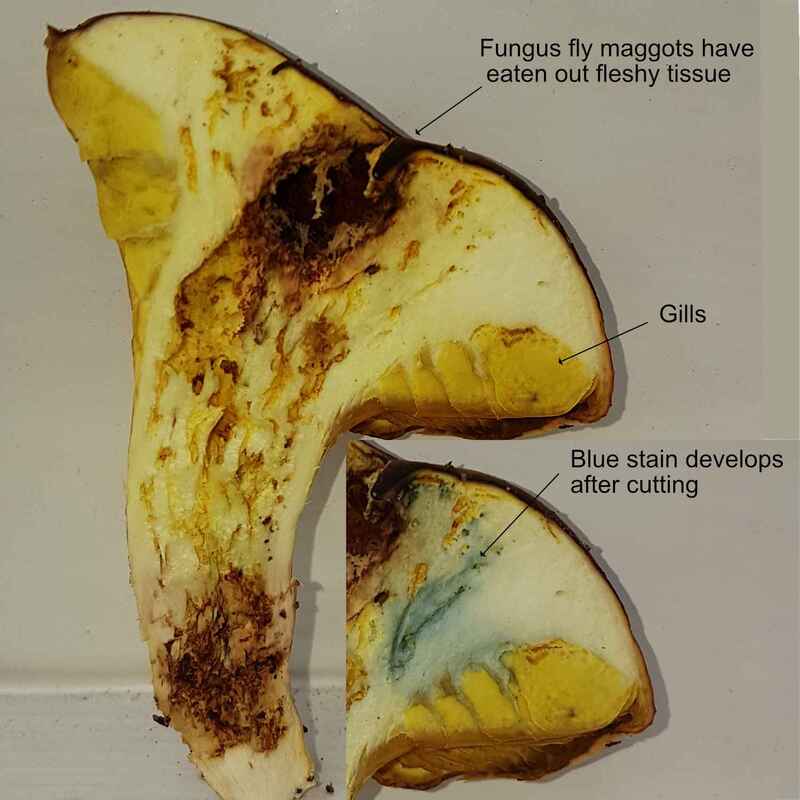
I found a big and unusual fungus today in the arboretum that looks like a gilled toadstool but is classified as a bolete. A few clues to the classification are:
  • It is quite large (20cm diameter here)
  • It is very chunky with the fleshy part of the pileus (cap) very thick compared to the gills below
  • The gills peel off the fleshy part fairly easily
  • A blue stain appears when it is cut (common with boletes) then fades.
Like all the boletes I know it is a mycorrhizal fungus.
Boletes occur regularly in the arboretum, particularly the huge Salmon Gum Bolete, and Slippery Jack.
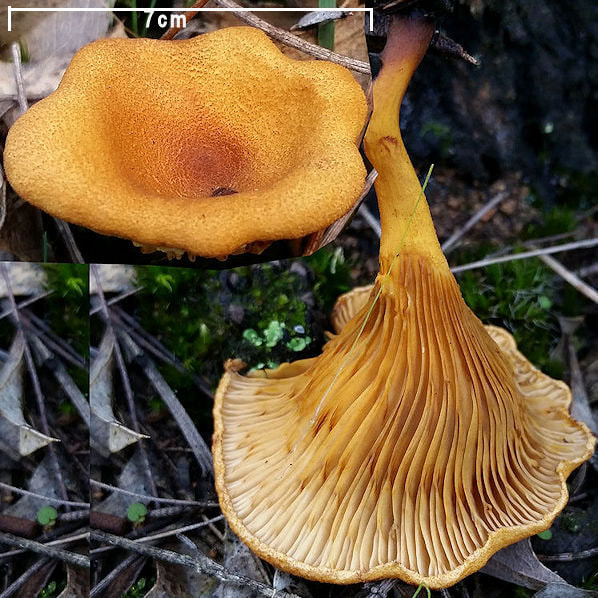
Images below compare it with a similar looking agaric Austropaxillus infundibuliformis that is commonly found in rock sheoak areas.
Picture
Austropaxillus infundibuliformis
Picture
Phylloporus clelandii
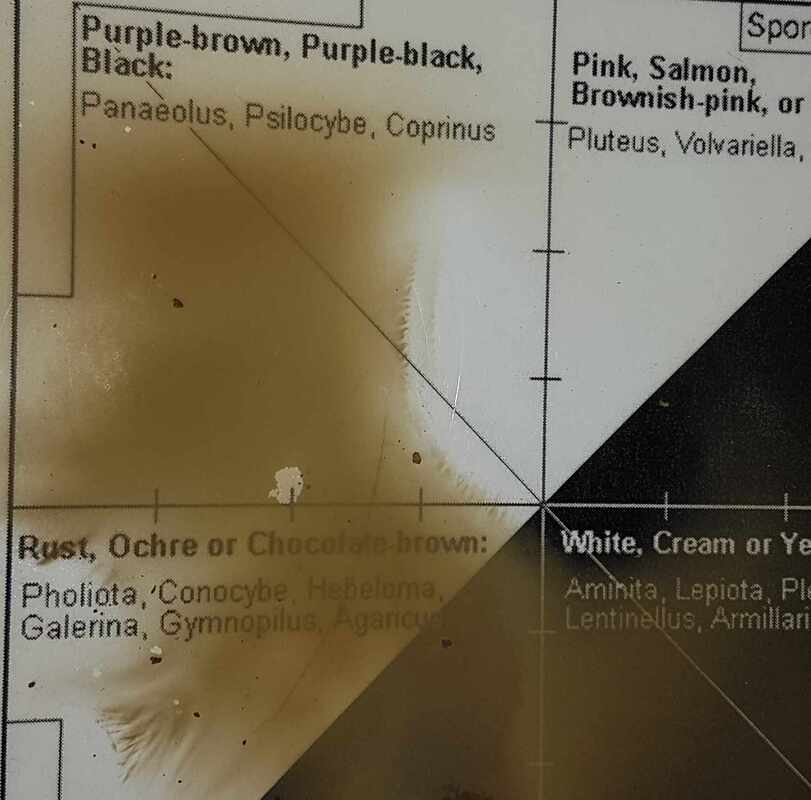
.​The spore print colour is called olive yellow.
It is amazing how quickly fungus fly maggots have eaten out the centre of boletes that look untouched on the outside.
Picture
this cacky colour is olive yellow
Picture
0 Comments
<<Previous
Forward>>

    Author

    Doug Sawkins is a friend of Foxes Lair 

    Categories

    All
    Animals Other
    Birds
    Disorders Plant Animal
    Fungi Lichens
    History
    Insects Bugs Other Arthropods
    Landscapes Soils
    Other Reserves And Places
    Reptiles
    Spiders Other Arachnids
    Tree
    Walks Other Facilities
    Wasp
    Wildflowers Orchids
    Wildflowers Other Summer Autumn
    Wildflowers Other Winter Spring
    Wildflowers Parasitic

    Archives

    September 2025
    June 2025
    May 2025
    April 2025
    February 2025
    January 2025
    December 2024
    November 2024
    May 2024
    April 2024
    December 2023
    November 2023
    September 2023
    August 2023
    July 2023
    June 2023
    May 2023
    April 2023
    March 2023
    February 2023
    January 2023
    December 2022
    October 2022
    July 2022
    June 2022
    May 2022
    April 2022
    March 2022
    January 2022
    November 2021
    October 2021
    September 2021
    August 2021
    July 2021
    June 2021
    May 2021
    April 2021
    March 2021
    February 2021
    January 2021
    December 2020
    November 2020
    October 2020
    September 2020
    August 2020
    July 2020
    June 2020
    May 2020
    April 2020
    March 2020
    February 2020
    January 2020
    November 2019
    October 2019
    July 2019
    April 2019
    March 2019
    February 2019
    January 2019
    December 2018
    November 2018
    September 2018
    July 2018
    May 2018
    April 2018
    March 2018
    February 2018
    January 2018
    December 2017
    November 2017
    October 2017
    September 2017
    July 2017
    May 2017
    April 2017
    February 2017
    January 2017
    December 2016
    November 2016
    October 2016
    September 2016
    August 2016
    July 2016
    June 2016
    May 2016
    April 2016
    March 2016
    February 2016
    January 2016
    December 2015
    November 2015
    October 2015
    September 2015
    August 2015
    July 2015
    May 2015
    April 2015
    March 2015
    February 2015
    January 2015
    September 2014
    August 2014
    April 2014
    March 2014
    February 2014
    May 2012
    March 2012
    October 2011
    September 2011
    August 2011
    April 2011

© 2015 All Rights Reserved. Doug Sawkins, Australia.