Foxes Lair
  • Home
  • About
    • About Foxes Lair
    • History
    • Landscape and Soils
  • Things To Do
    • Picnic Spots
    • Walk Trails
    • Visit the Arboretum
    • Ride Your Bicycle
    • Scavenger hunt
    • Geocaching and Orienteering
  • Things To See
    • Wildflowers
    • Trees in the Narrogin district
    • Birds
    • Vertebrates
    • Narrogin spiders scorpions ticks
    • Fungi and lichens
  • Foxes Lair seasonal guide
    • December to March
    • April - May
    • June-July
    • August
    • September
    • October
    • November
  • Other great reserves
    • Railway Dam
    • Yilliminning Rock
    • Old Mill Dam
    • Yornaning Dam
    • Contine Hill
    • Highbury Reserve
    • Boyagin Rock
    • Barna Mia
    • Toolibin Lake
    • Newman Block
    • Harrismith Nature Reserve
    • Candy Block
    • Tutanning Nature Reserve
  • 1Foxypress
    • Foxypress
    • Vanishing Farms
  • Contact

Sheet web spider

10/6/2016

0 Comments

 
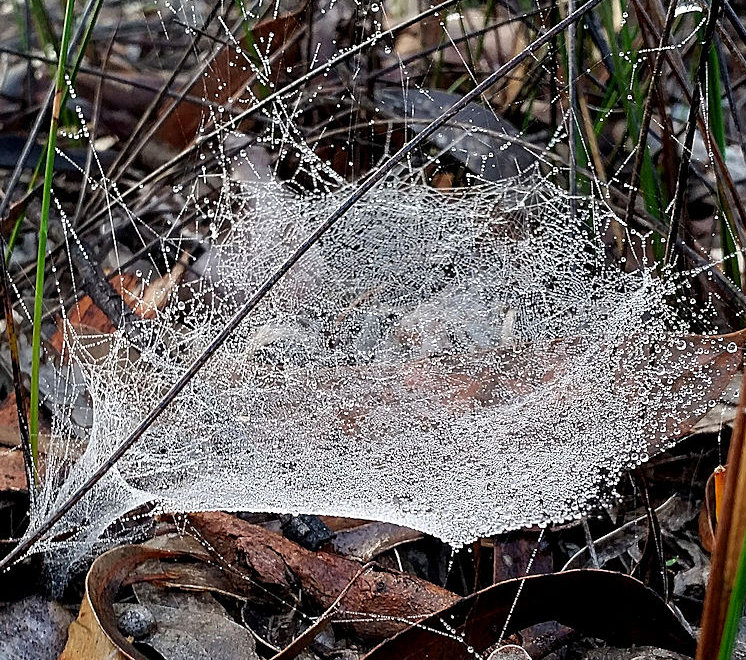
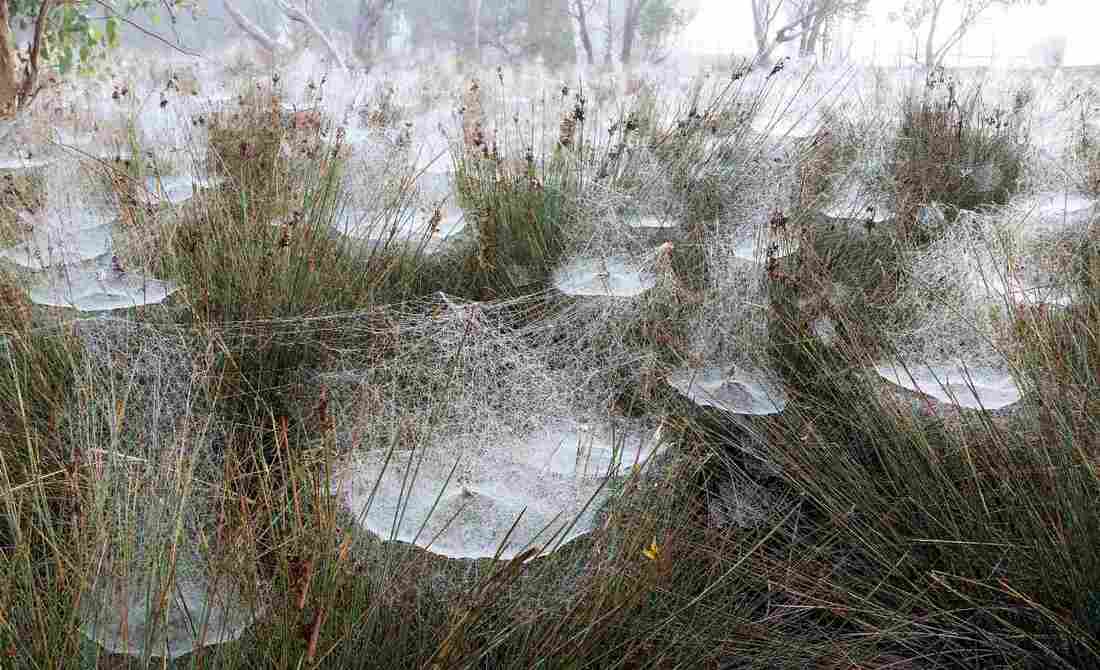
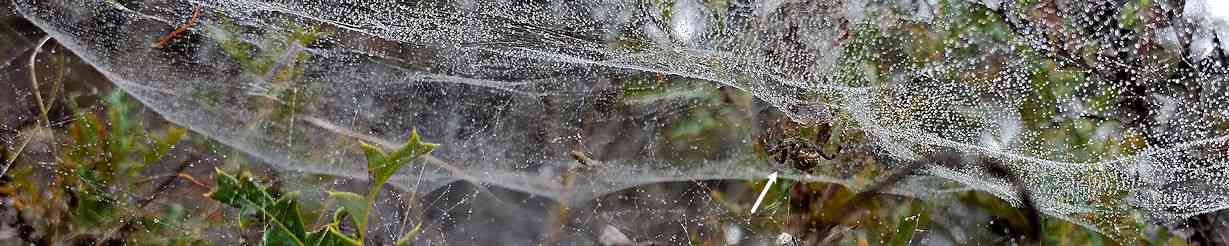
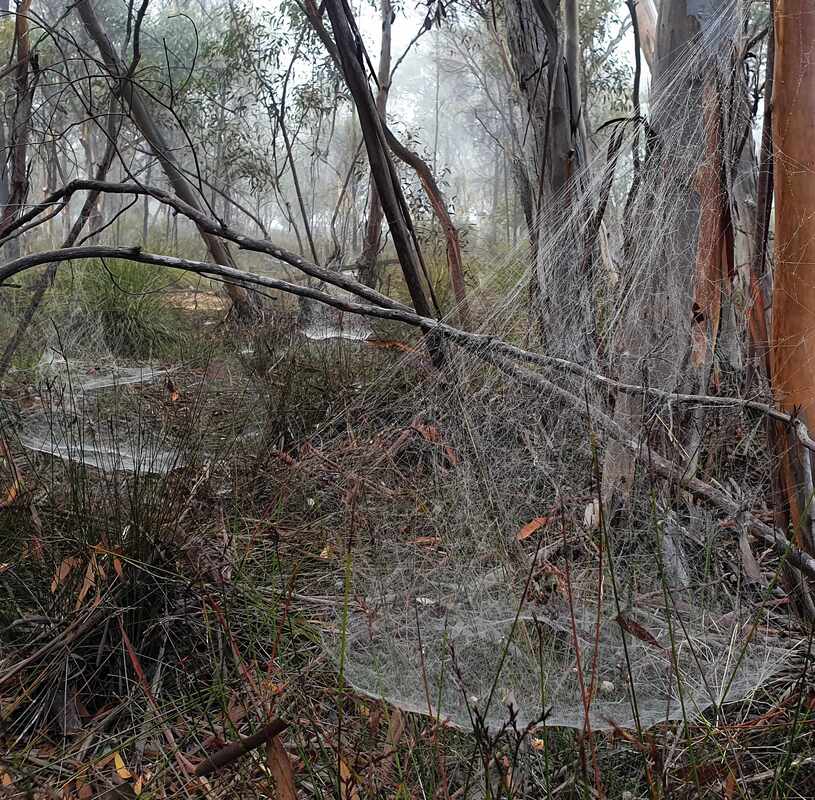
PictureFlat spreading web
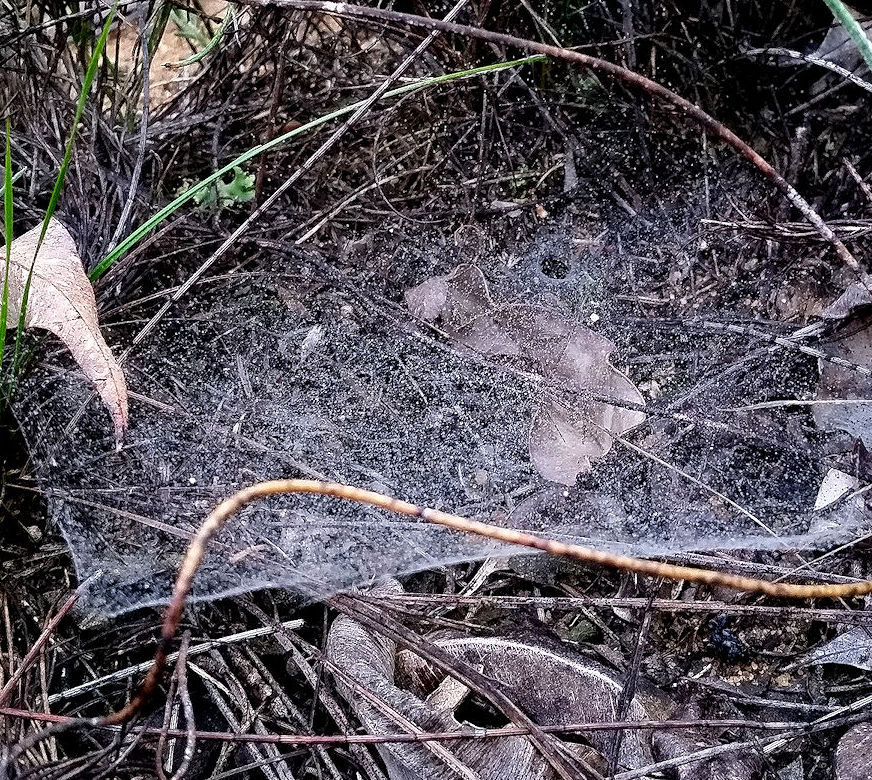
For months I was intrigued by flat cushion like webs Which spread across the ground from the base of a low plant in open rush country. At first I attempted to return to a web after the dew had gone to find that it had disappeared. I then tagged the spot and returned again to find a small hole in the ground and realised that the spider ate its web each morning to recycle the precious silk for a new evening web.
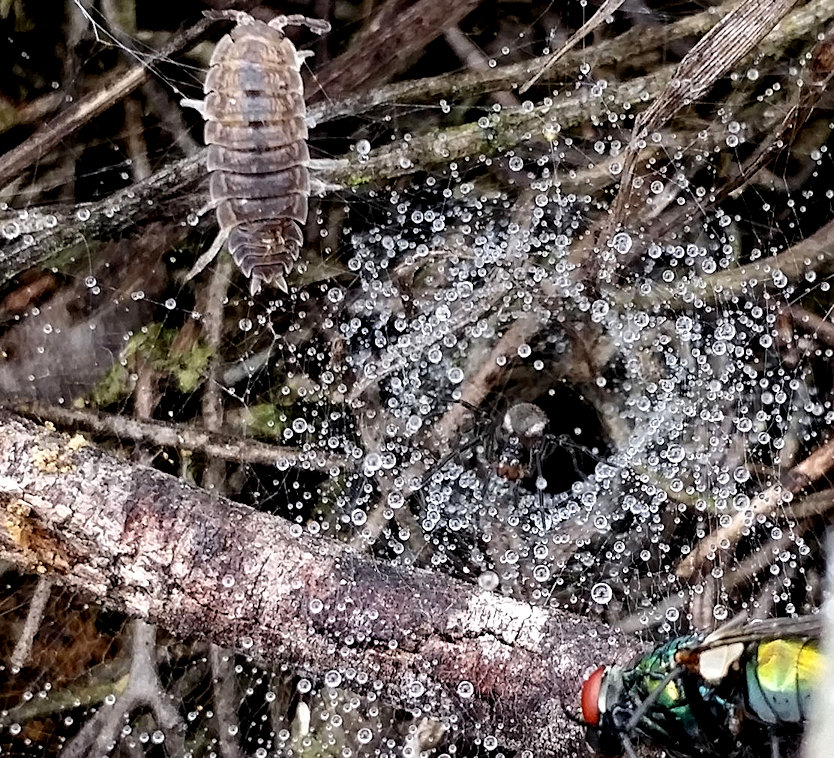
I returned again with the next dew with a supply of flies and pill bugs and almost froze my butt off dropping them into webs and hoping to see a magnificent trapdoor type spider to emerge. After much waiting, I discovered that the occupant was an exceptionally shy and squirty specimen, which hunted prey several times its size, but disappeared whenever I tried to take a photo.
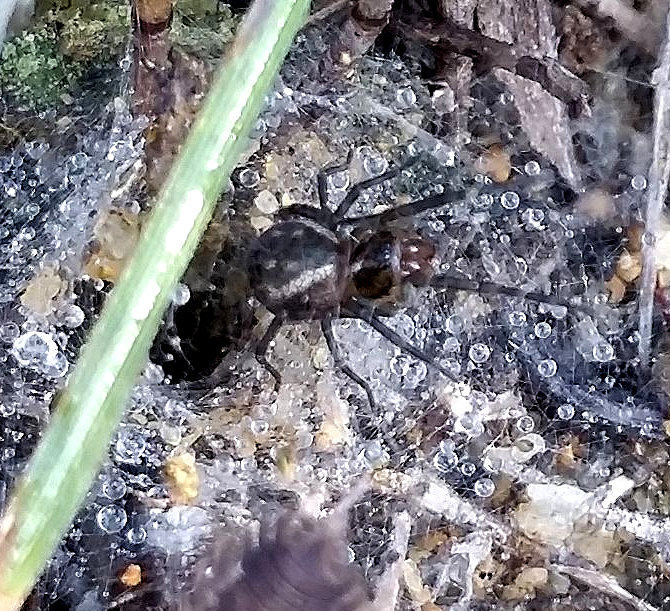
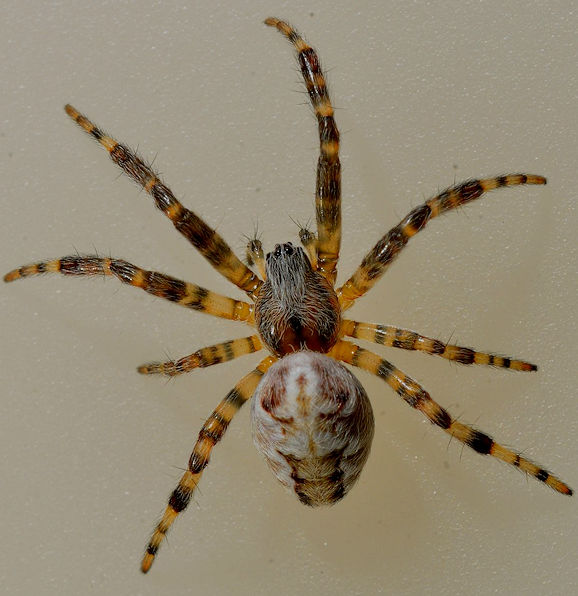
Patience prevailed and I was able to identify the spider as a  Corasoides species.
They are also known as Parachute Spiders.

Picture
Entry funnel in web
Picture
At entrance
Picture
Emerging
0 Comments

Tent spider Cryptophera hirta

23/5/2016

0 Comments

 
PictureWebs in sedges at Railway Dam

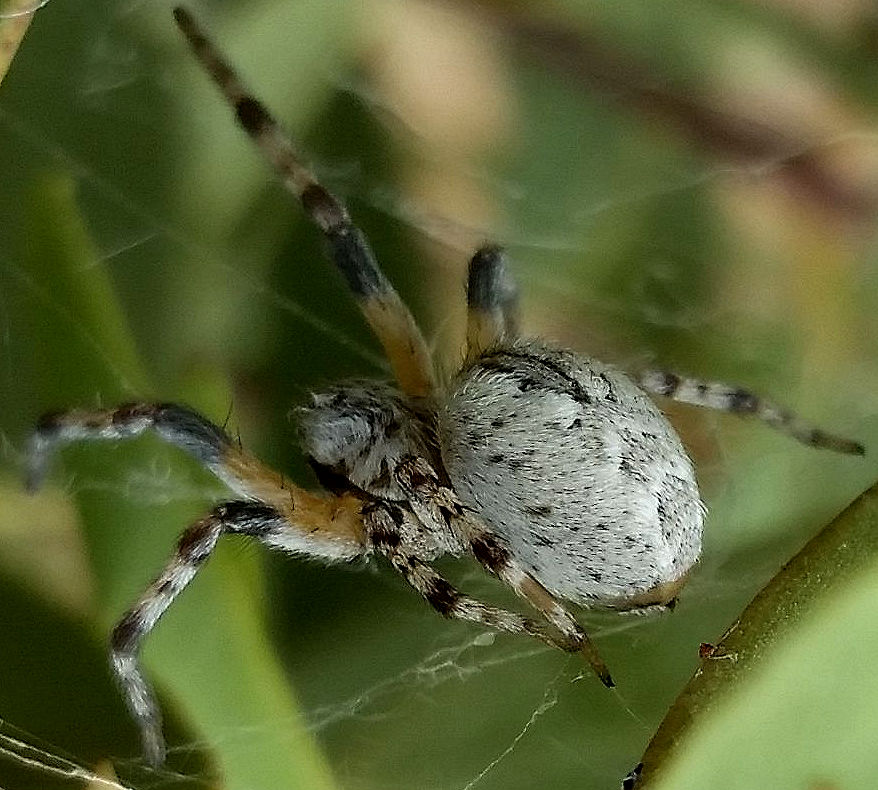
Tent web spiders belong to the orb weaver family Araneidae, but do not produce typical vertical circular orb webs. They have non sticky horizontal webs, with a cone shaped arrangement of silken threads above that contains a central silky mass that is used as a retreat, nursery and rubbish dump.
Webs are common in sedges and low  shrubs on open country, and are easily seen on dewy mornings
The spider approaches its prey from the underside of the web, and cuts out the piece of web containing its prey to feed.

Picture
Spider waiting below web base
These spiders also share their webs with tiny kleptoparasite spiders.
Picture
Typical web
Picture
Adult female
Picture
Orb weaver abdomen is much larger than the cephalothorax
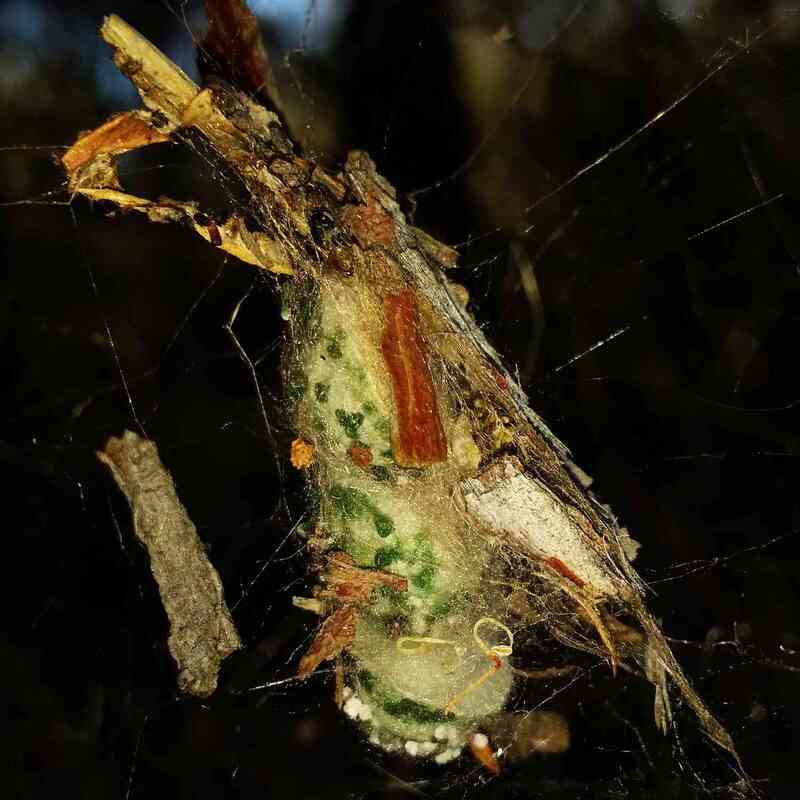
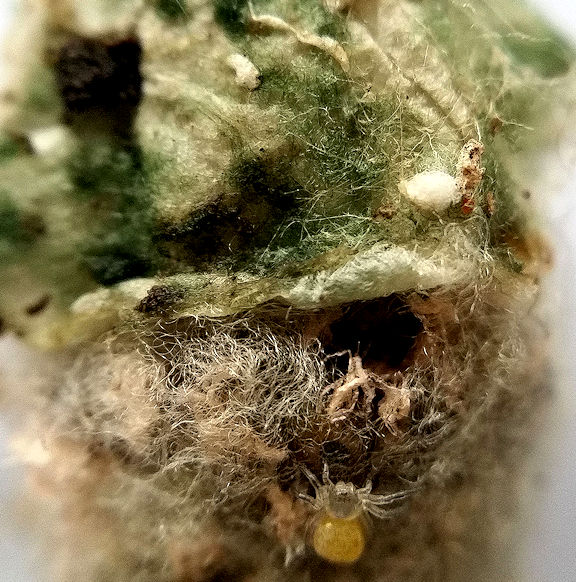
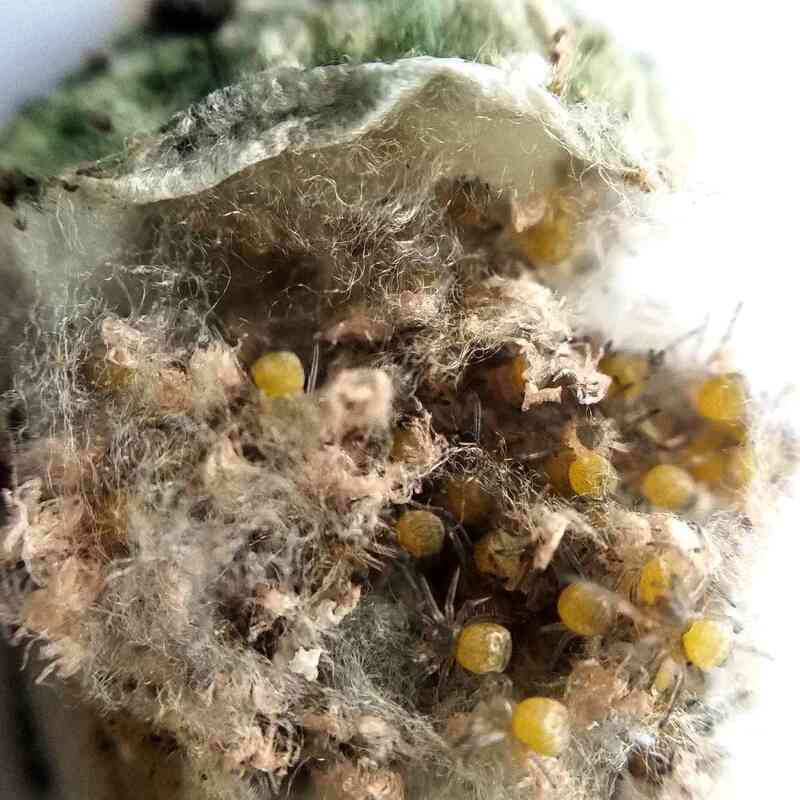
A few months ago I noticed that the central silky refuge contained bright green spots, and took one home for closer examination. It was mainly a spiderling nursery with 3 separate egg sacs under a very tough silk roof. The green spots are algal colonies (growing on meal remains?). When I slightly opened one of the egg sacs I was greeted by a mass of  shed exoskeletons and spiderlings that rushed to repair the gap.
Picture
Central retreat
Picture
Nursery entrance and protective cap
Picture
0 Comments

Huntsman spiders

25/4/2016

0 Comments

 
Greetings fellow Foxies,
These are my favourite spiders. Hairy, thrilling and relatively harmless. Huntsman spiders are in the Sparassidae family and are the large ‘hairy scary’ spiders that absolutely terrify people when they scuttle out from behind a curtain or the sun visor in the car. In reality, Australian huntsman spiders are a fascinating group with 13 genera and 94 described species. Many huntsman spiders live socially in large family groups with the mothers showing extraordinary maternal instinct. These large, hairy grey-brown spiders have flattened bodies and are found throughout Australia, preferring to live outside under the bark of trees or under rocks and logs on the ground. They are typically long-legged (females can reach sizes up to 15cm across the legs) with forward facing legs, and are known for their scuttling sideways gait. These sure-footed and agile spiders are nocturnal and sometimes seen indoors at night, hunting for insects. They have keen eyesight and are good hunters, running down and pouncing on their prey. Despite their size, they are not known to inflict a serious bite on humans.
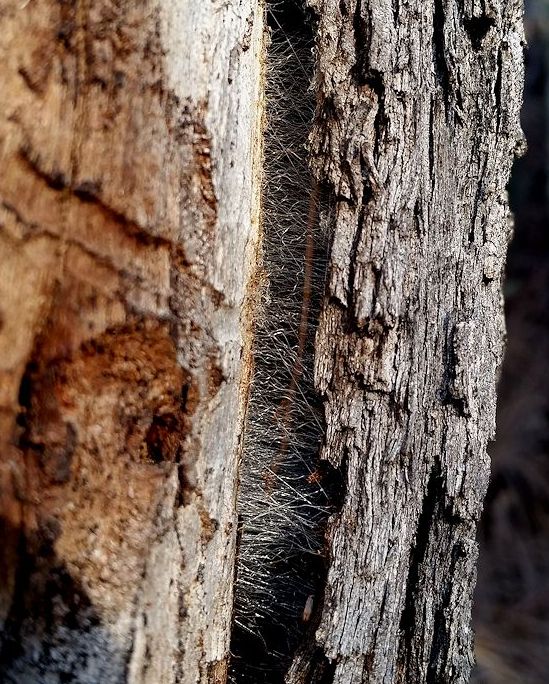
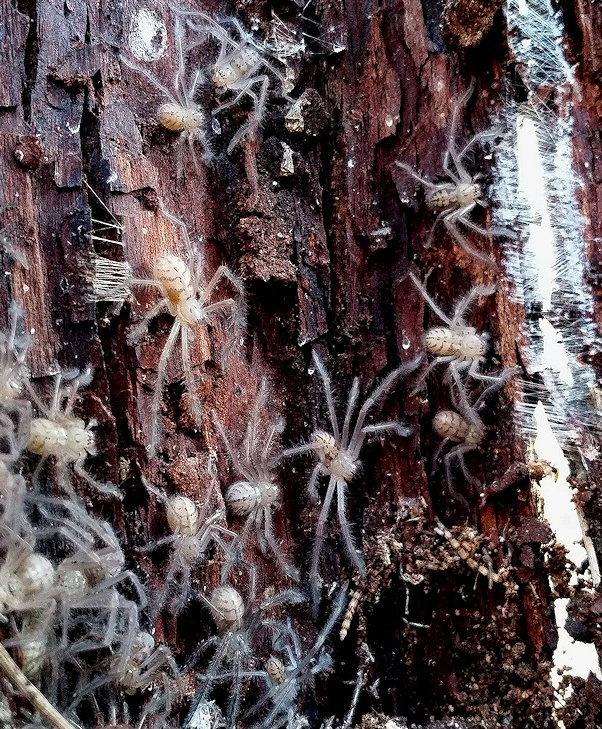
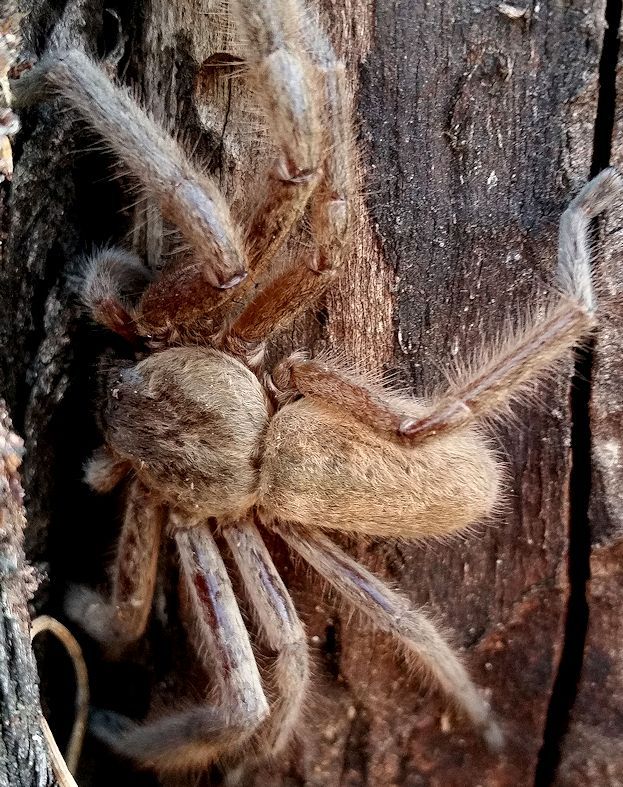
Recently I noticed a webby suture in bark of a dead sheoak, and opened it to find a mass of baby huntsman spiders, and then the mum that was huge but quite docile as I edged her into position for a photo.
Picture
webby nursery edge
Picture
spiderlings in nursery
Picture
big momma
Picture
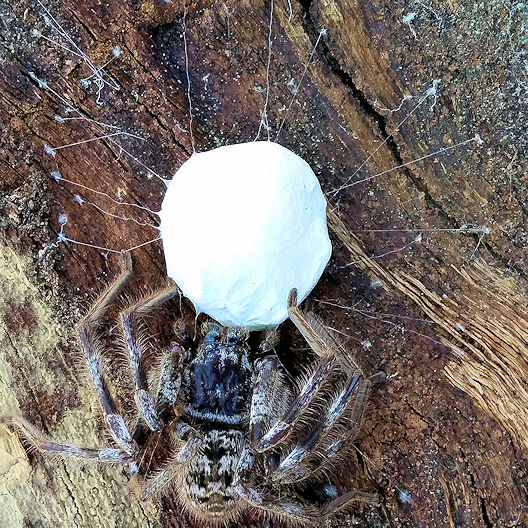
Recently I found a huntsman female guarding her egg sac on the underside of a piece of bark. She kept her ground despite the movement. Note the lovely pattern of silk attachment threads.


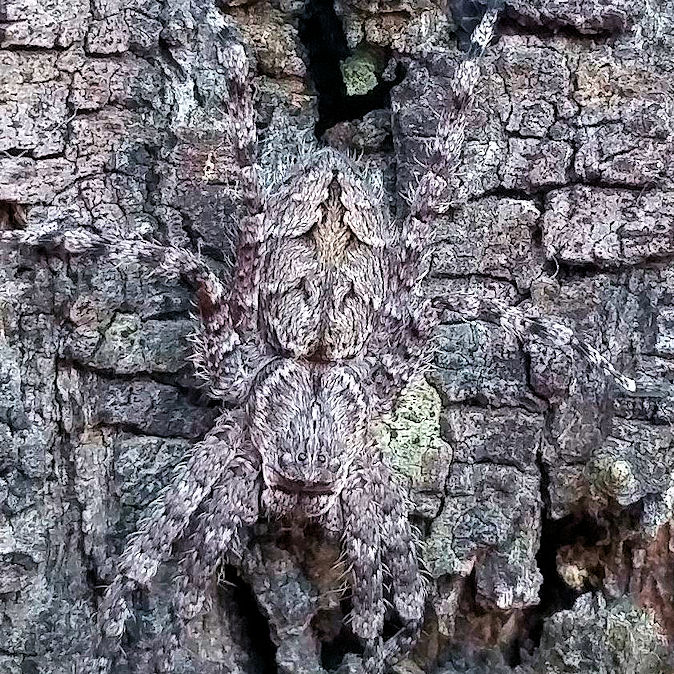
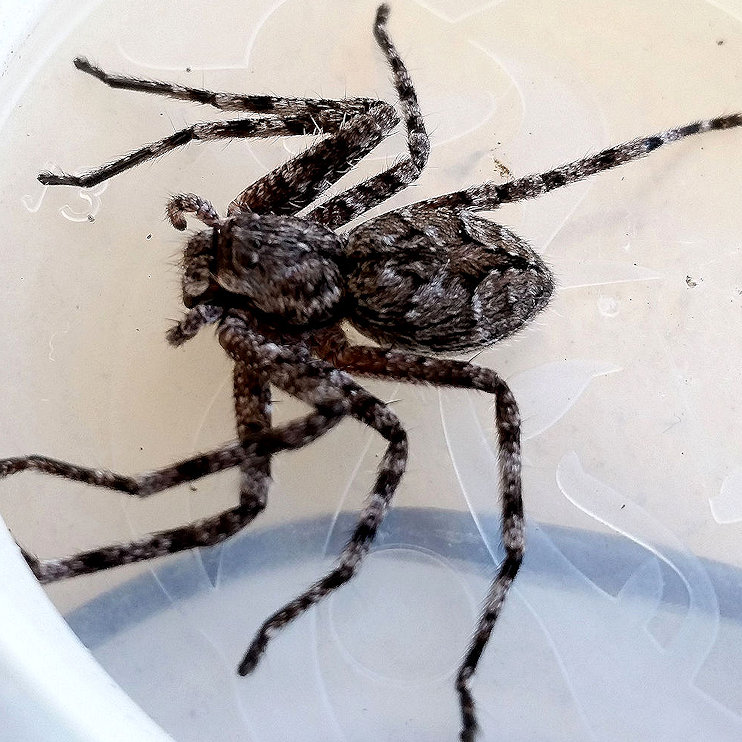
The wonderful huntsman species below that I found on a rock sheoak trunk was amazingly well camouflaged. As it was smaller, with a domed carapace, and the abdomen is not as flat, I suspect that it was a badge huntsman; Neosparassus Sp.
These have a conspicuous colour pattern un the underside of the abdomen, but I couldn't see the underside.

 These have a conspicuous colour pattern un the underside of the abdomen, but I couldn't see the underside.
Picture
Picture
Picture
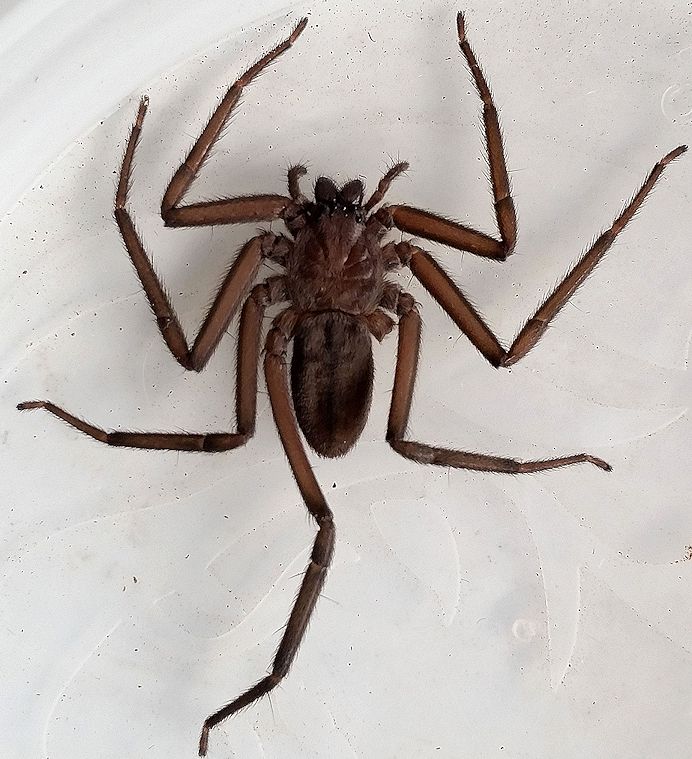
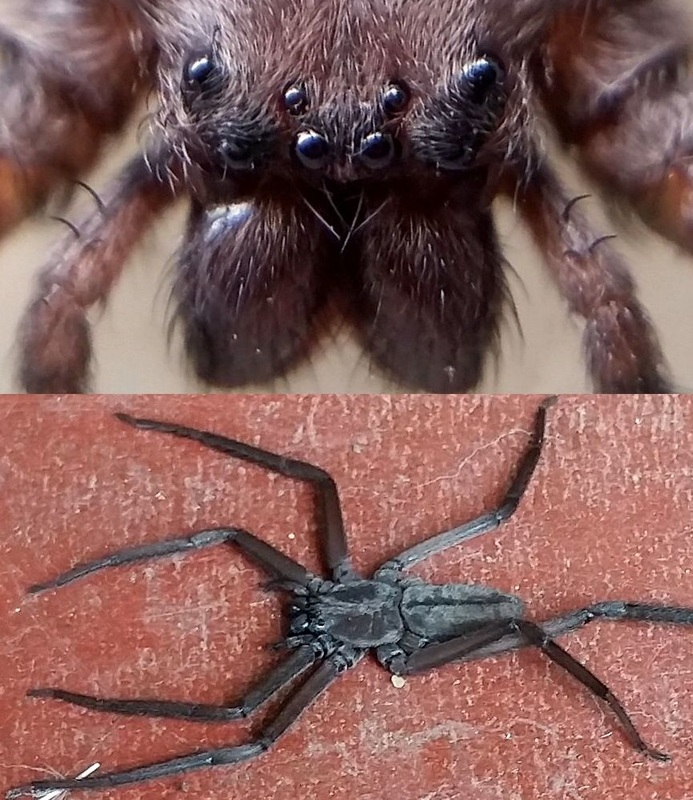
The amazing spider below (once again under bark of a dead tree) was in the Gnaphosidae family but has been shifted to the Sparassidae family.
It seems be pre-squashed with an amazingly flat body that can fit in thin cracks, is very fast, and sometimes seen in cupboards and drawers.
I
 have found that a stay in the fridge (not freezer) is efficacious in encouraging insects to stay still, but of no use with these spiders that are adapted to hunting on cold nights.
I
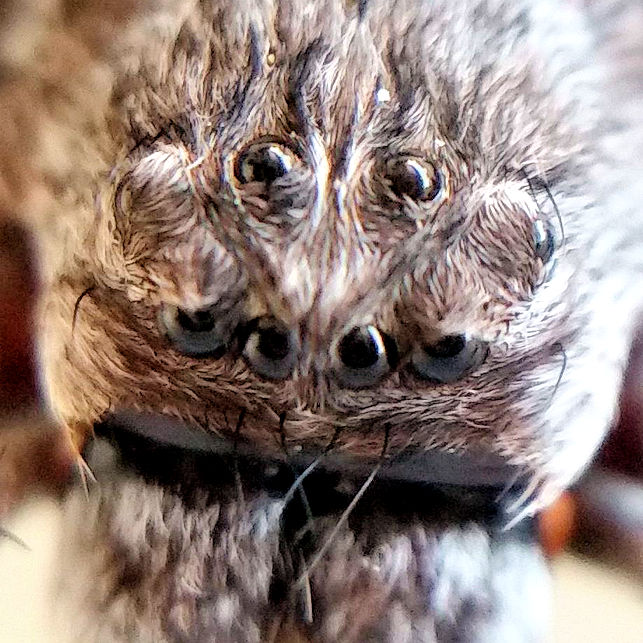
t stayed still long enough for me snap the characteristic huntsman 2 rows of largish eyes. Some eyes seem to have hairs over or in them (weird).
Picture
Picture
0 Comments

Wolf spiders

23/4/2016

0 Comments

 
Picture
Greetings fellow foxies
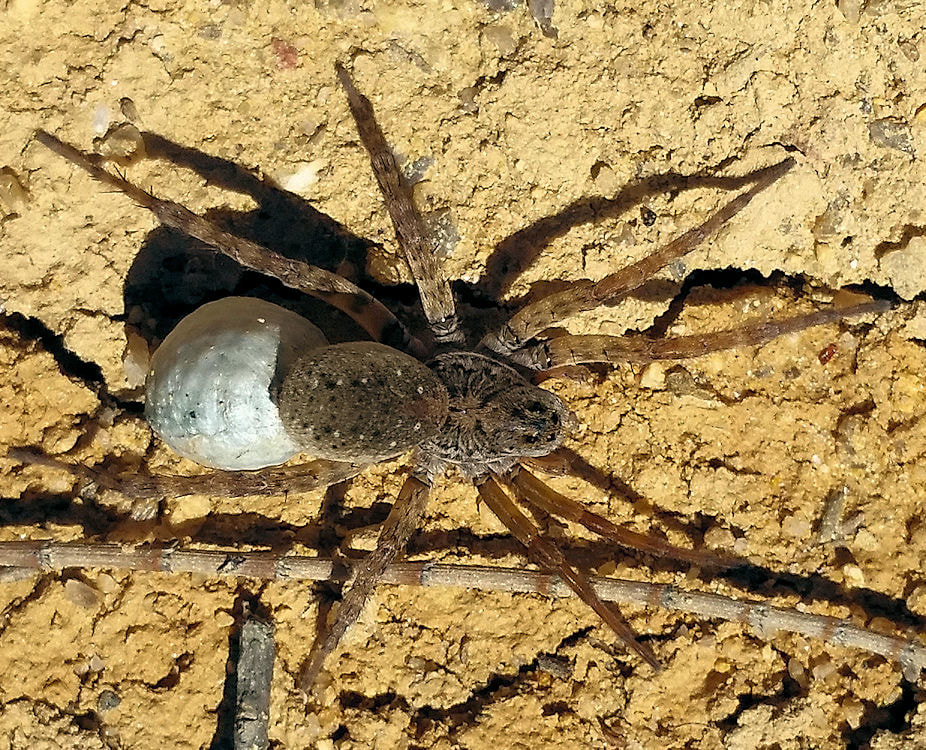
The wolf spider (genus Lycosidae) is the most commonly seen spider in the garden. They are less visible in the bush during the day, but their gleaming eyes are visible at night by torch light.
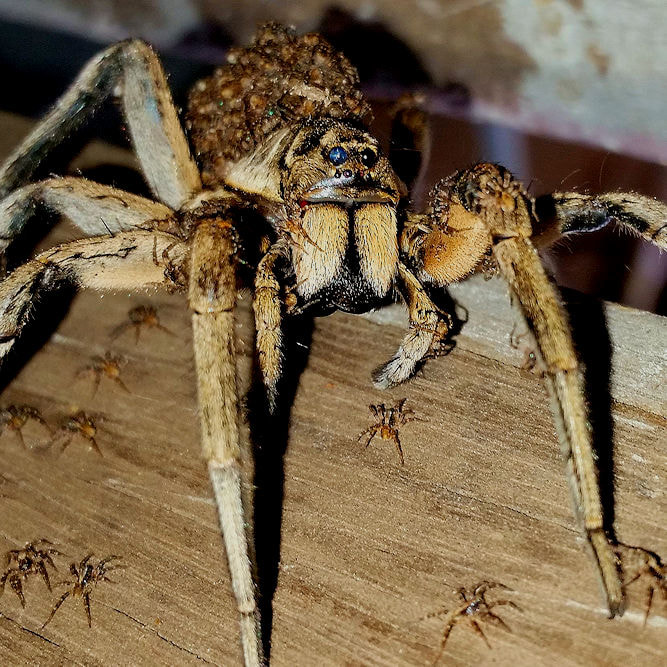
Wolf spiders are robust, agile hunters that live on the ground in leaf litter or burrows. They have eight eyes, four small ones lower down on the face, two large eyes above looking forward and two large eyes further back looking upward.

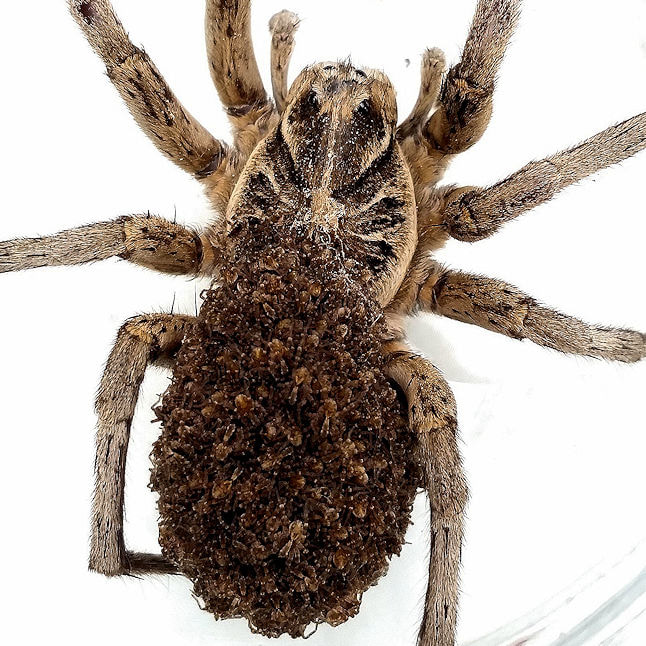
 The surface colours are mostly browns and greys with some distinctive surface markings. One pair of eyes is unusually large. Lycosids live in burrows in the ground but frequently leave their burrows to stalk ground-dwelling insects. Females sometimes drag an egg sac behind them or carry their spiderlings on their back. Spiders occupying their burrows will often be seen just inside the entrance, which is sometimes fitted with a door or a collar of leaf litter.
The huge mum below with her spiderlings were nearly sucked up by the vacuum cleaner today.

Other spiders may be mistaken for wolf spiders. To see this group click here
Picture
Female with egg mass attached to her abdomen
Picture
Picture
0 Comments

Marbled scorpion

24/3/2016

0 Comments

 
Greetings fellow Foxies,
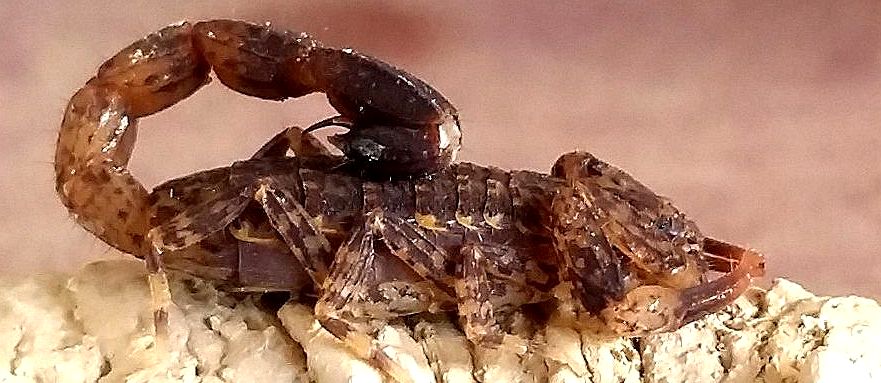
I found this little beauty (lychas marmoreus) under a slab at the Claypit. Scorpions are arachnids like spiders, and are often feared, but before you faint or scream, note that it is only 4cm long, no more dangerous than an ant or bee and hard to find.
Picture
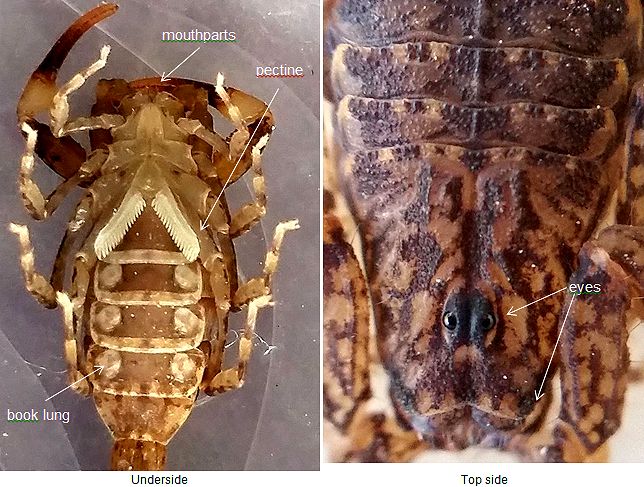
This is a nocturnal hunter that has a pectine (comb-like sensory system to detect prey) and 10 eyes (2 on top and 5 tiny ones each front side) that only detect light or dark. They also have 8 book lungs that are quite different to ours.
They grab their prey with front claws, sting it with the tail then suck it dry like a spider
A delicate and wonderful creature to be admired then left alone

Picture
0 Comments
<<Previous
Forward>>

    Author

    Doug Sawkins is a friend of Foxes Lair 

    Categories

    All
    Animals Other
    Birds
    Disorders Plant Animal
    Fungi Lichens
    History
    Insects Bugs Other Arthropods
    Landscapes Soils
    Other Reserves And Places
    Reptiles
    Spiders Other Arachnids
    Tree
    Walks Other Facilities
    Wasp
    Wildflowers Orchids
    Wildflowers Other Summer Autumn
    Wildflowers Other Winter Spring
    Wildflowers Parasitic

    Archives

    February 2026
    December 2025
    November 2025
    October 2025
    September 2025
    June 2025
    May 2025
    April 2025
    February 2025
    January 2025
    December 2024
    November 2024
    May 2024
    April 2024
    December 2023
    November 2023
    September 2023
    August 2023
    July 2023
    June 2023
    May 2023
    April 2023
    March 2023
    February 2023
    January 2023
    December 2022
    October 2022
    July 2022
    June 2022
    May 2022
    April 2022
    March 2022
    January 2022
    November 2021
    October 2021
    September 2021
    August 2021
    July 2021
    June 2021
    May 2021
    April 2021
    March 2021
    February 2021
    January 2021
    December 2020
    November 2020
    October 2020
    September 2020
    August 2020
    July 2020
    June 2020
    May 2020
    April 2020
    March 2020
    February 2020
    January 2020
    November 2019
    October 2019
    July 2019
    April 2019
    March 2019
    February 2019
    January 2019
    December 2018
    November 2018
    September 2018
    July 2018
    May 2018
    April 2018
    March 2018
    February 2018
    January 2018
    December 2017
    November 2017
    October 2017
    September 2017
    July 2017
    May 2017
    April 2017
    February 2017
    January 2017
    December 2016
    November 2016
    October 2016
    September 2016
    August 2016
    July 2016
    June 2016
    May 2016
    April 2016
    March 2016
    February 2016
    January 2016
    December 2015
    November 2015
    October 2015
    September 2015
    August 2015
    July 2015
    May 2015
    April 2015
    March 2015
    February 2015
    January 2015
    September 2014
    August 2014
    April 2014
    March 2014
    February 2014
    May 2012
    March 2012
    October 2011
    September 2011
    August 2011
    April 2011

© 2015 All Rights Reserved. Doug Sawkins, Australia.