Foxes Lair
  • Home
  • About
    • About Foxes Lair
    • History
    • Landscape and Soils
  • Things To Do
    • Picnic Spots
    • Walk Trails
    • Visit the Arboretum
    • Ride Your Bicycle
    • Scavenger hunt
    • Geocaching and Orienteering
  • Things To See
    • Wildflowers
    • Trees in the Narrogin district
    • Birds
    • Vertebrates
    • Narrogin spiders scorpions ticks
    • Fungi and lichens
  • Foxes Lair seasonal guide
    • December to March
    • April - May
    • June-July
    • August
    • September
    • October
    • November
  • Other great reserves
    • Railway Dam
    • Yilliminning Rock
    • Old Mill Dam
    • Yornaning Dam
    • Contine Hill
    • Highbury Reserve
    • Boyagin Rock
    • Barna Mia
    • Toolibin Lake
    • Newman Block
    • Harrismith Nature Reserve
    • Candy Block
    • Tutanning Nature Reserve
  • 1Foxypress
    • Foxypress
    • Vanishing Farms
  • Contact

Wandoo Trunk Pits

6/11/2018

0 Comments

 
​Greetings Fellow Foxies,
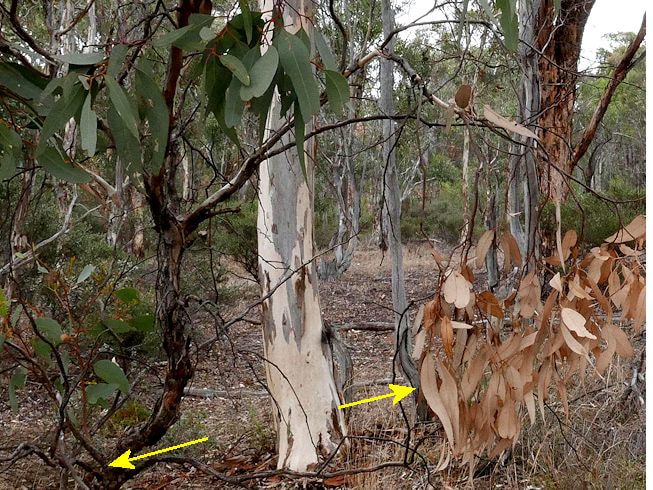
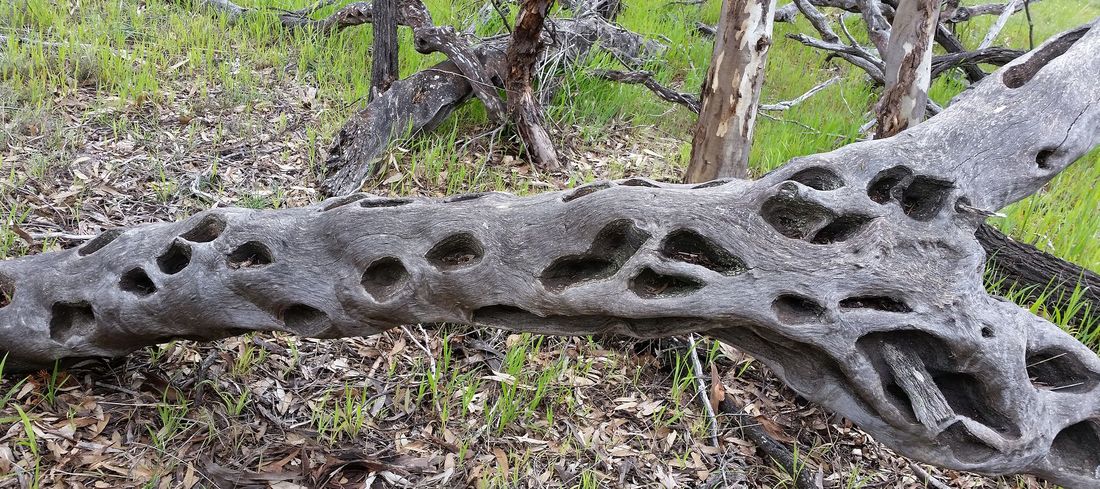
A year ago I spotted a wandoo in Candy Reserve that had large strange pits in its trunk and didn’t think too much about it until I found another example in another reserve. In this case a large branch had fallen an affected tree many years ago, leaving beautifully patterned wood after the bark had fallen off.
Picture
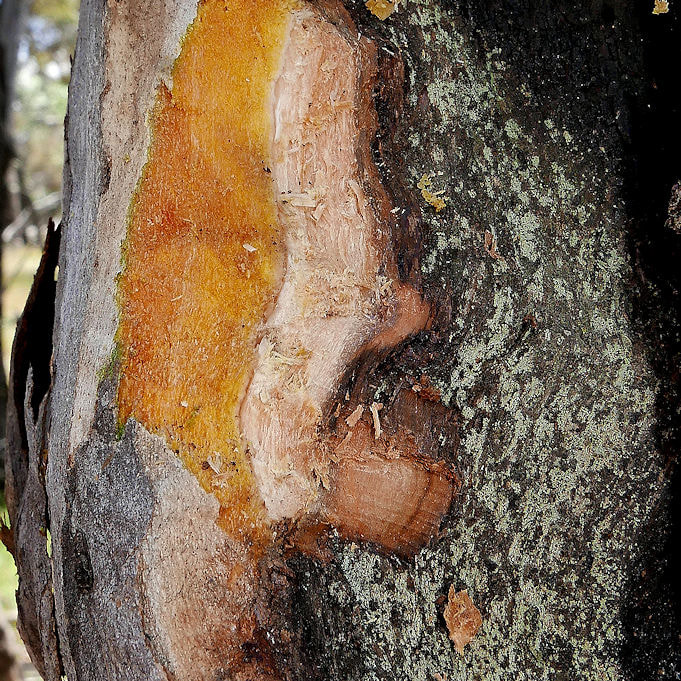
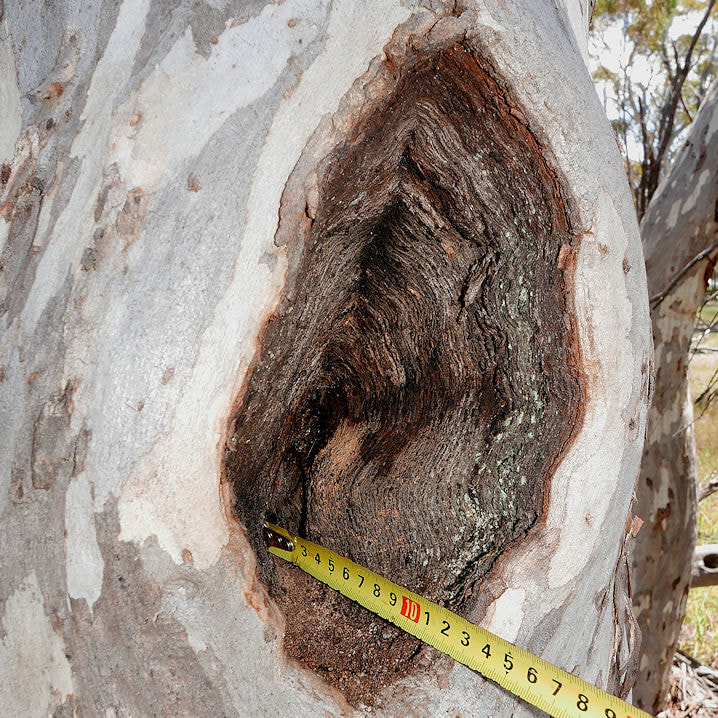
​Pits on the living tree are like inverted oval cones, and the damage extends up the tree to the youngest branches.

Picture
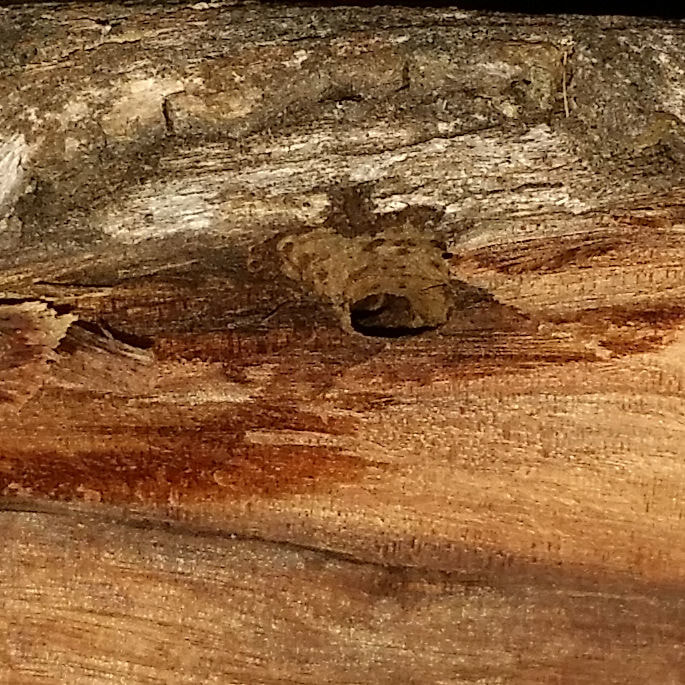
​On close examination I could see the tree’s annual growth rings on the sides and a small hole in the heartwood at the base. The sapwood was clean and clear of fungi indicating that an insect was the primary cause.
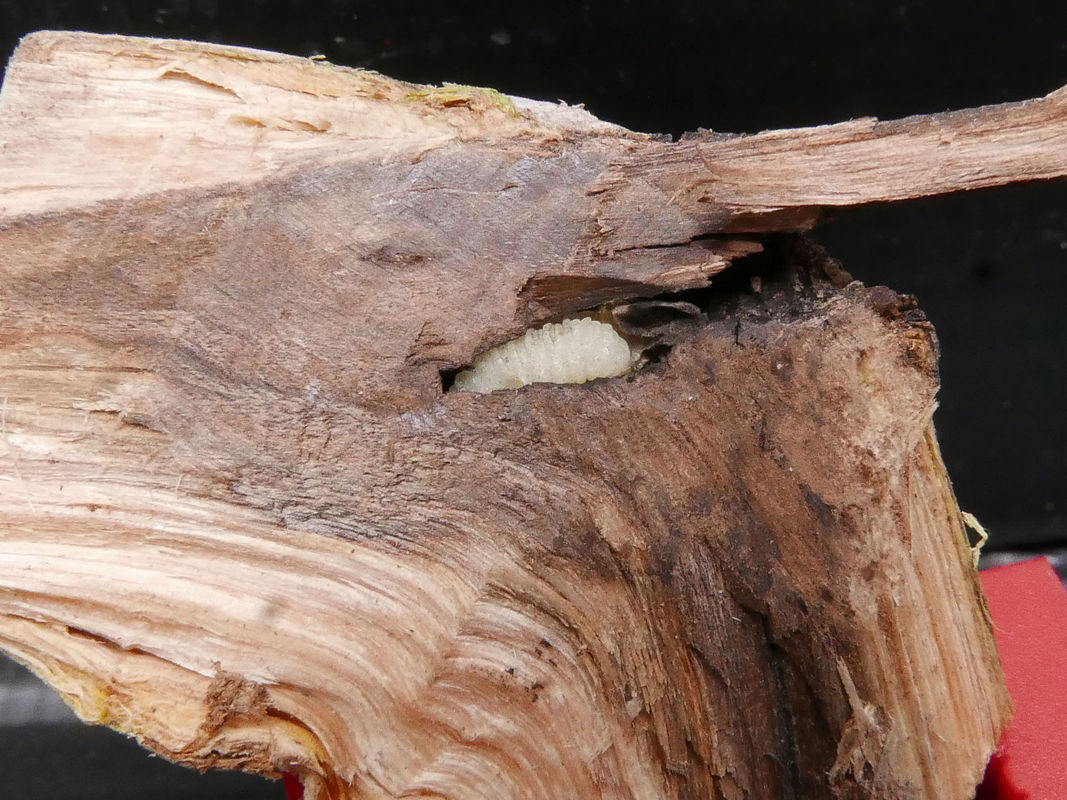
When I cut a section through a pit I found a small (about 3mm diameter) burrow leading from the base into a more extensive gallery system in the middle of the stem.
Picture
Typical pit on trunk
Picture
Hole at base of pit
Picture
Cut atpit edge shows healthy sapwood
Enquiries have failed to produce an identification
There are similarities to wandoo crown decline as fungal canker was present in the heartwood but there are clear differences.
  • This is very rare and hasn’t spread to any adjoining trees.
  • The sapwood is healthy.
  • I could see a ring of chew marks on the outermost sapwood layer surrounding pit which suggests that some insect comes out of the basal burrow to feed regularly.
  • There must be successive generations of the insect, as indicated by the growth rings in the pits and the continuation of damage on the youngest branches
 Apart from cutting down a 200 year old tree or camping out by it and do nightly inspections, I can only ask if any of my readers can help solve this intriguing mystery
For more images click HERE
0 Comments

Wandoo Crown Decline

18/5/2018

0 Comments

 
PictureEpicormic shoot (left), dead shoot (right)
Greetings fellow Foxies,
 Have you noticed large numbers of dead leaves on local wandoos, particularly where a whole twig or small branch has died?
This condition where wandoos die back and leave dead branches projecting though the leaf canopy is called Wandoo Crown Decline. This is a cyclical problem that caused huge damage in the 1990’s when the Wandoo Recovery Group was formed.

Research showed that boring insects and associated pathogenic fungi, are the principal agents disrupting stem nutrient and water conducting channels. Symptoms are worse in dry autumns, but underlying factors driving the long term cycle are unresolved.
This autumn I couldn’t find any pattern of areas affected. There are a couple of monitoring sites in Foxes Lair that don’t appear to have a lot of very recent damage. Affected trees in Foxes Lair seem to be randomly distributed, but badly affected ones have obviously been repeatedly attacked.
Being a loyal citizen scientist, I nipped out and sampled a couple of branches from a badly affected tree for close analysis.
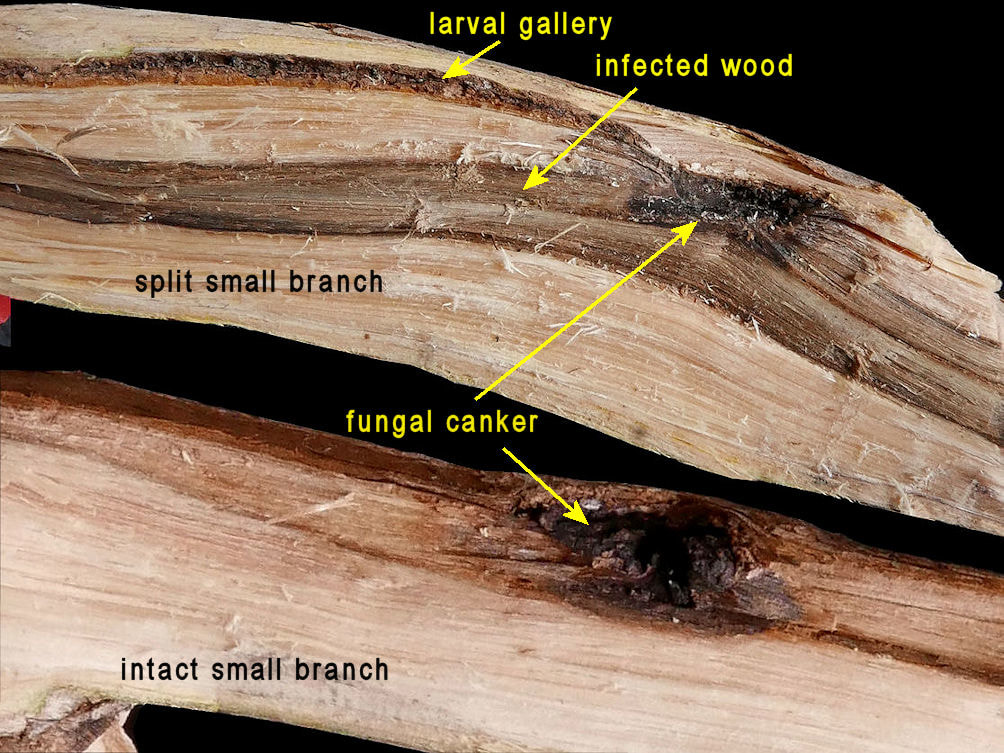
My first observation was that the branches were distorted and gangly with lots of dead lower shoots, stems with dark cankers (sunken dead lesions) and resprouting shoots. Clearly not a single year problem.
Looking closely, it was amazing to see so many things attacking the tree. I found stem and leaf galls, and leaf damage from a range of chewing insects, but the real cause of branch death is inside the stems.

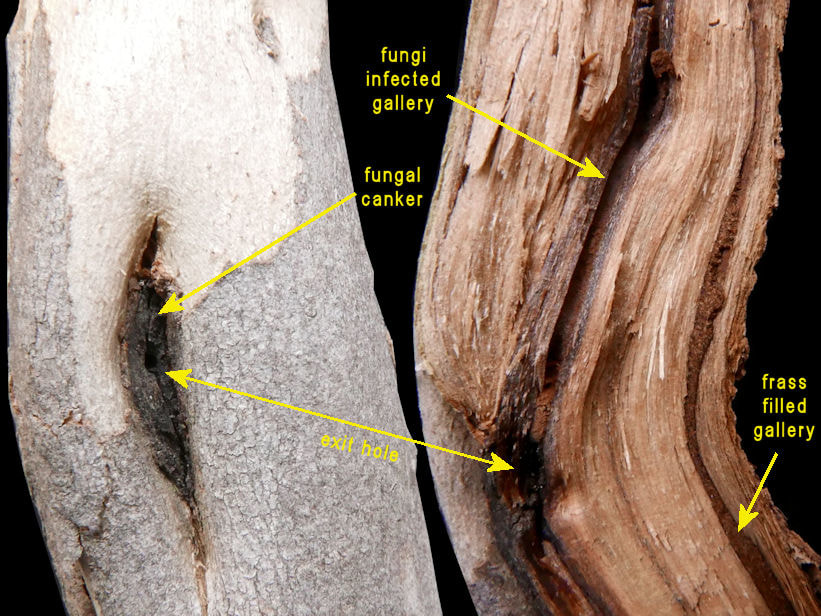
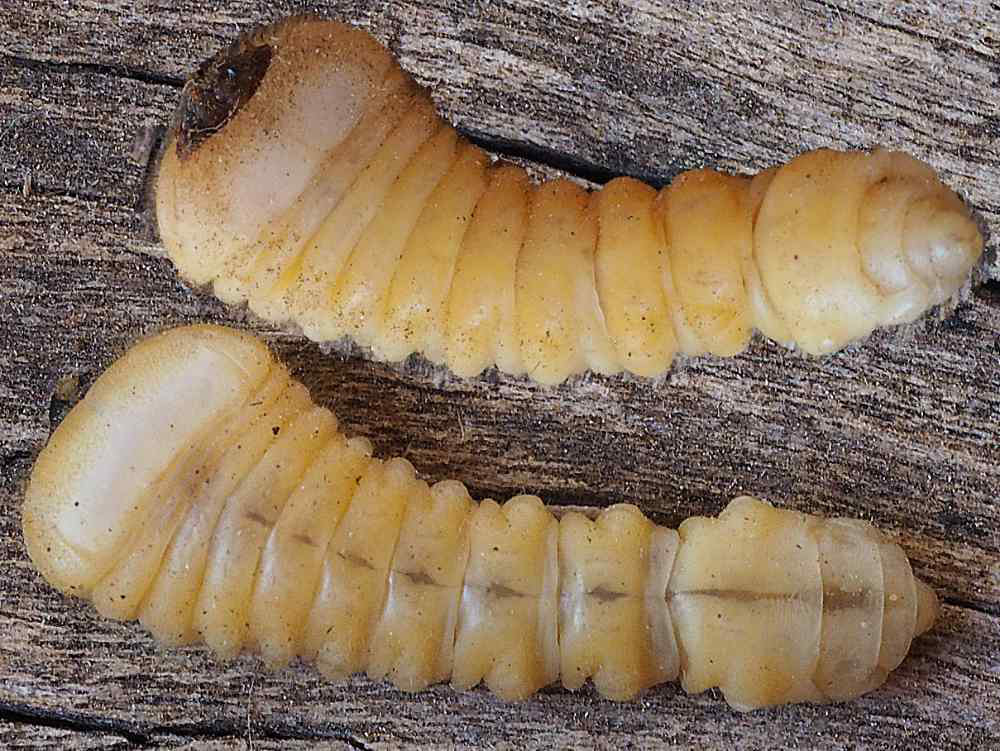
The insect involved is a jewel beetle Cisseis fascigera). Beetles emerge from November to February, mate and lay eggs on stems. The larva that looks like a witchetty grub chews tissue and wood inside and along the stems (longitudinal galleries), before pupating in its gallery and emerging a year later.
Unfortunately the insect introduces spores of rot fungi that spread through the stem.
Picture
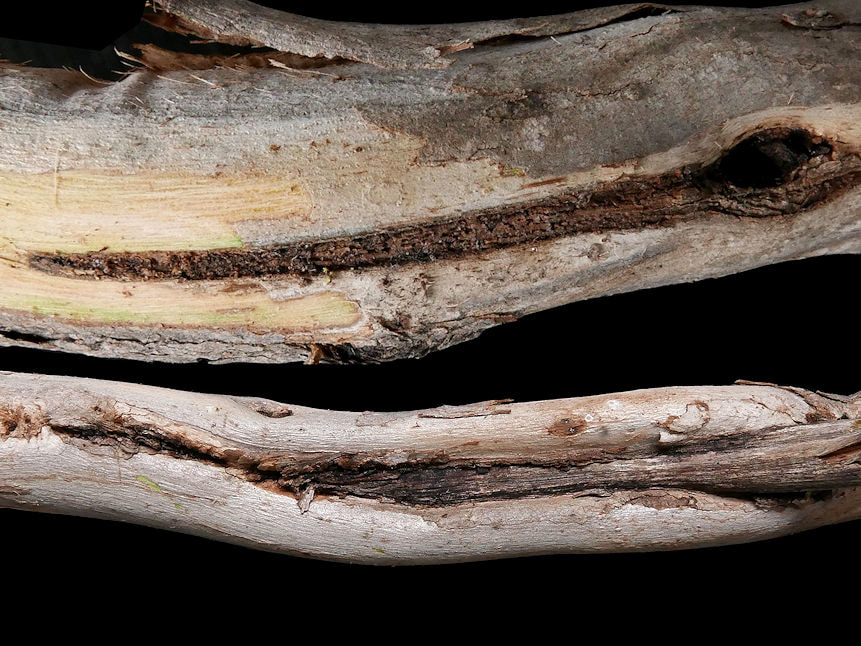
Intact branch showing exterior hole
Picture
split branch showing the larva in its gallery
Picture
Intact and split stem (frass is entomologist name for poo)
Picture
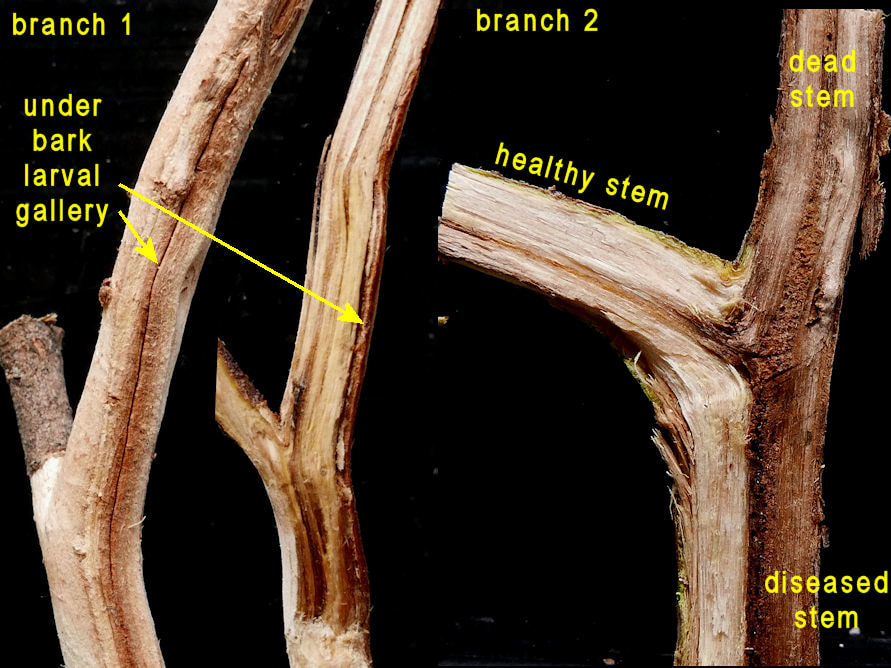
I split the sections of stem down each branch and was shocked by the extent of fungal invasion that is easily seen as dark stained tissue. On these branches fungus is doing more damage than the insects.
Tissue is often infected with few external symptoms
 The branch1 stem on the far left shows fungal staining only around a gallery between the bark and the wood. In the split section you can see that the fungus is more extensive in the wood.
 In branch 2 infection has spread down the stem from a dead part.
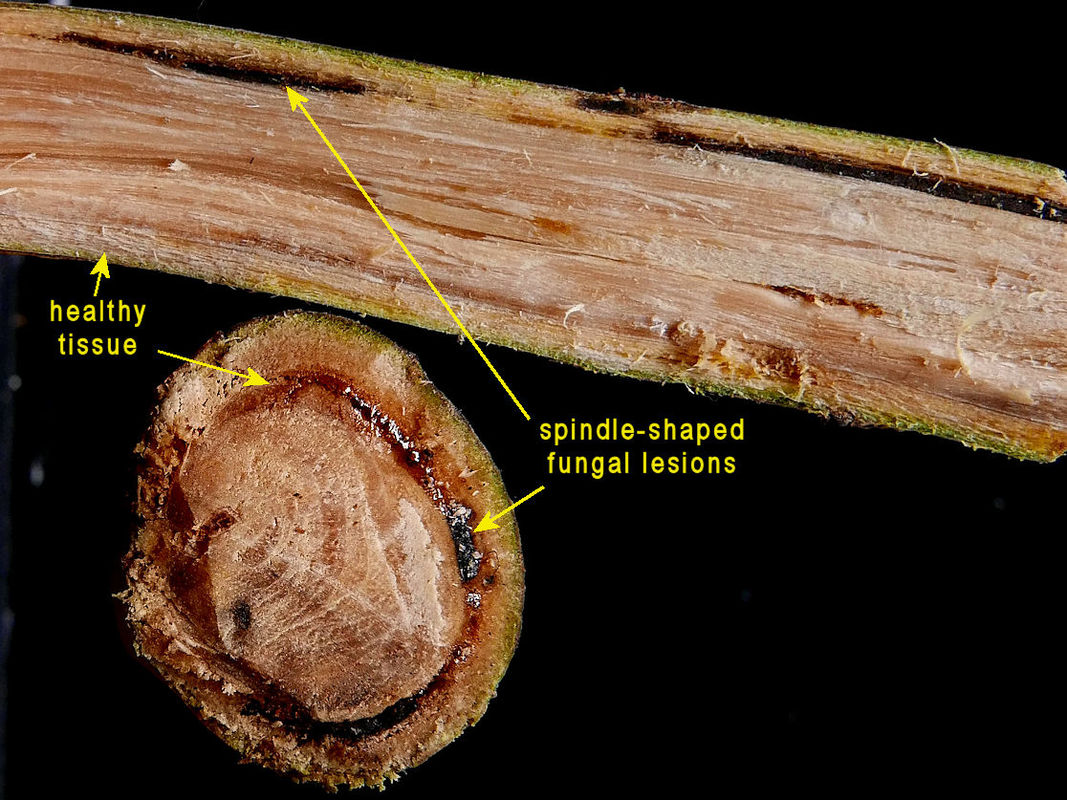
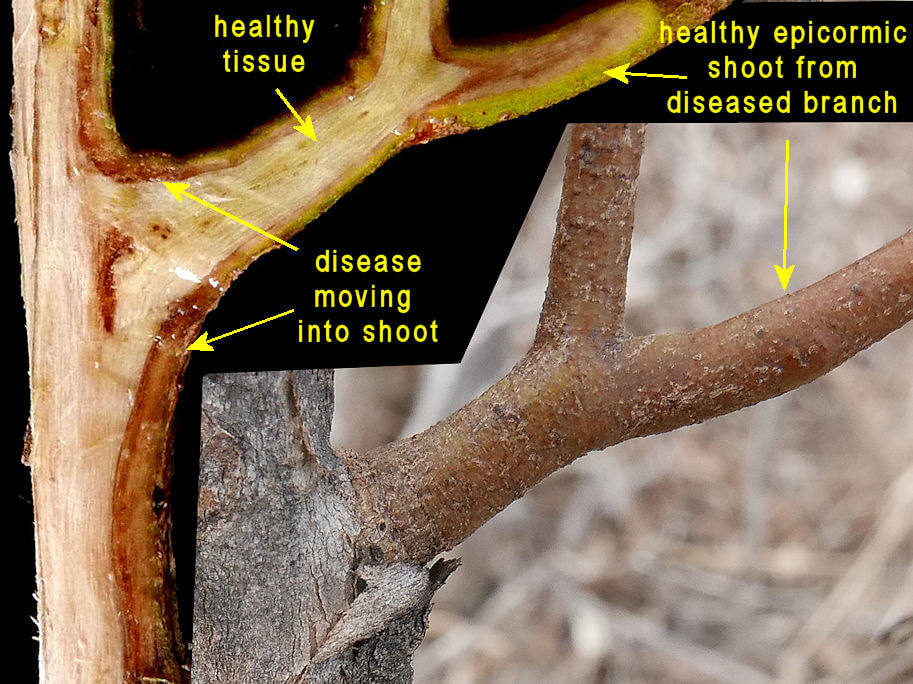
The following images shows how the fungus symptoms progress with age
Picture
No external symptoms. Longitudinal spindle shaped lesions in the sapwood and cambium layer
Picture
Healthy epicormic shoot on a diseased stem being invaded by fungus
PictureSunken fungal canker lesion on stem surface

Picture
External disease that has spread from a canker then exposed internal dead wood.
Picture
Other borers like this large longicorn beetle larva could also be involved

​References


Wandoo Recovery Group report


0 Comments

Beautiful Australian Bark

13/12/2017

0 Comments

 
Greetings fellow Foxies,
No, this is not an exposition on shock jocks or pompous politicians.
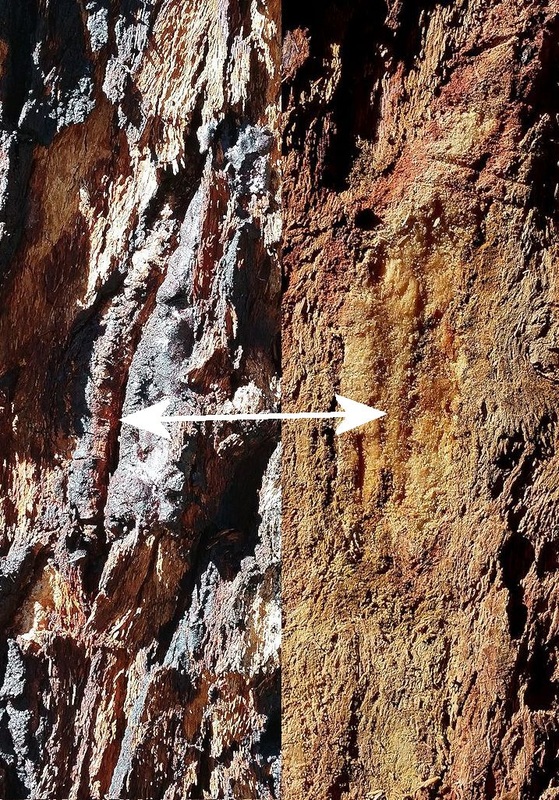
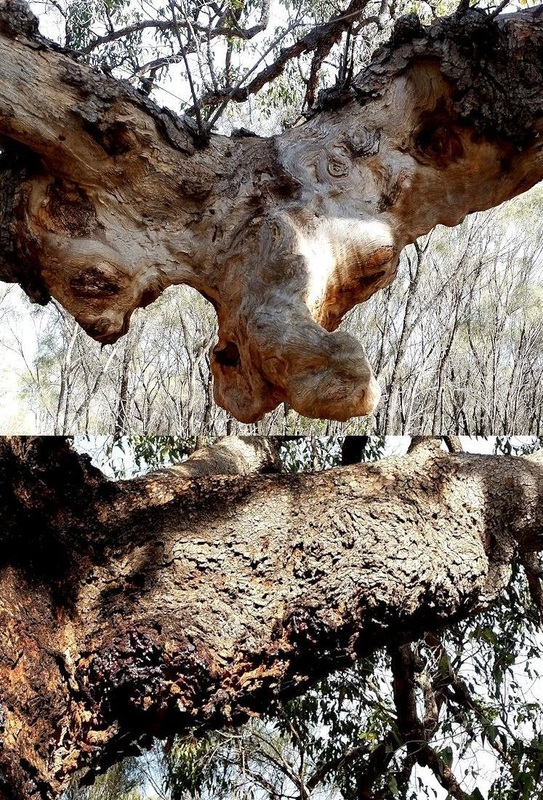
Every year I marvel at the lovely colours and textures of  our eucalypts when they are shedding old bark. This, in addition to their unique flowers make them amazing, and underappreciated by most Australians.
The arboretum is a good place to see the range of bark types, particularly in the summer/autumn. This Foxypress shows the progression of bark regrowth in brown mallet, and I hope you enjoy the sample of other trees below.
0 Comments

Sheoaks and Tammars

26/6/2016

0 Comments

 
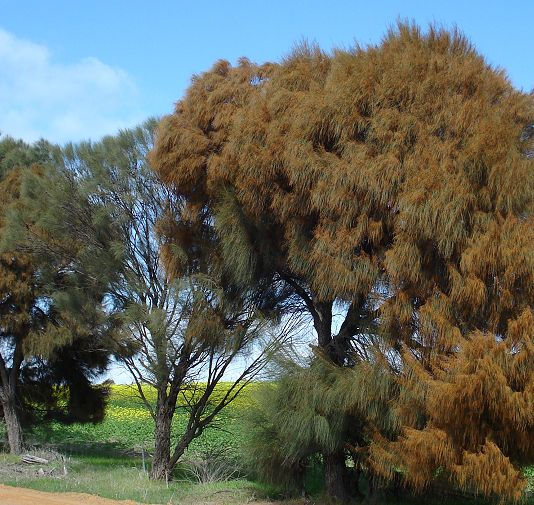
​Belonging to the Casuarinaceae family, these plants are instantly recognised by their needle-like foliage and the wonderful sighing sound of the wind passing through them. Around Narrogin we tend to notice the trees most: Rock Sheoak; Allocasuarina huegeliana on well drained soils, and Salt Sheoak; Casuarina obesa in semi saline lakes and waterways. A bed of sheoak needles with a whispering wind overhead is a wonderful place for courting couples (after they have repelled the ants, ticks and mosquitos).
The common name Sheoak was first given to Rock Sheoak by early European settlers who thought the wood resembeld that of the European oak but was inferior, and being sexists called it she-oak. 
The genus name Casuarina is derived from the Malay word for cassowary, due to similarities of layered feathers/ needles. If you look closely at a needle you will notice rings of scales, which are the true leaves. The green needles are in fact photosynthesising stems. Casuarinas and Allocasuarinas have subtle differences in cone structure and needle orientation. Allocasuarina means opposite to Casuarina, referring to needle orientation.
Tammas or tammars, are shrubs, which become dominant on gravelly soils generally east of a line through Yealering and Harrismith.
 
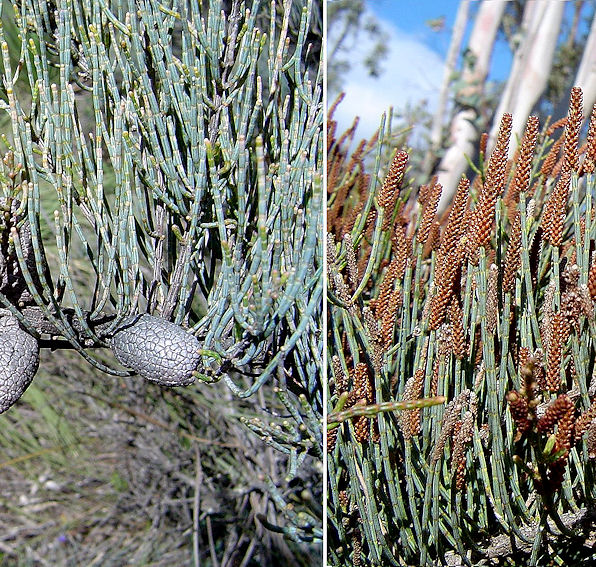
Casuarinaceae have male and female plants (dioecious), but differ from the animal world in that the females have the nuts (cones). 
Male plants produce pollen that is blown by wind to female flowers. Like most wind pollinated species, huge amounts of pollen are produced, and you will notice now green female and orange pollen-bearing males everywhere.
​In our bush the vast majority of plants in the bush have root modifications (cluster or proteoid roots) and alliances with fungi (mycorrhizas), which enhance their ability to access nutrients and water and to build a 'niche' to give them an advantage over others. 
Plants on poor sand or gravel soils often have cluster roots that are also instrumental in forming gravels.
Eucalypts and other plants on more fertile soils mainly use mycorrhizas.
Casuarinaceae are very adaptable. They have cluster roots, ectomycorrhizas (where the fungus does not invade the plant root), AND nodules where bacteria produce nitrogen like legumes.
 
Allocasuarina huegeliana was named Rock Sheoak because it mostly occurred around granite rock outcrops. Competition by other plants and grazing of seedlings by by native marsupials restricted their spread. Small marsupial extinction has allowed the sheoaks to spread, and thick needle  cover  suppresses other plants.   Since European settlement they have spread greatly on roadsides and other well drained areas of bush. I frequently see roads with remnant wandoo vegetation on one side of a road and rock sheoak thicket on the disturbed other side. 
Picture
Rock Sheoak female flower and cone
Picture
Male Rock Sheoak loaded with pollen
Picture
Mixed male and female trees
narrogin_sheoaks_tammas.pdf
File Size: 270 kb
File Type: pdf
Download File

Picture
Female (left) and male dwarf sheoak
Picture
Wheatbelt Tammar Allocasuarina campestris
There are lots of tammas (all Allocasuarinas), particularly on kwongan soils, which are often overlooked because they don’t have conventional flowers. Foxes Lair has Dwarf Sheoak; Allocasuarina humilis on gravels, and Allocasuarina microstachyia that only occurs on the south side of the Claypit.
My favourite is the compass bush; Allocasuarina pinaster, which occurs in the Lake Grace area on grey sandy gravels. The nearest Location is Holden Road near Tarin Rock. 
Picture
Compass bush plant
Picture
Compass bush fruit
0 Comments

Marri decline

9/3/2016

0 Comments

 
Greetings fellow Foxies,
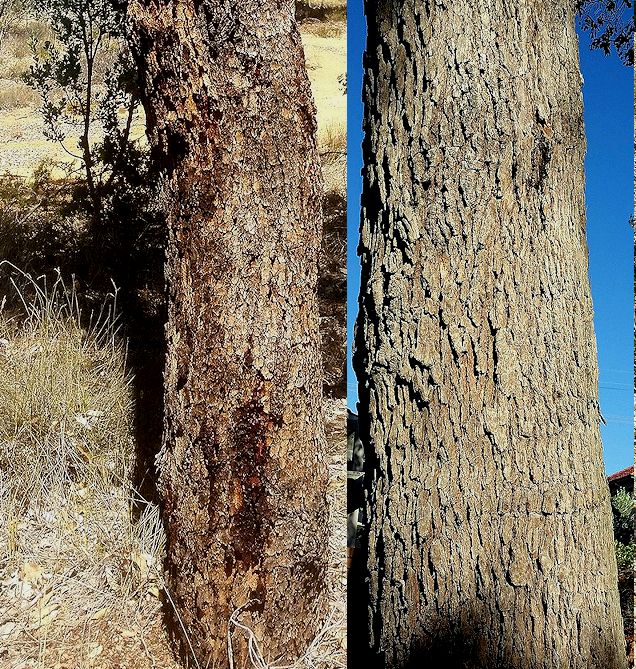
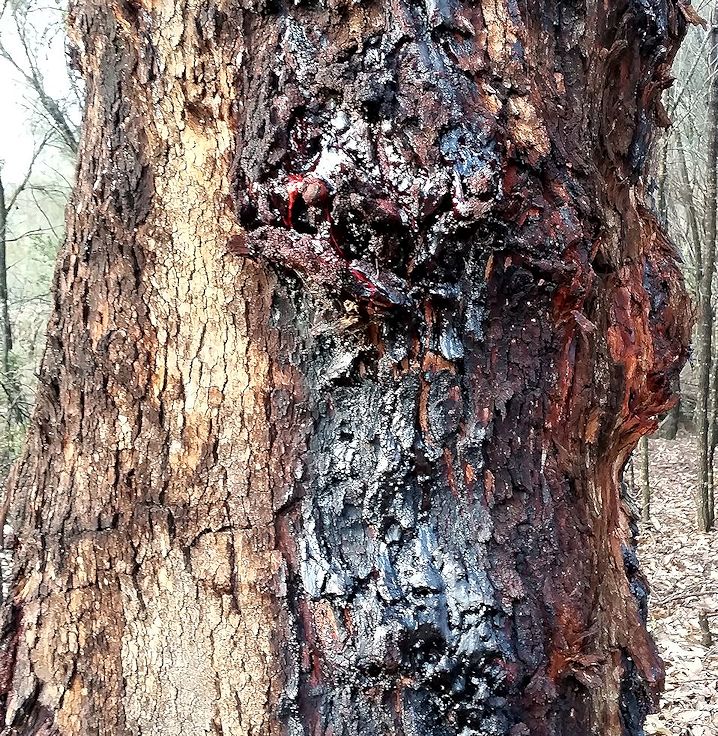
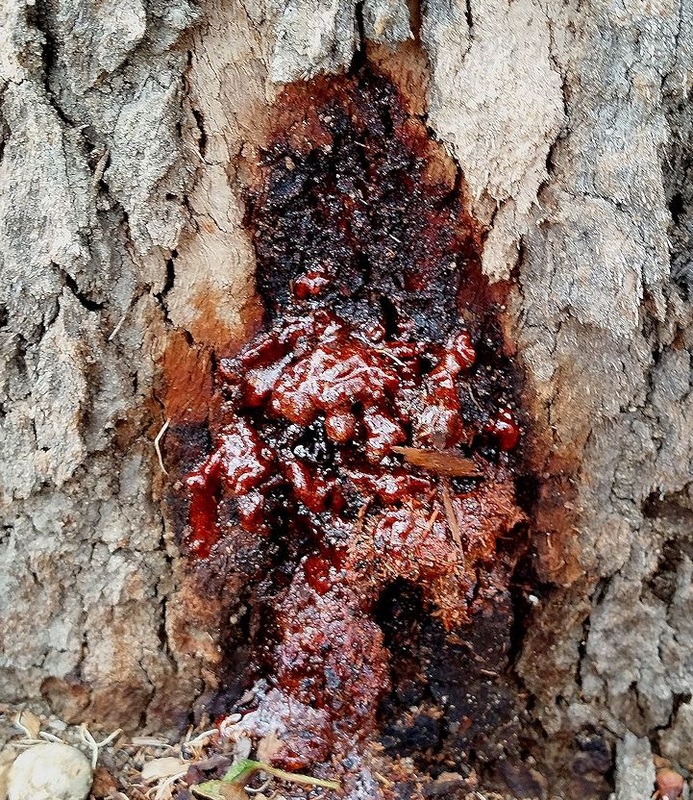
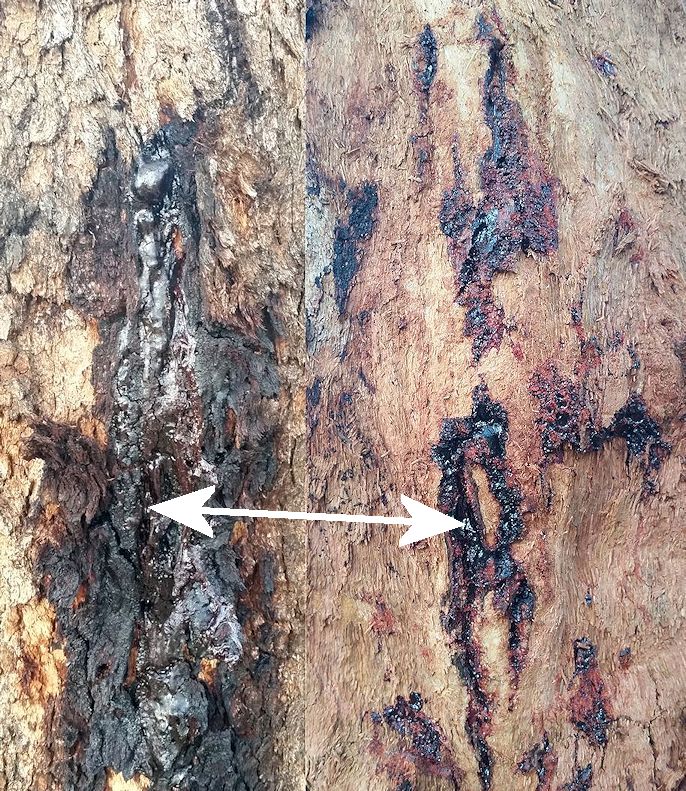
Marri trees are flowering profusely this year, possibly due to the February rains. However I have noticed a lot of red gum oozing from adult trees and a few have died spontaneously in recent years. The penny dropped when I saw beautiful adult marris in a Perth (and later Narrogin) garden with unblemished bark, in stark contrast to scabby specimens in Foxes Lair. The gum is a defence mechanism against damage by mainly woodborers. 
As Foxes Lair is on the eastern edge of marri range, marris are under more water stress, slower growing, and more susceptible to parasites.
Picture
Young tree in full flower
Picture
Foxes Lair (left) and Perth garden (right) trunks
Picture
Gum flow
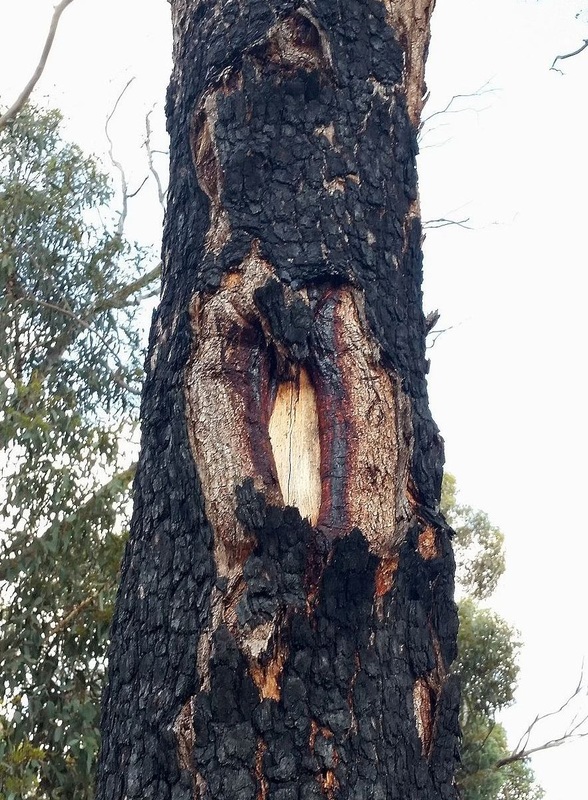
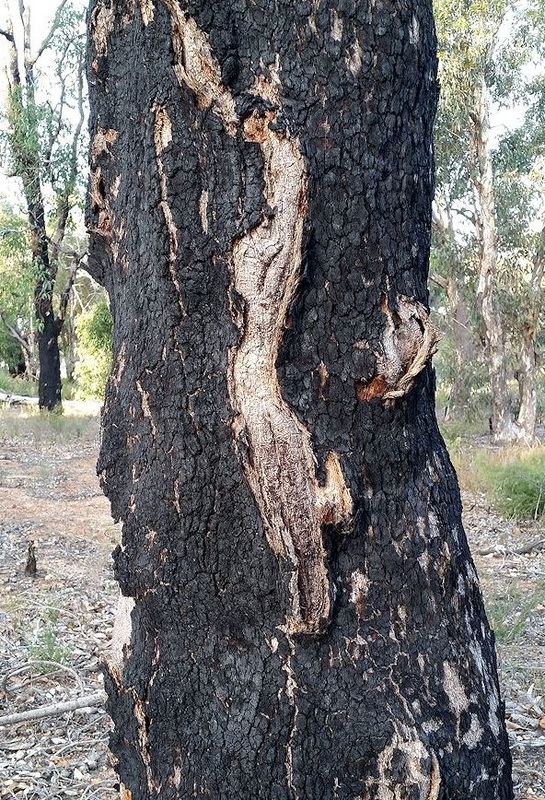
There are still some magnificent and ancient marris in Foxes Lair like the fire damaged specimen on the left, that still manage to produce a flower or two.
However as rainfall decreases and temperatures rise I fear that marri, jarrah and bull banksia may slowly be replaced by scrub and mallees in the reserve.


A number of factors have been suggested
  • Marri Canker (Quamabalaria coryecup) disease is killing marris in higher rainfall areas. Luckily I haven’t seen the characteristic symptoms here
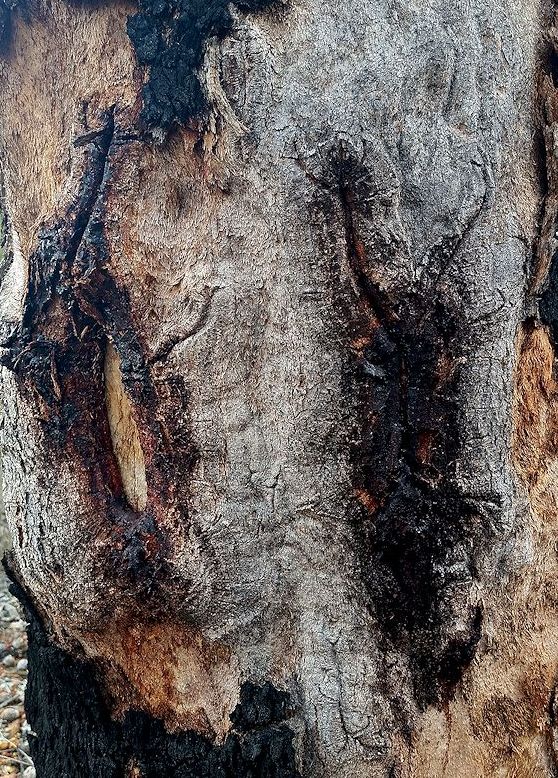
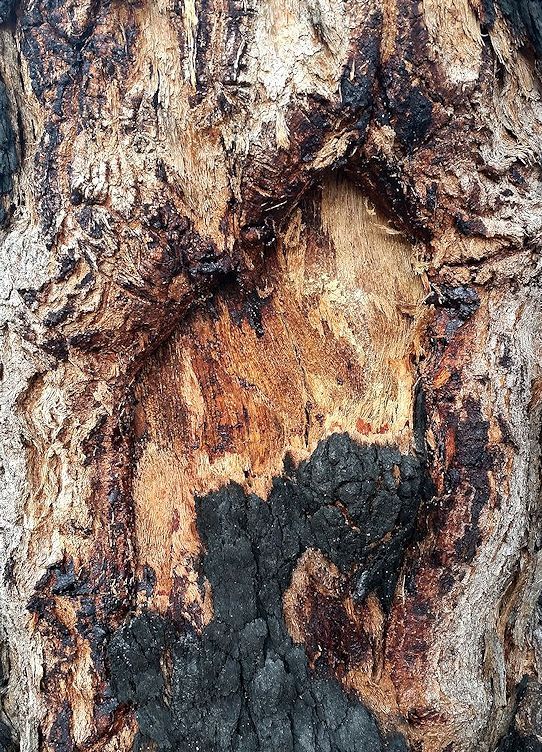
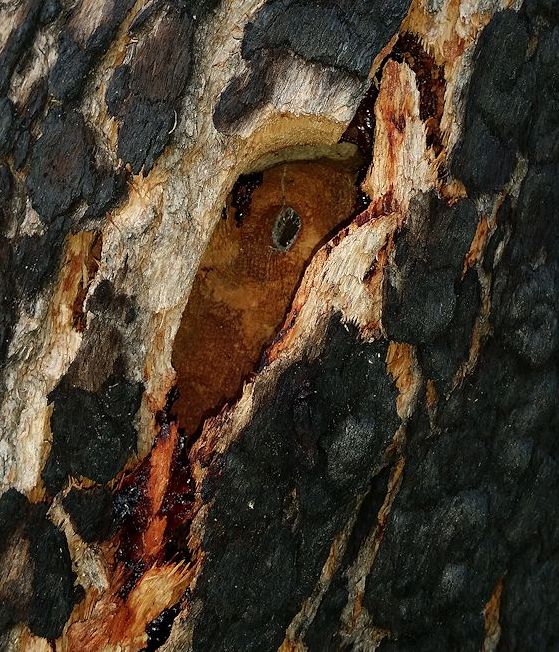
  • Wildfire damage. Marri is more susceptible to fire damage than jar and wandoo. I went to an area opposite Williams Road that had marris scattered in amongst dense Dryandra nobilis scrub where the fire was most intense in 2009, and sure enough found clear fire damage. Interestingly the scars had healed with relatively little associated insect damage, and on closer observation I noticed that the scar often been affected by prior damage as there were 2 concentric scars and the exposed wood was sometimes burnt. The reserve was burnt in the 1970’s and 4WD vehicles also used to career through the bush and may have damaged trees. I also noticed that younger trees were less likely to have the scars. Regular low intensity fires that don't burn through the outer bark promote healthier trees that are more able to resist insect attack. I have recommended that scheduled cool burns in a mosaic pattern with each bay burnt every 10+ year to keep biodiversity in the reserve be included in the Foxes Lair management plan.
Picture
Probable fire damage
Picture
Possible fire damage
Picture
Secondary burn on old fire lesion
  • Borer damage can be easily spotted by copious outpouring of kino (red gum) from a single point, and sometimes a multiple exudations it bark splits. Kino outpours are a natural reaction from the tree to drown invading insects. Water-stressed trees are more liable to insect attack because there is less and thicker kino and it has more sugars that attract insects. The warming climate is also affecting insects’ biology by making them come out of dormancy earlier. DPAW was investigating insect damage in the reserve in the late nineties.
Picture
Copious kino from a hole
Picture
bark shaved off to show insect holes
Picture
Bullseye borer escape hole
  • Spontaneous splitting? DPAW colleague Peter White reminded me that gum bands occur routinely in marri wood, and that some smooth barked eucalypts have splits in their bark following large variations in rainfall.
    A lot of these splits have healed.
    When I shaved the rough bark back from a split, I found live flesh underneath the split with bark on either side. I have also noticed tumorous type growths on old marri branches, but suspect insect involvement.
Picture
Split and growths
Picture
bark scraped off split to show underlying growth
Picture
Growths on live and dead branch
0 Comments
<<Previous
Forward>>

    Author

    Doug Sawkins is a friend of Foxes Lair 

    Categories

    All
    Animals Other
    Birds
    Disorders Plant Animal
    Fungi Lichens
    History
    Insects Bugs Other Arthropods
    Landscapes Soils
    Other Reserves And Places
    Reptiles
    Spiders Other Arachnids
    Tree
    Walks Other Facilities
    Wasp
    Wildflowers Orchids
    Wildflowers Other Summer Autumn
    Wildflowers Other Winter Spring
    Wildflowers Parasitic

    Archives

    September 2025
    June 2025
    May 2025
    April 2025
    February 2025
    January 2025
    December 2024
    November 2024
    May 2024
    April 2024
    December 2023
    November 2023
    September 2023
    August 2023
    July 2023
    June 2023
    May 2023
    April 2023
    March 2023
    February 2023
    January 2023
    December 2022
    October 2022
    July 2022
    June 2022
    May 2022
    April 2022
    March 2022
    January 2022
    November 2021
    October 2021
    September 2021
    August 2021
    July 2021
    June 2021
    May 2021
    April 2021
    March 2021
    February 2021
    January 2021
    December 2020
    November 2020
    October 2020
    September 2020
    August 2020
    July 2020
    June 2020
    May 2020
    April 2020
    March 2020
    February 2020
    January 2020
    November 2019
    October 2019
    July 2019
    April 2019
    March 2019
    February 2019
    January 2019
    December 2018
    November 2018
    September 2018
    July 2018
    May 2018
    April 2018
    March 2018
    February 2018
    January 2018
    December 2017
    November 2017
    October 2017
    September 2017
    July 2017
    May 2017
    April 2017
    February 2017
    January 2017
    December 2016
    November 2016
    October 2016
    September 2016
    August 2016
    July 2016
    June 2016
    May 2016
    April 2016
    March 2016
    February 2016
    January 2016
    December 2015
    November 2015
    October 2015
    September 2015
    August 2015
    July 2015
    May 2015
    April 2015
    March 2015
    February 2015
    January 2015
    September 2014
    August 2014
    April 2014
    March 2014
    February 2014
    May 2012
    March 2012
    October 2011
    September 2011
    August 2011
    April 2011

© 2015 All Rights Reserved. Doug Sawkins, Australia.