Foxes Lair
  • Home
  • About
    • About Foxes Lair
    • History
    • Landscape and Soils
  • Things To Do
    • Picnic Spots
    • Walk Trails
    • Visit the Arboretum
    • Ride Your Bicycle
    • Scavenger hunt
    • Geocaching and Orienteering
  • Things To See
    • Wildflowers
    • Trees in the Narrogin district
    • Birds
    • Vertebrates
    • Narrogin spiders scorpions ticks
    • Fungi and lichens
  • Foxes Lair seasonal guide
    • December to March
    • April - May
    • June-July
    • August
    • September
    • October
    • November
  • Other great reserves
    • Railway Dam
    • Yilliminning Rock
    • Old Mill Dam
    • Yornaning Dam
    • Contine Hill
    • Highbury Reserve
    • Boyagin Rock
    • Barna Mia
    • Toolibin Lake
    • Newman Block
    • Harrismith Nature Reserve
    • Candy Block
    • Tutanning Nature Reserve
  • 1Foxypress
    • Foxypress
    • Vanishing Farms
  • Contact

In Praise of Daddy Long Legs

25/1/2016

3 Comments

 
Daddy Long Legs are inoffensive spiders, which occur in all countries of the world with the exception of Antarctica. Harmless as they are, some people pay to exterminate them using toxic sprays. This is a waste of time for 2 reasons.
  1. The chemical used is toxic, but very short lived, and within a few days, spiderlings drift in on threads of silk to recolonise vacated areas.
  2. The sprays kill everything, including predators and beneficial insects that maintain a natural balance and may increase the incidence of nastier spiders like Redbacks
I read a fabulous book called Spiders: Learning to love them. Lynne Kelly, the author is an inspirational person who studied spiders to overcome her arachnophobia, and now loves them.
The book is a mine of information. For example, did you know that a Daddy Long Legs favoured food is other spiders?
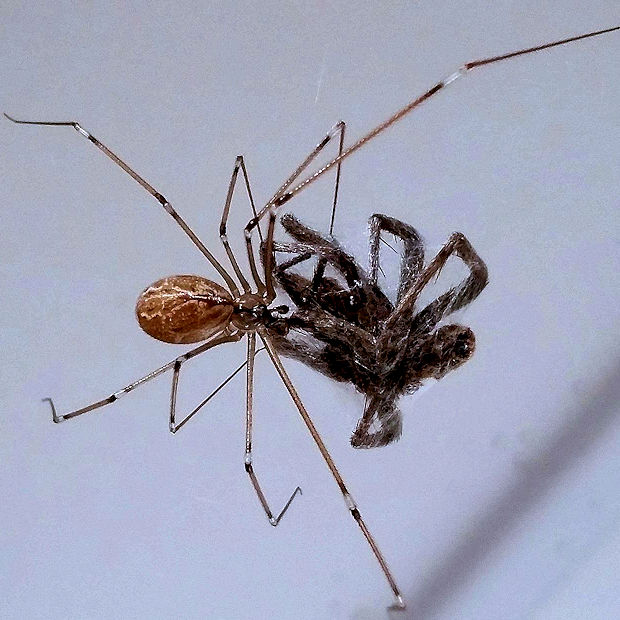
They will kill much larger spiders by keeping them at a distance and wrapping them up with silk using their long legs. For example see the wrapped Huntsman spider below. They can also approach prey spider webs and tug on them like a trapped insect before nabbing the unsuspecting inhabitant.
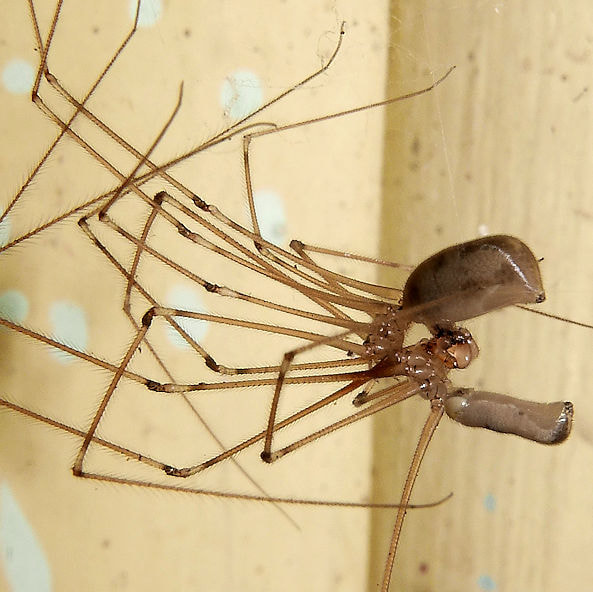
PictureMale holding female above at bay while mating
Have you noticed that when disturbed, a Daddy Long Legs vibrates madly to make it harder for any potential predator to grab it. Vibration also makes any prey more enmeshed in the web.
Daddy Long Legs can have compound webs that contain many spiders but they have defined territories that they don’t cross without causing a fight. The ones shown are Smeringopus species - south African immigrants.
I recently watched a male spider very carefully approach a female when he quickly slipped under her and kept her fangs away as he transferred sperm to her genital opening with bulbous pedipalps.

The Sawkins residence is spider friendly, although I draw the line with Redbacks (poisonous), and White-Tail spiders in the house (can go to bed with you and nip, but do not have flesh eating venom - a myth).
I have a theory that leaving our Daddy Long Legs reduce Redback numbers. With this in mind I decided to pit a Redback against Daddy Long Legs and eventually found one after half a day looking and disturbing about a thousand resident Daddy Long Legs
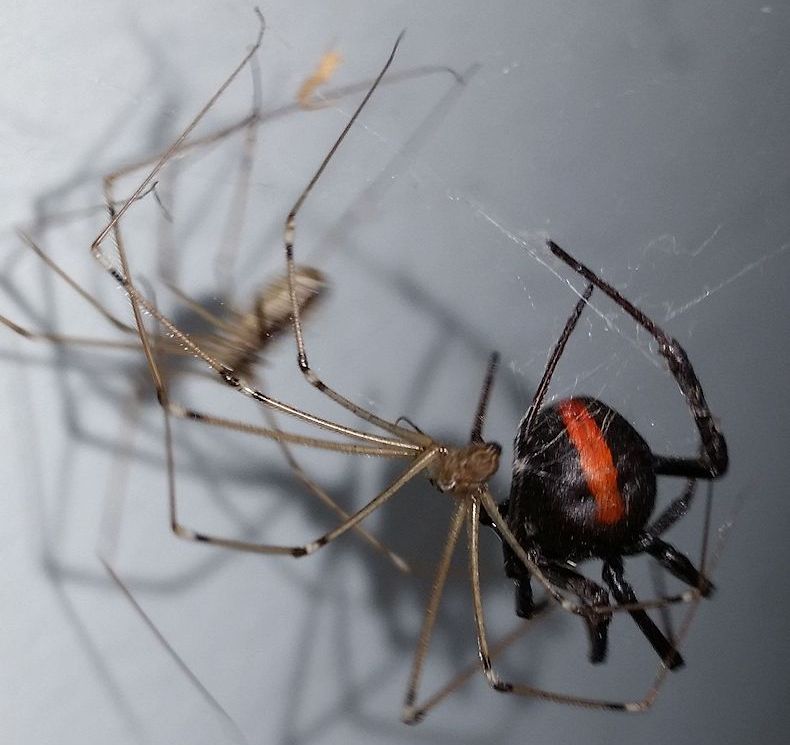
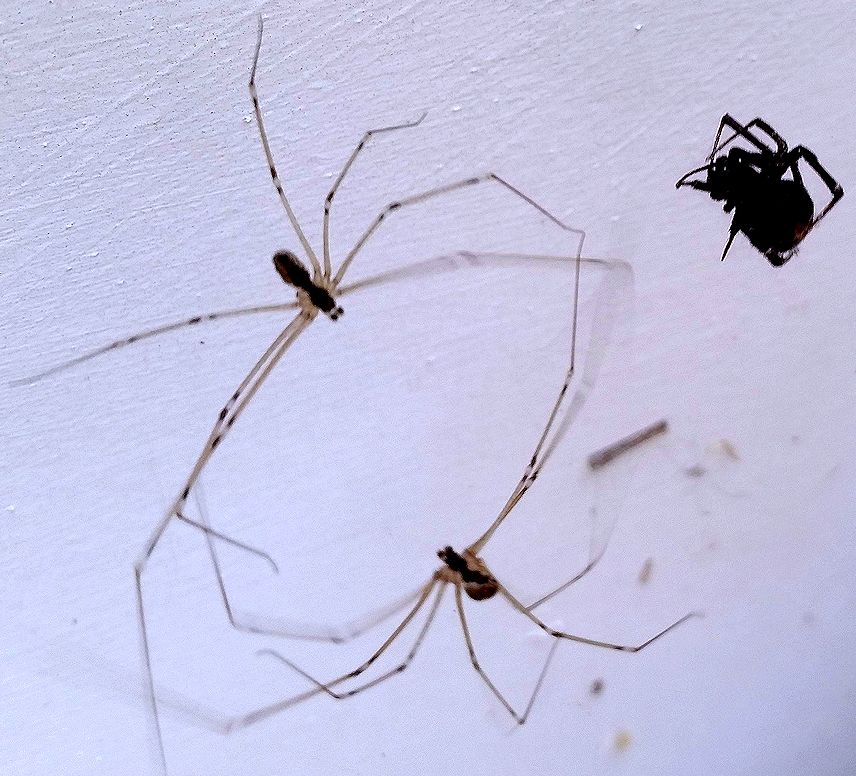
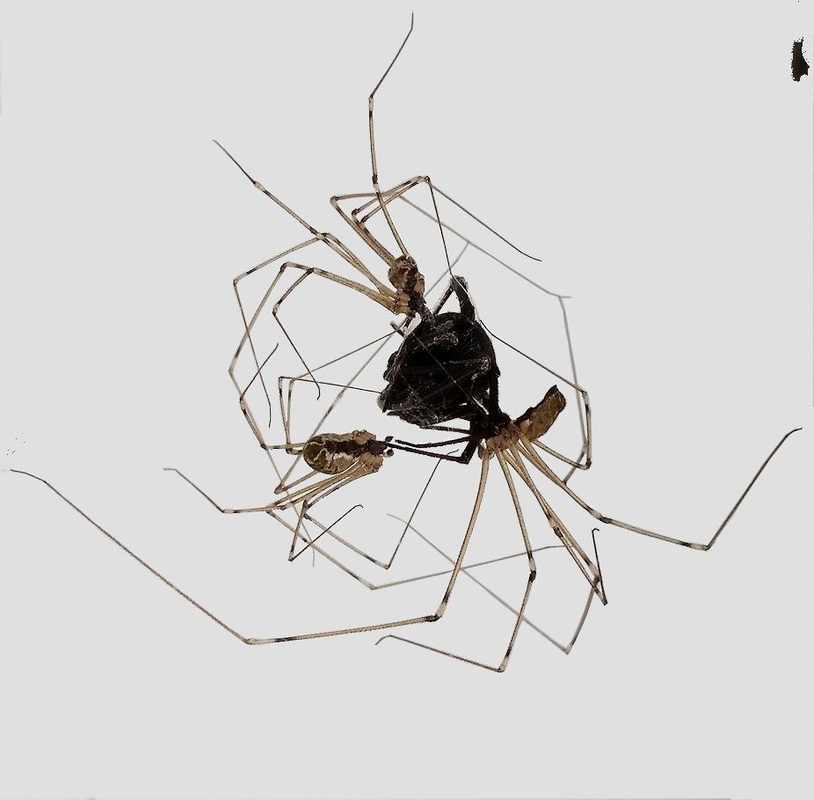
I dropped the Redback in such a web complex and returning later, found a female Daddy Long Legs wrapping it up. Others moved in and there was an almighty fight before they all managed to feed together out of each other’s’ sight.
Entrenched adult Redbacks and Black House Spiders can repel Daddy Long Legs but juveniles would be vulnerable.

So withhold the spray and be grateful for the good old Daddy Long Legs​!
More info https://en.wikipedia.org/wiki/Pholcidae
.
Picture
male wrapping up a huntsman spider
Picture
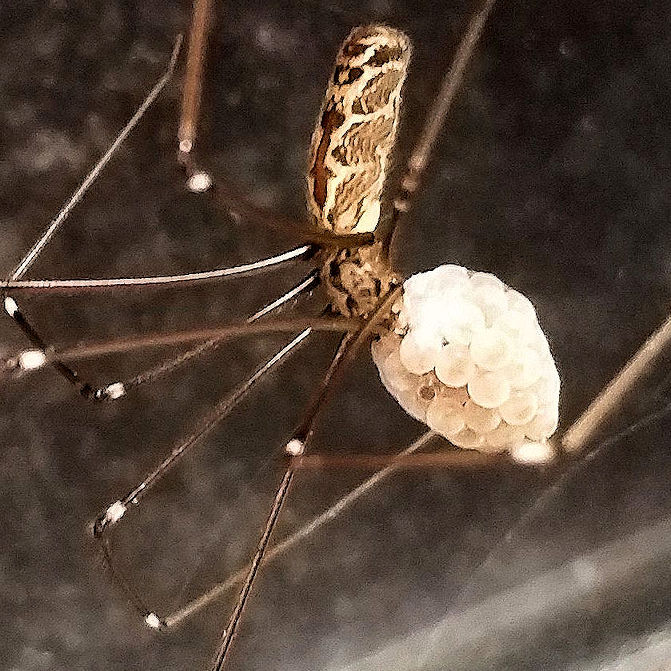
females guard their egg sacs in their jaws
Picture
Intruder approaching
Picture
Fight for the prize
Picture
Compromise
3 Comments

Billardiera and Marianthus Wildflowers

22/1/2016

0 Comments

 
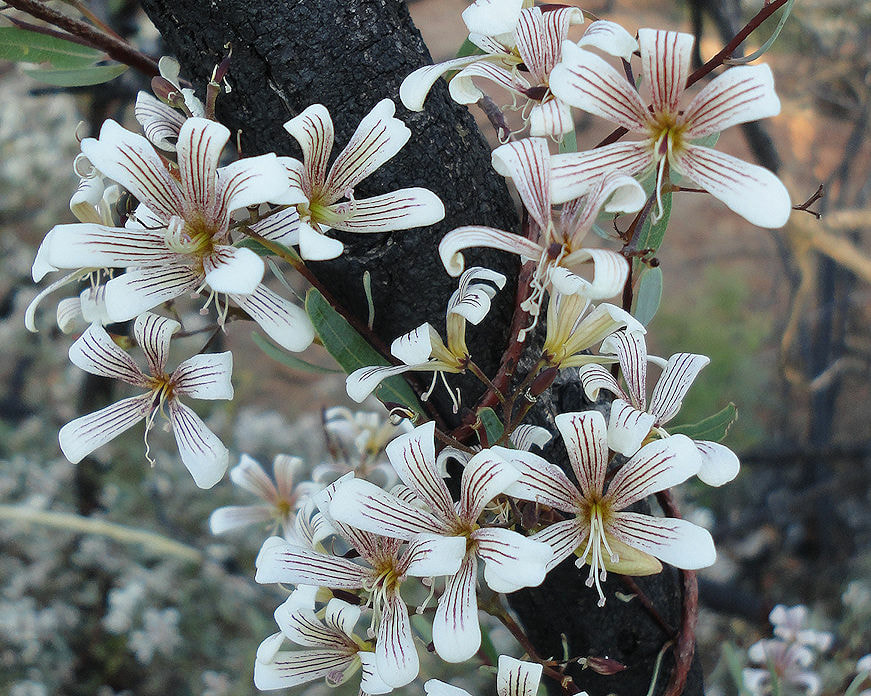
In the last fortnight lovely Painted Marianthus (Marianthus bicolor) plants have been covered in flowers in open wandoo/marri woodland, and will increase after recent heavy rain. These plants are climbers and would be wonderful plants in a native garden. Plant hotspots are southern edge of Williams road and around the Claypit. Marianthus and Billardiera belong to the Pittosporum family. These are shrubs, often vines that often have fleshy seed pods. The pods on some  species are used for bush tucker, but after my disastrous taste test of the native apricot  I am more careful.
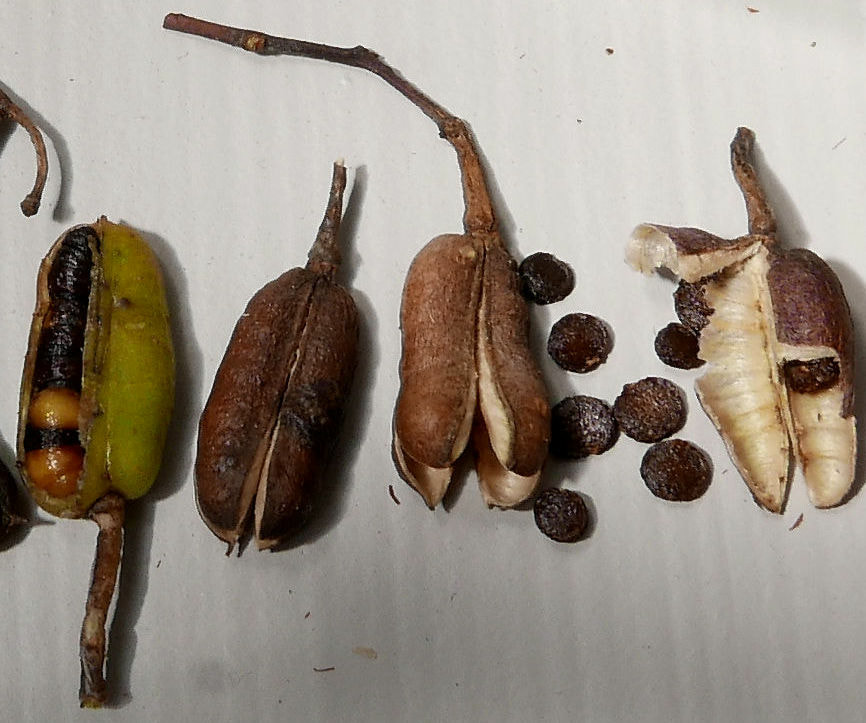
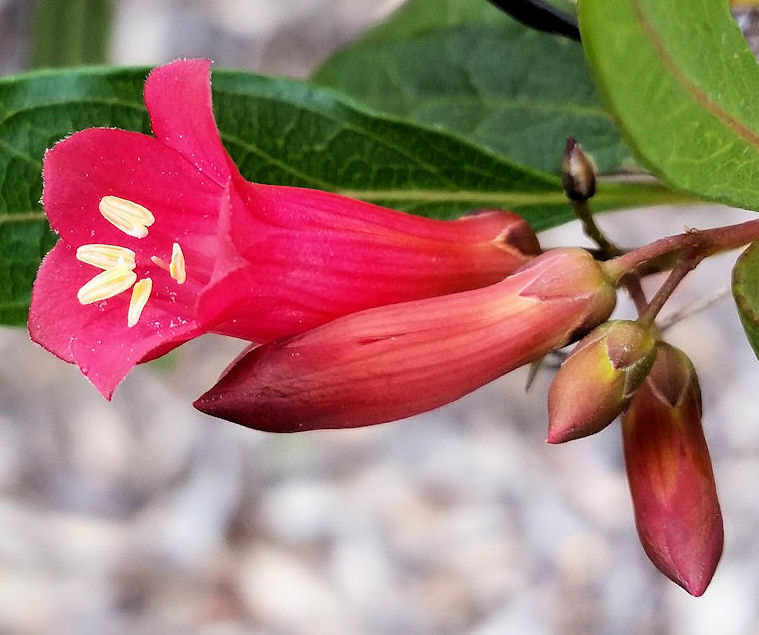
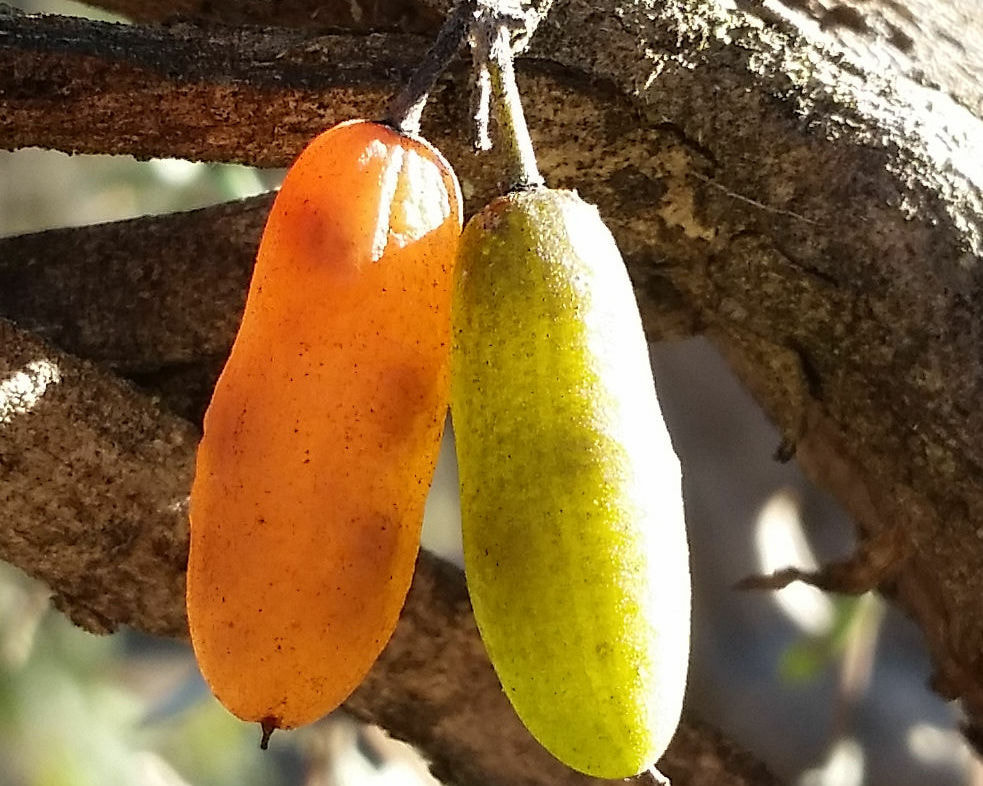
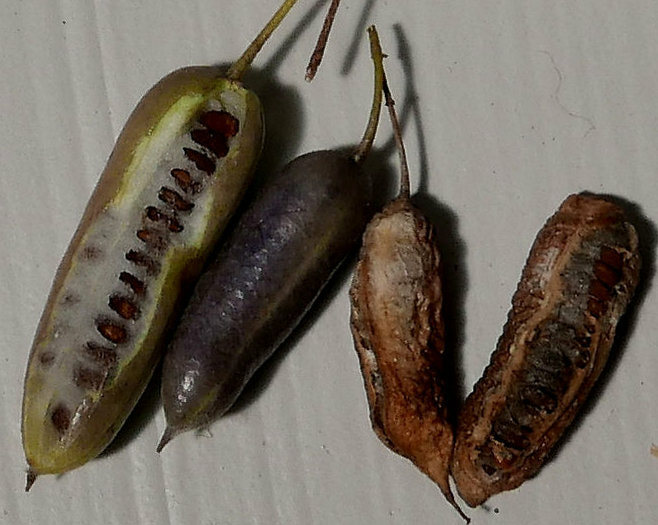
Painted Marianthus fruit has a thin rind when green that tastes nasty. Red Marianthus/Marianthus erubescens ( Candy Block) has similar fruit
​
Picture
Marianthus bicolor Painted Marianthus
Picture
Fruit at varying stages
Picture
Marianthus erubescens/Red Marianthus
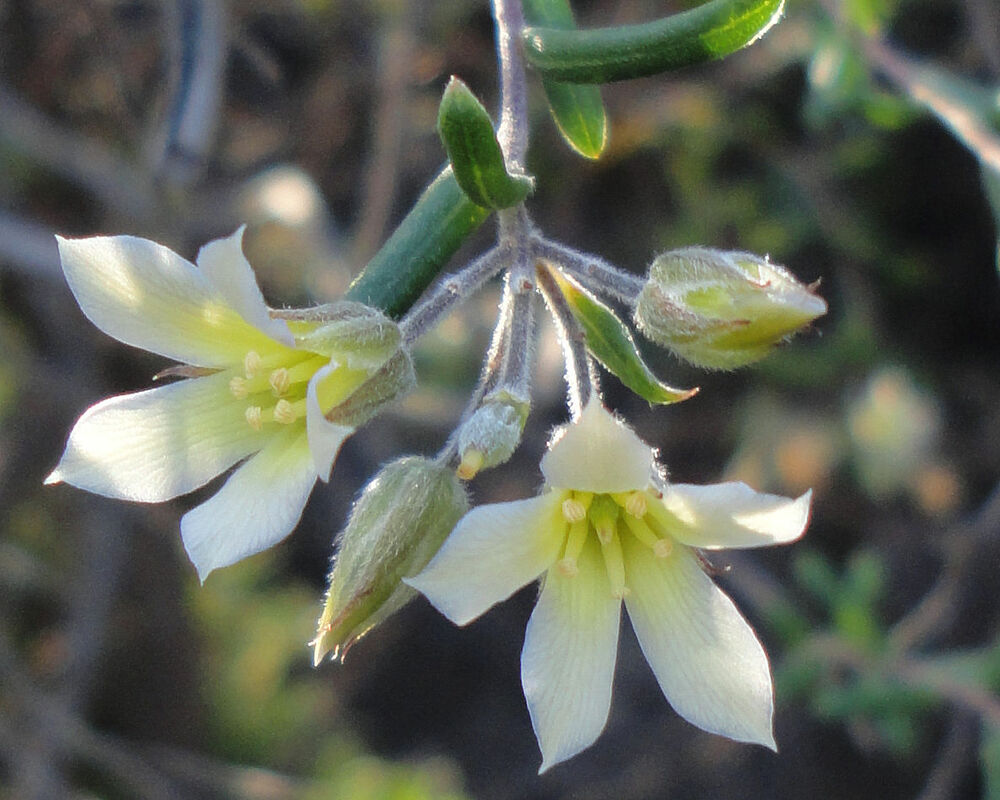
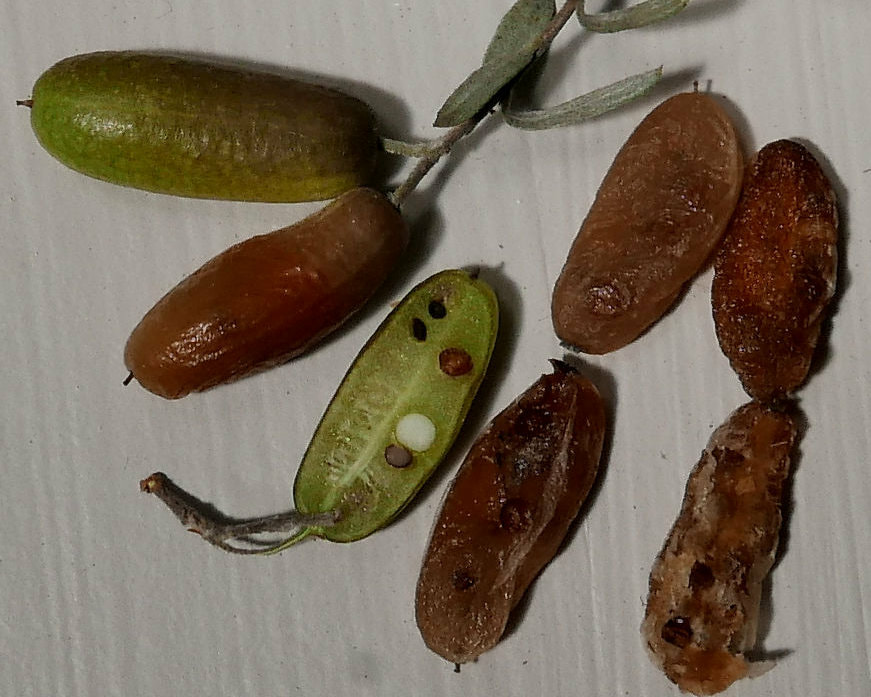
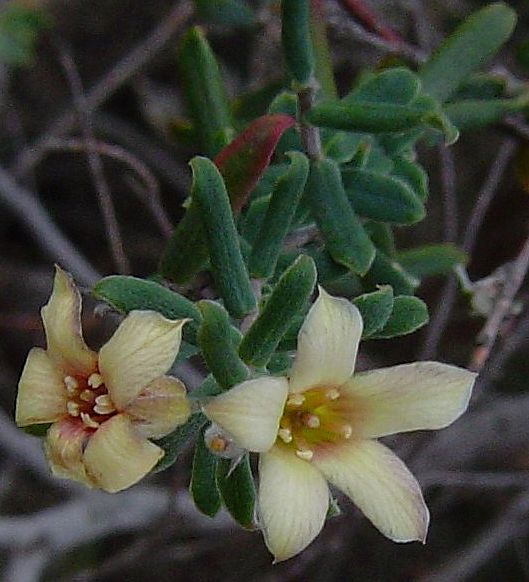
Billardiera venusta (Gravel climber) that is a common November flowering vine in gravel soils that is often overlooked due to its creamy green flowers. I found some enticing looking fruit on one that looked like an elongated raisin, and offered it to my beloved wife, who reported tangy lime flavour and a fizzing sensation on her tongue. This is not recorded as a bush tucker plant but passed the test.
Picture
Billardiera venusta Gravel Climber
Picture
Gravel Climber fruit
Picture
Gravel Climber fruit at various stages
Picture
Billardiera heterophylla Bluebell Creeper
Picture
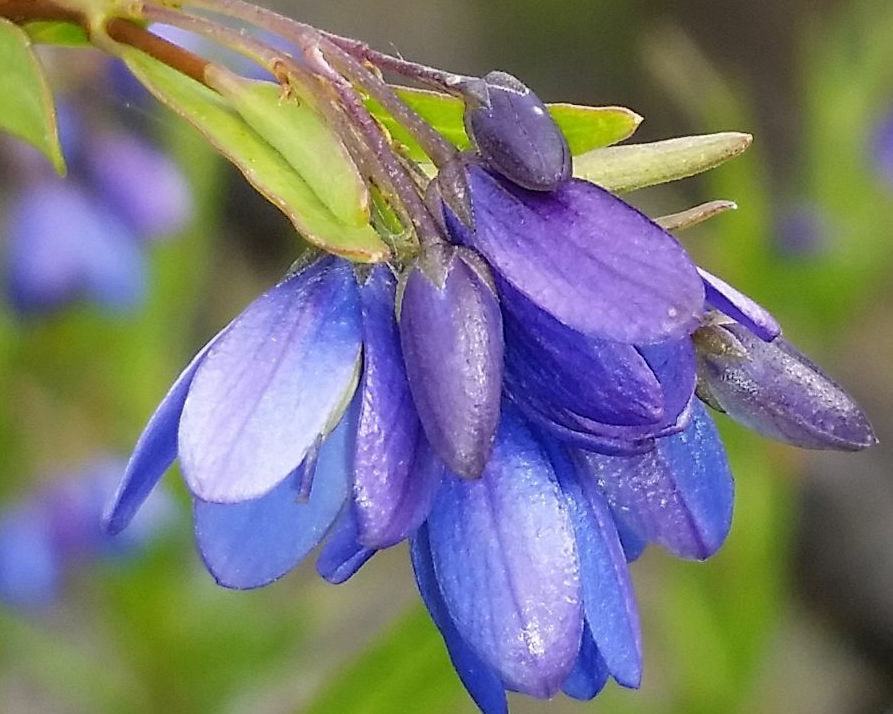
Bluebell Creeper
Picture
Bluebell Creeper fruit at varying stages
The beautiful summer flowering Bluebell Creeper (Billardiera heterophylla), is a recorded bush tucker plant. When green, the thin pod wall has an apple taste , but becomes nasty when purple, then dries to a woody pod. Overrated!
Picture
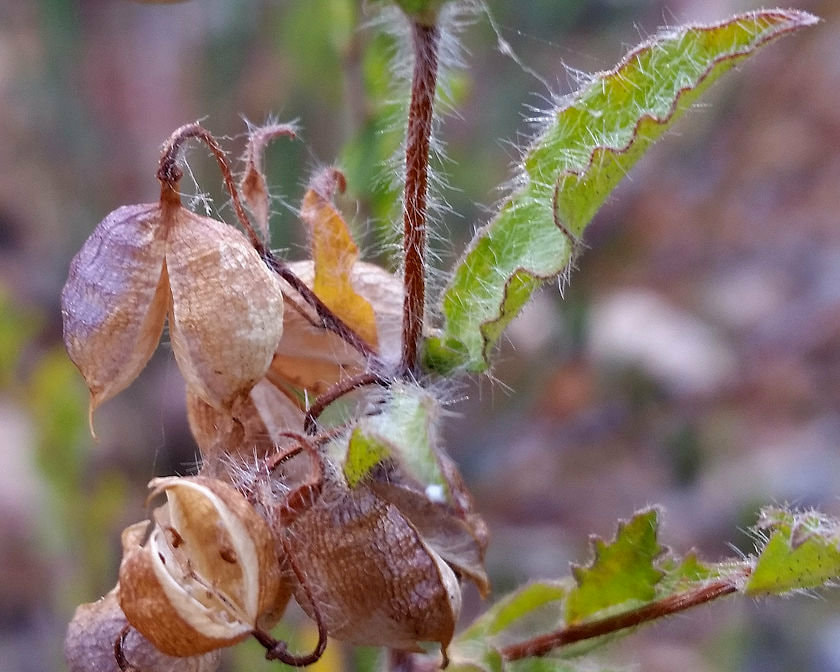
Marianthus drummondianus fruit
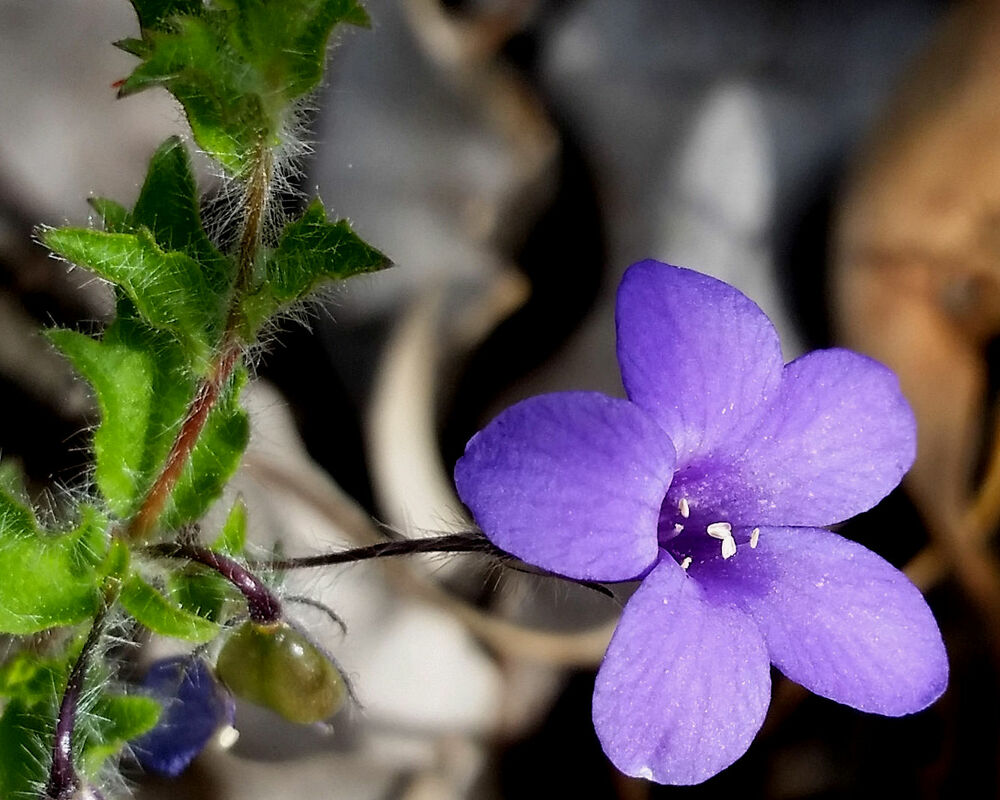
Marianthus drummondianus is a low  October flowering shrub with deep green leaves and a mass of lovely velvet blue flowers. It is largely restricted to stony gravel near the water tank on the Banksia Walk.
Picture
Marianthus drummondianus
0 Comments

I Love a Mallet in the Morning (and evening too)

8/1/2016

0 Comments

 
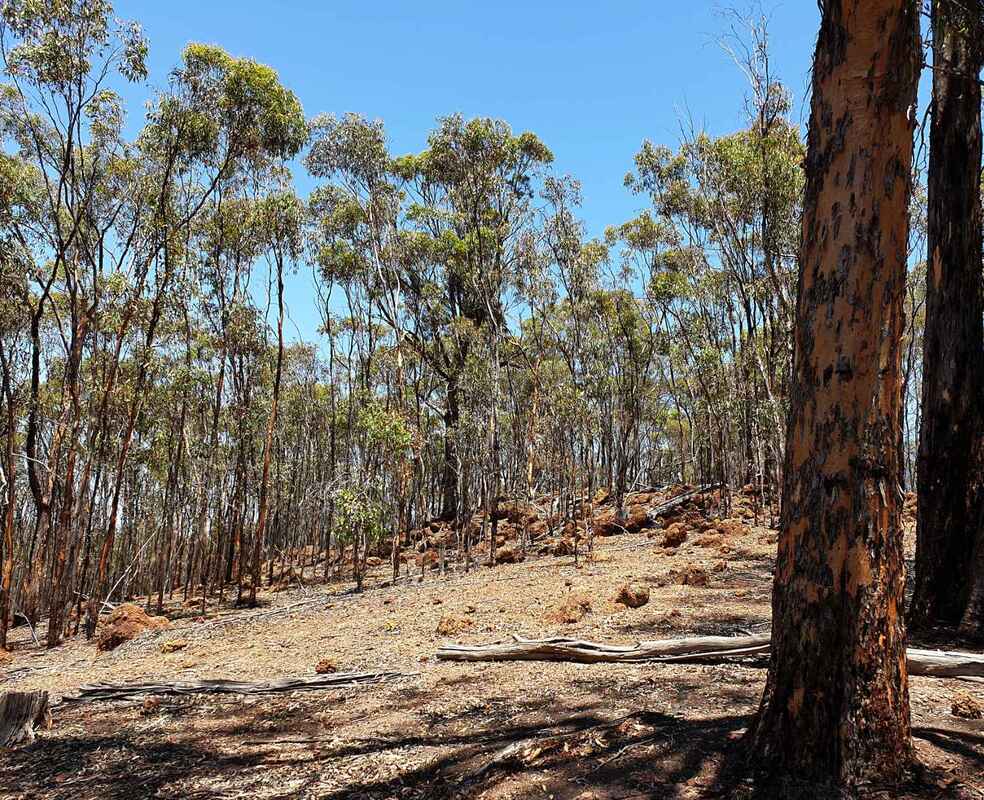
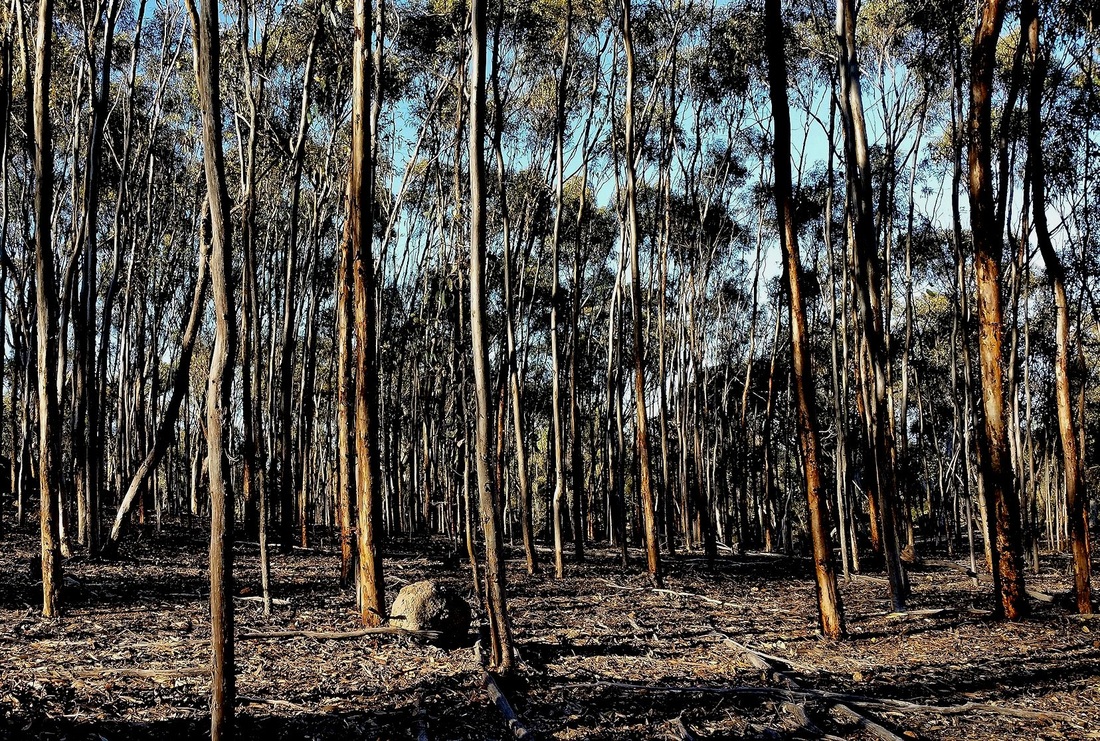
PictureLarge mallets on the right survived a fire about 50 years ago that caused the thicket of younger plants to germinate
​Brown mallets (Eucalyptus astringens) are generally only found on breakaways.
Unlike other eucalypts, they are sensitive to fire. To reduce fire risk they stop most plants from growing underneath them.

Brown mallets deny water to other plants by 2 means:
  • Mallet leaves and bark make the soil surrounding them highly water repellent, keeping the topsoil too dry for other plants.
  • Mallets intercept rain in their canopy and channel it down steeply ascending branches to their stem where it is rapidly absorbed at the base of the tree. Tannins in the bark are thought to 'thin' the water so it passes more rapidly into the soil
Mallets rarely resprout after a bushfire, but die and drop large amounts of seed that germinates to form the dense  mallet 'whipstick' thickets. The trees gradually thin out until a few large ones remain, until the next bushfire restarts the cycle.

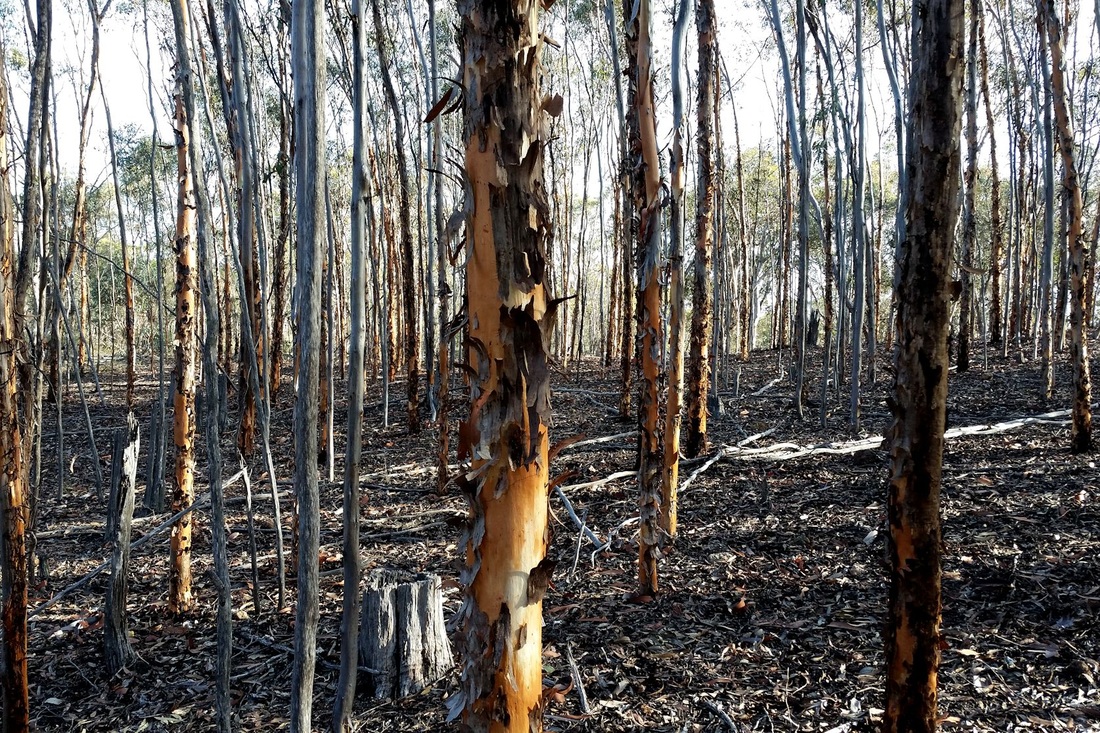
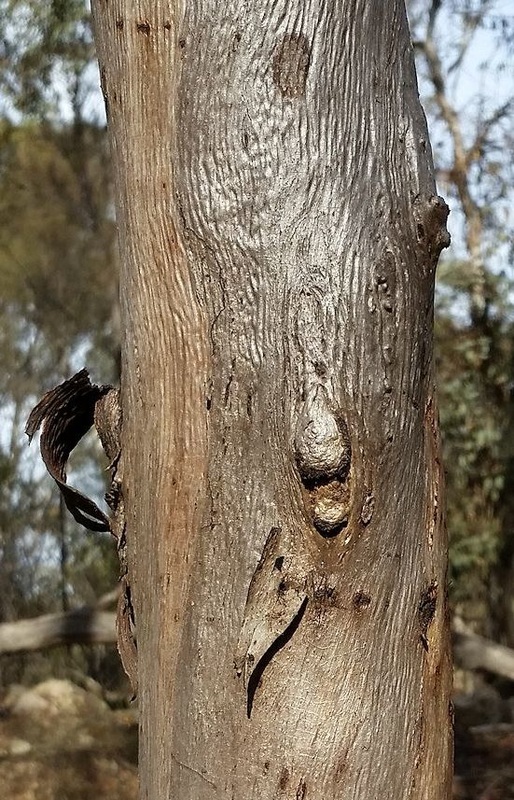
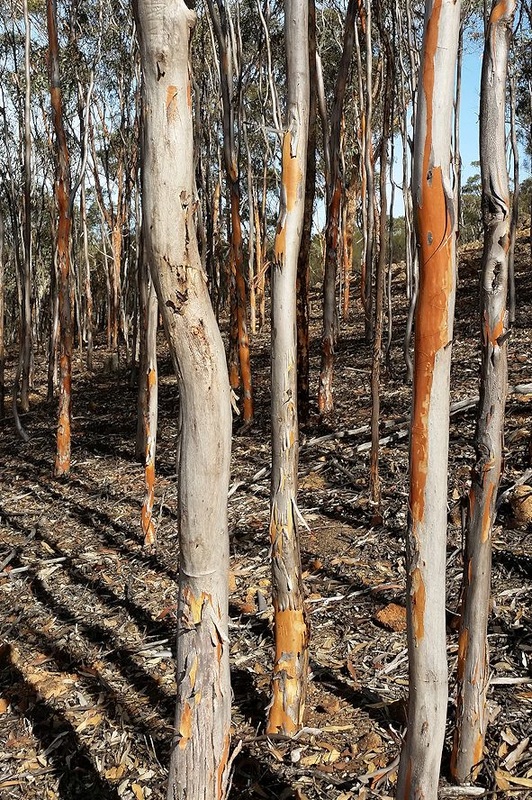
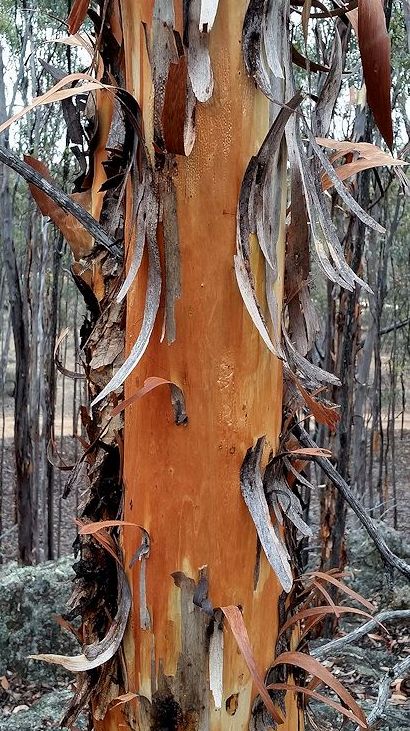
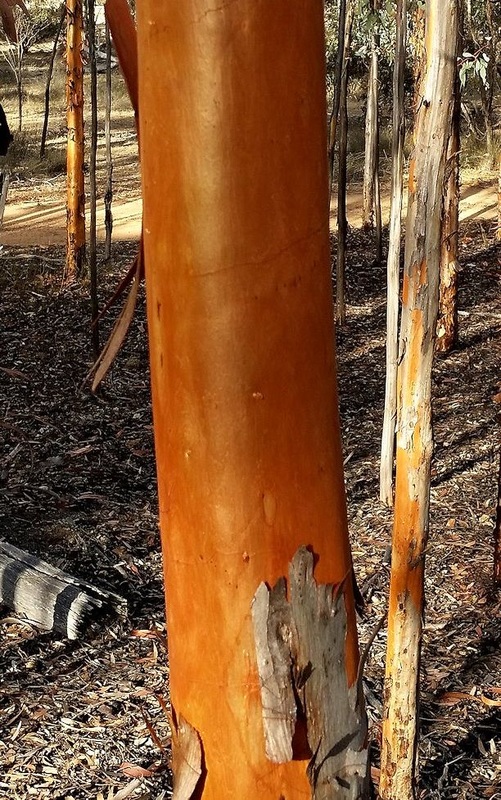
Early summer is a wonderful time of the year to see wandoos and  brown mallets shedding their old bark to reveal gleaming cream and copper coloured trunks in the rising and setting sun.
If you sit on the Claypit walk breakaway bench that overlooks Narrogin, you will notice that old grey-brown bark of the whipstick mallets is shedding in curly flakes to reveal smooth coppery new bark. Individual mallets vary in the process, and the normally uniform array of smooth stems has become a ragged array of shapes and colours. And to top it off, Golden orb weavers have webs there too. Oh bliss!
So abandon your bed, TV, or mind numbing social media and embark on an early morning/evening pilgrimage to meditate amongst the mallets!
Om mani padme gum
Picture
Subdued colours in November
Picture
Ragged colourful appearance in January
Picture
Picture
Picture
Picture
0 Comments

    Author

    Doug Sawkins is a friend of Foxes Lair 

    Categories

    All
    Animals Other
    Birds
    Disorders Plant Animal
    Fungi Lichens
    History
    Insects Bugs Other Arthropods
    Landscapes Soils
    Other Reserves And Places
    Reptiles
    Spiders Other Arachnids
    Tree
    Walks Other Facilities
    Wasp
    Wildflowers Orchids
    Wildflowers Other Summer Autumn
    Wildflowers Other Winter Spring
    Wildflowers Parasitic

    Archives

    September 2025
    June 2025
    May 2025
    April 2025
    February 2025
    January 2025
    December 2024
    November 2024
    May 2024
    April 2024
    December 2023
    November 2023
    September 2023
    August 2023
    July 2023
    June 2023
    May 2023
    April 2023
    March 2023
    February 2023
    January 2023
    December 2022
    October 2022
    July 2022
    June 2022
    May 2022
    April 2022
    March 2022
    January 2022
    November 2021
    October 2021
    September 2021
    August 2021
    July 2021
    June 2021
    May 2021
    April 2021
    March 2021
    February 2021
    January 2021
    December 2020
    November 2020
    October 2020
    September 2020
    August 2020
    July 2020
    June 2020
    May 2020
    April 2020
    March 2020
    February 2020
    January 2020
    November 2019
    October 2019
    July 2019
    April 2019
    March 2019
    February 2019
    January 2019
    December 2018
    November 2018
    September 2018
    July 2018
    May 2018
    April 2018
    March 2018
    February 2018
    January 2018
    December 2017
    November 2017
    October 2017
    September 2017
    July 2017
    May 2017
    April 2017
    February 2017
    January 2017
    December 2016
    November 2016
    October 2016
    September 2016
    August 2016
    July 2016
    June 2016
    May 2016
    April 2016
    March 2016
    February 2016
    January 2016
    December 2015
    November 2015
    October 2015
    September 2015
    August 2015
    July 2015
    May 2015
    April 2015
    March 2015
    February 2015
    January 2015
    September 2014
    August 2014
    April 2014
    March 2014
    February 2014
    May 2012
    March 2012
    October 2011
    September 2011
    August 2011
    April 2011

© 2015 All Rights Reserved. Doug Sawkins, Australia.