Hello fellow Foxies,
An egg mass on a leaf took me on a journey of learning about the world of hoppers.
Planthoppers, leafhoppers, treehoppers and froghoppers are all small bugs that suck sap from plants.
They belong to the order Hemiptera (sucking insects that are called homopterans)
Suborders include
Heteroptera: (typical bugs like stink bugs that suck plants or animal suckers such as bedbugs, and assassin bugs.
Sternorrhyncha: aphids, whiteflies, and scale insects
Auchenorrhyncha: cicadas, leafhoppers, treehoppers, planthoppers, and spittlebugs (adults called froghoppers)
Hoppers have aerodynamically shaped adult bodies and most have an exceptional hopping ability to escape from predators. The nymphs are generally tiny. There is great confusion around hopper names. For example the commonly named two-lined treehopper below is in the leafhopper genus.
Adult leafhoppers (Family Cicadellidae) have torpedo-shaped bodies and wings that tend to be flat on the body. I have found the three species below. The brown leafhopper lives in an ant nest and is tended by ants.
An egg mass on a leaf took me on a journey of learning about the world of hoppers.
Planthoppers, leafhoppers, treehoppers and froghoppers are all small bugs that suck sap from plants.
They belong to the order Hemiptera (sucking insects that are called homopterans)
Suborders include
Heteroptera: (typical bugs like stink bugs that suck plants or animal suckers such as bedbugs, and assassin bugs.
Sternorrhyncha: aphids, whiteflies, and scale insects
Auchenorrhyncha: cicadas, leafhoppers, treehoppers, planthoppers, and spittlebugs (adults called froghoppers)
Hoppers have aerodynamically shaped adult bodies and most have an exceptional hopping ability to escape from predators. The nymphs are generally tiny. There is great confusion around hopper names. For example the commonly named two-lined treehopper below is in the leafhopper genus.
Adult leafhoppers (Family Cicadellidae) have torpedo-shaped bodies and wings that tend to be flat on the body. I have found the three species below. The brown leafhopper lives in an ant nest and is tended by ants.
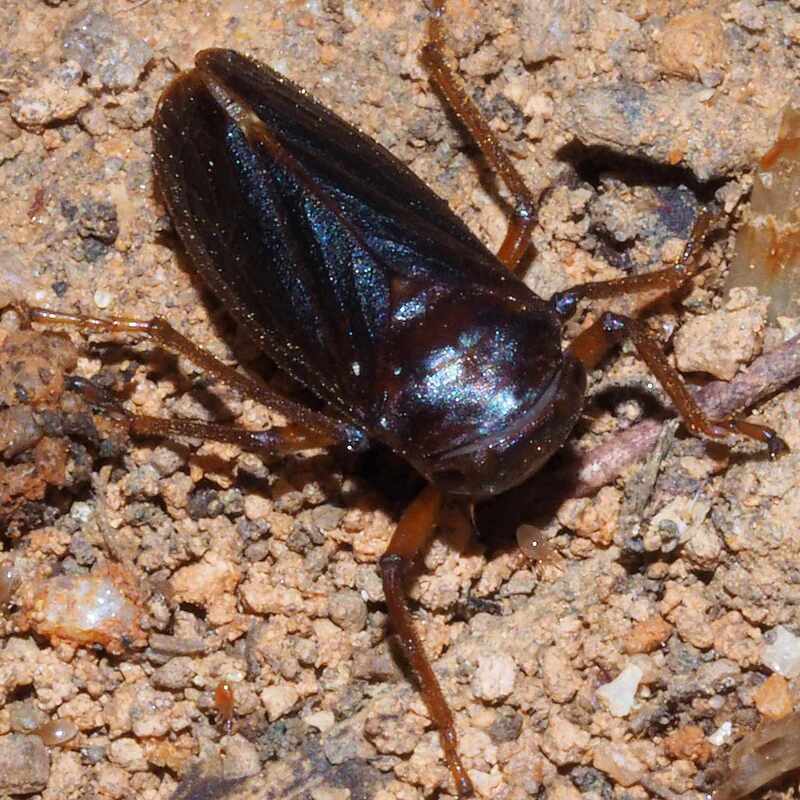 Leafhopper;Pogonoscopus Pogonoscopini | 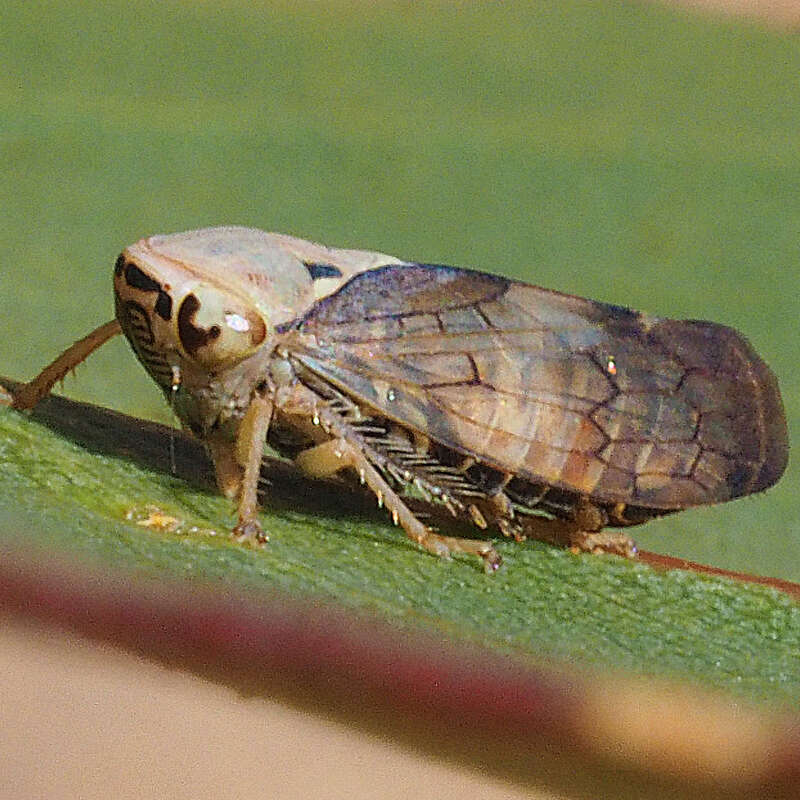 Leafhopper; Subfamily Tartessinae | 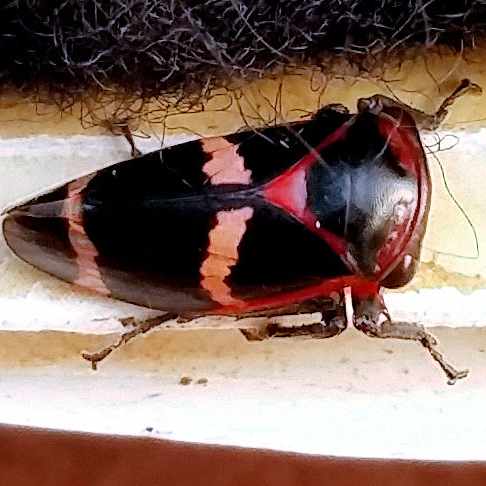 Leafhopper; Two-lined gum treehopper Eurymeloides bicincta |
I am yet to find a froghopper. They are more often seen as their strange nymphs called spittlebugs
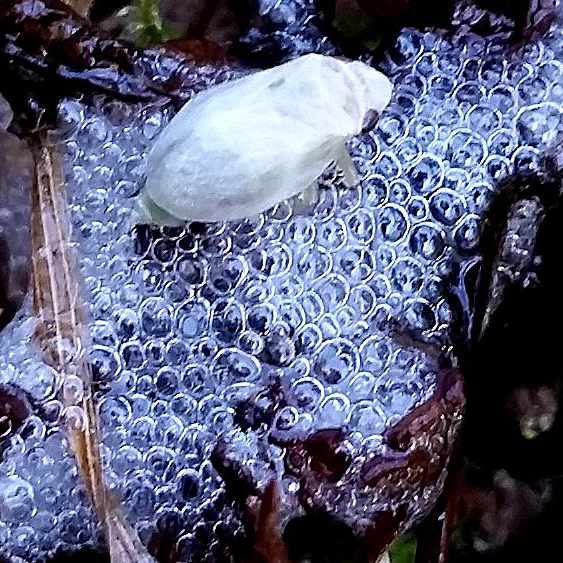 Spittlebug (nymph) family Aphrophoridae | 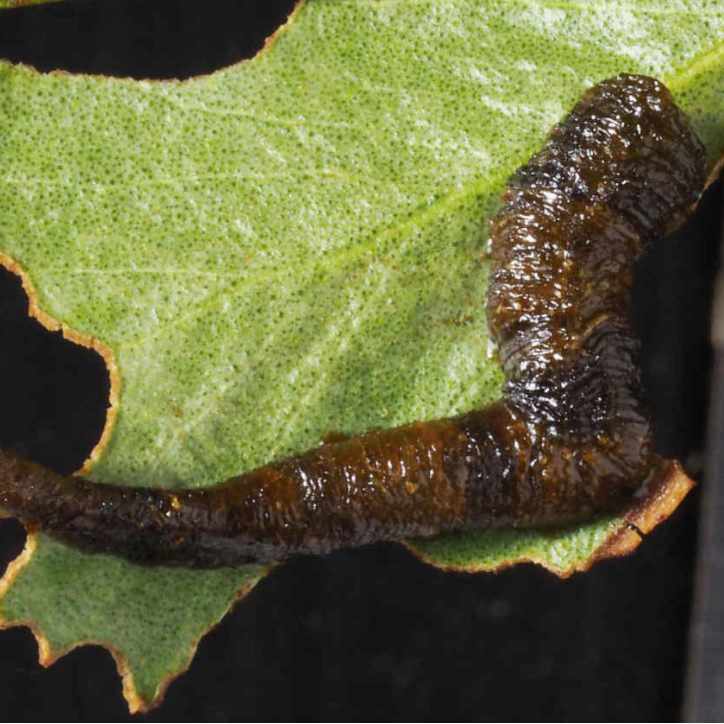 Tube spittlebug (nymph) family Machaerotidae |
My interest in hoppers started with attractive white blobs that appeared in January on box poison leaves in Foxes Lair. They were planthopper egg masses with a white waxy cover. Planthoppers have mostly narrow heads with large compound eyes separated by a ridge. I was yet to find an adult planthopper and eagerly monitored the blobs for emerging juveniles.
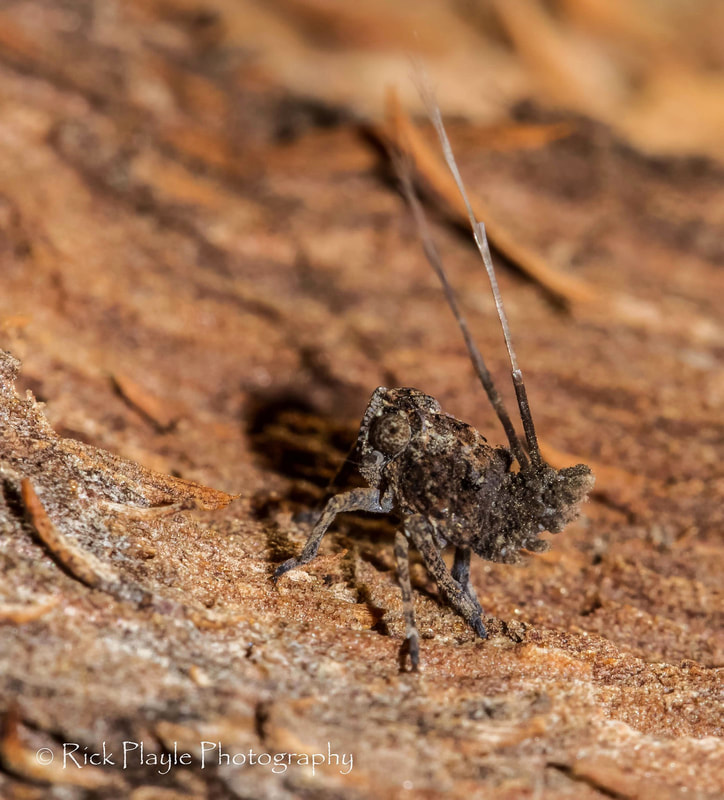 Eurybrachid planthopper nymph head on left | 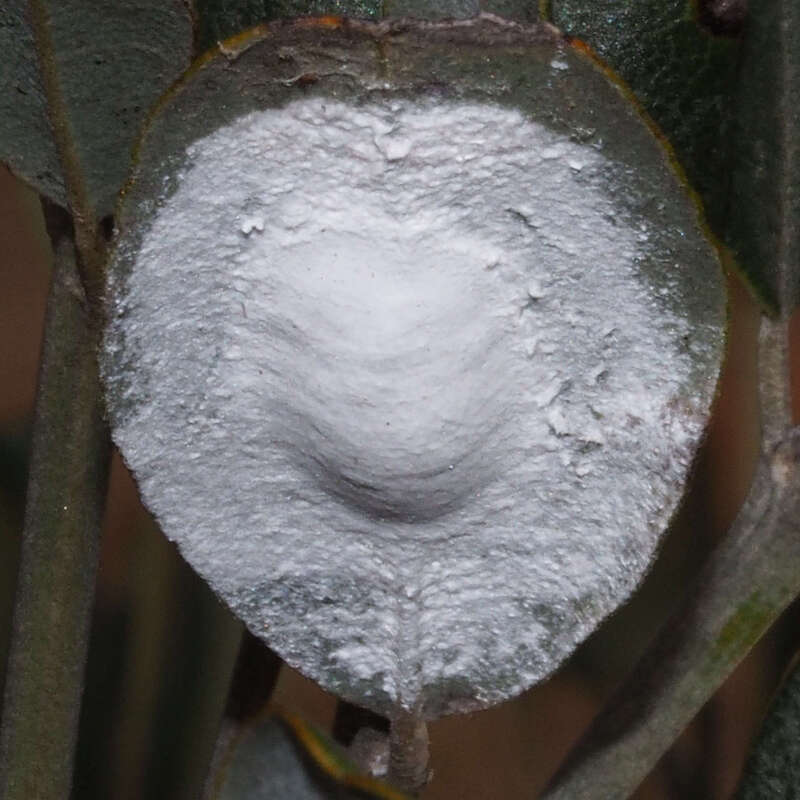 Egg mass |
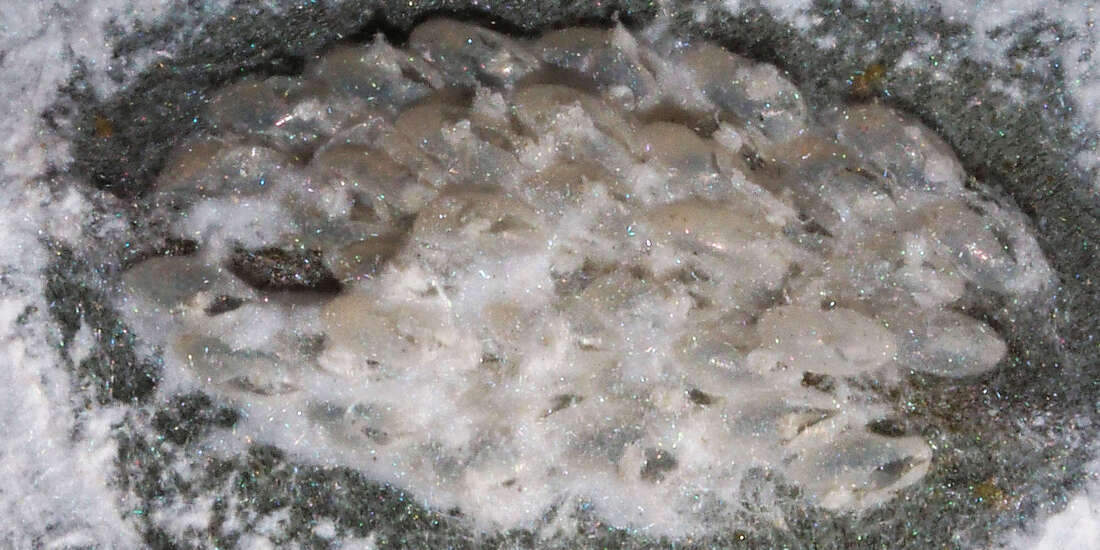 Too late. Most have hatched leaving empty shells
 Alas I never witnessed the wonderful hatching time. The egg masses were empty, or they had 1mm black spots in the mass that looked like parasite eggs.
I put a leaf with spotty egg mass in a glass jar and sure enough tiny 2mm blackish wasps appeared. This species is just one of thousands of stingless parasitoid chalcid wasps that keep insect numbers in control.
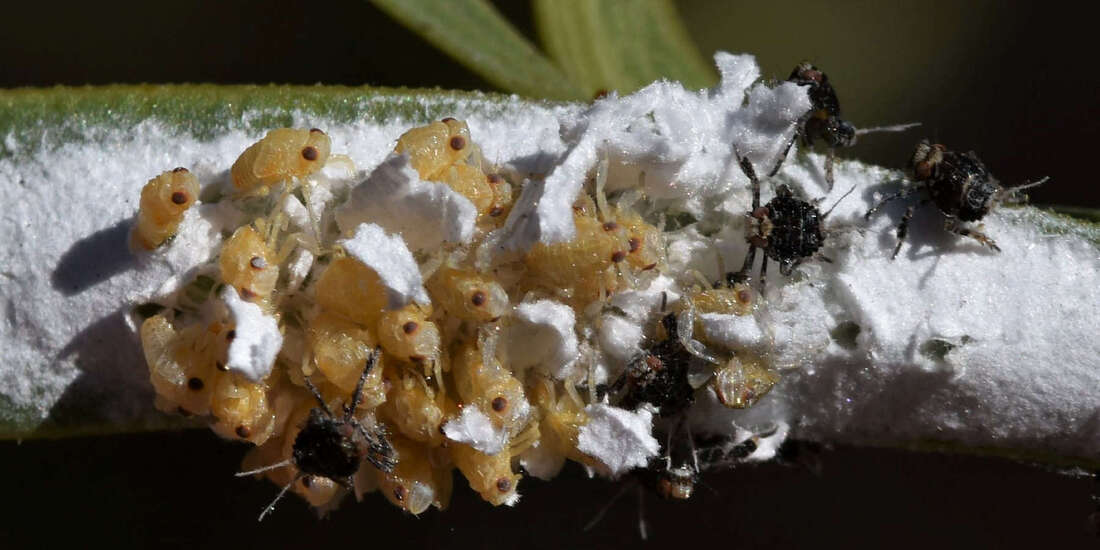 Hatching planthoppers; image Doug Mcdougie | 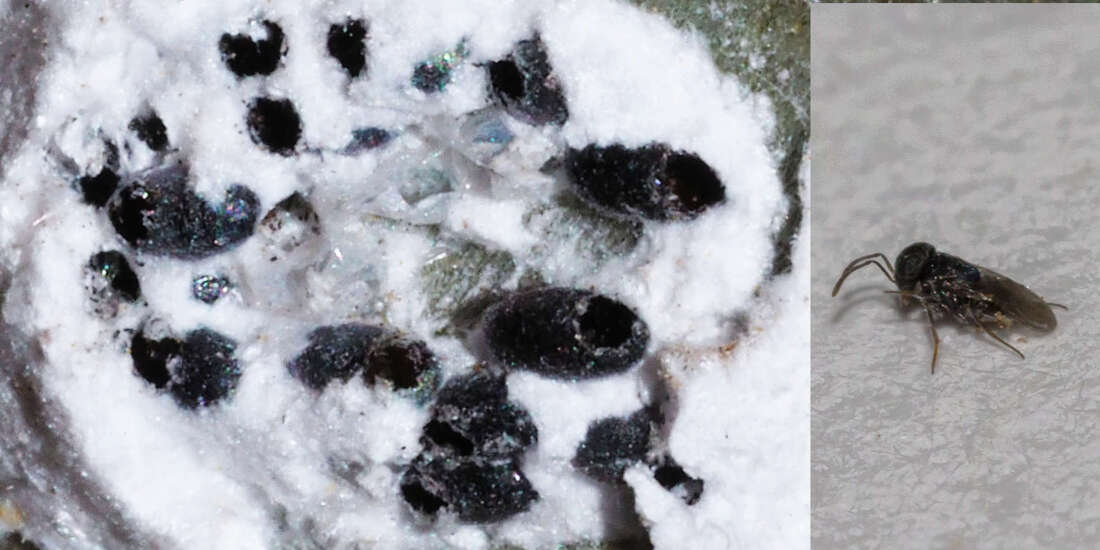 Wasp eggs an emerged adult |
Amazingly there are even tinier (from 0.1mm; a printed full stop is about 0.3mm!) hyperparasitic wasps that keep chalcid wasp numbers down by laying their eggs on the other wasp’s eggs. I won’t be getting a photo of these anytime soon!